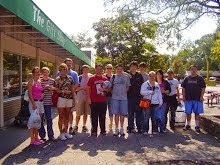
Wilmington store operated by people with disabilities
By Cece Nunn
http://www.starnewsonline.com/article/20100927/ARTICLES/100929709/-1/news300?p=all&tc=pgall
In good economic times or bad, people with disabilities can have a hard time finding jobs, according to federal government studies.
Tim Corbett doesn’t have to look at U.S. Bureau of Labor Statistics reports to know that. It’s one reason the Surf City resident started Carolina Country Store, a business that employs three people with disabilities. The store, with Wilmington locations in the Old Wilmington City Market at 119 S. Water St. and Blue Moon Gift Shops at 203 Racine Drive, sells, among other goodies, flavored pecans made by residents of the O’Berry Center, a state institution in Goldsboro that houses more than 300 people with developmental disabilities.
The pecans are $6 for a 4-ounce bag, $10 for an 8-ounce jar and $13 for a 12-ounce jar.
Corbett worked at the center as a vocational consultant for more than 10 years. With a bachelor’s degree in education of the hearing impaired from Atlantic Christian College and a master’s degree in special education from East Carolina University, Corbett taught special education in Greene County schools for 20 years before working at the O’Berry Center.
“My goal was to one day have a business that could be run and operated by people with disabilities,” Corbett said.
One of Corbett’s employees, Wilmington resident Lindsay Schulz, works four hours a day, three days a week at the store’s location in the Old Wilmington City Market. Schulz, 30, has Down syndrome.
“I like to work here,” Schulz said on a recent Thursday as she waited for customers next to a table topped with samples of the store’s pecans. “I love it. I pass out pecans to everybody. I say, ‘Would you like to try one?’ ”
Schulz also runs the credit card machine, bags merchandise for customers and restocks the shelves. Before the Carolina Country Store, Schulz worked at another business off Randall Parkway selling food and other items. That venture, called W.A.V.E. mart, is part of a vocational program for people with disabilities at RHA Health Services in Burnt Mill Business Park.
Nick Mullins, a Carolina Country Store assistant, said Schulz is a good employee. “She’s very conscientious,” Mullins said.
Schulz’s mother, Natalia Schulz, said, “For Lindsay, I think it’s a great experience. It allows her to interact with people and it gives her an opportunity to learn new skills.”
Lindsay’s brother Michael Schulz, 28, who also has Down syndrome, works at Cici’s Pizza one day a week.
“I would like him to have more hours or have a second job,” Natalia Schulz said.
She said in her experience employers in Wilmington aren’t as receptive to hiring people with disabilities as other places she and her children have lived.
“It’s almost like fear of the unknown,” Natalia Schulz said. “People aren’t as aware of their capabilities and aren’t willing to try them whereas (Corbett) is willing to put himself out and give these kids an opportunity to learn skills.”
Corbett said he hopes to hire more employees as the business expands. Open for three months, the store at Old Wilmington City Market has doubled in size recently. The Blue Moon Gift Shops store, which relocated to a bigger space within the business, has been open for more than a year.
“Our goal is to have somebody working every day with us,” Corbett said.
Monday, October 4, 2010

School special-needs program trains ‘work force ready’ students
School special-needs program trains ‘work force ready’ students
Posted on Wednesday, September 29th, 2010 at 7:08 pm.
By Michael Hansberry
http://www.madisoncountyrecord.com/2010/09/29/school-special-needs-program-trains-%E2%80%98work-force-ready%E2%80%99-students/
Employees from HudsonAlpha Institute for Biotechnology visited Bob Jones High School Sept. 29 to help a special-needs class extract DNA from strawberries, kiwis and peaches.
The activity was part of Charlene Sandford’s delayed development class study of cells.
“Our students are in school until they are 21, so we have longer to work with them,” Sandford said. “We are working with students that have Down syndrome, autism, cerebral palsy and other types of disabilities. It takes them a little longer to learn, so this program allows us to educate them while they work and have fun.”
Three students in the class work at HudsonAlpha preparing and packaging DNA kits. Their work with the company is part of a community-based work program the school initiated 12 years ago. The program sends students with developmental problems to local businesses for six weeks, where they train and become work force ready once they exit Bob Jones.
“Our goal is to get students exposed to the community and let everyone know that we are here and employable,” Sandford said. “We have them train at certain jobs, so when they graduate high school, they’ll already have that experience.”
Sandford said the program gives each student well-rounded training experience.
Other employers such as the Westin Hotel, PESA manufacturing, the Huntsville Botanical Gardens and Domino’s Pizza also employ students from the program. The school pairs each student with a job skill of their choice. Sandford said some students prefer clerical work while others prefer to work outside.
Three male students in the class currently work for PESA, a company that designs and produces routing switching systems.
“It’s all about careers and teaching the students that they can be productive,” Sandford said. “I am definitely proud of them all. They go out and give a 100 percent every time.”
Bob Lipinski, with the Madison City School System, is responsible for finding companies to employ students. He said it’s great to have businesses and organizations in the area that are willing to provide training opportunities for students who are “far end” special education.
“Not only do the kids get the work done, they do it with a smile,” Lipinksi said. “They learn work etiquette skills and overall how to function in the work environment.”
Funding comes from special education funds through the Individuals with Disabilities Act, along with some funds on the state and local levels.
Katy Weaver is one of the students in the class and participants in the program. Her job at HudsonAlpha entails mixing different types of solutions.
Come Friday night, Katy will be the first special-needs student in Bob Jones history to be on homecoming court.
“It’s a complete honor, I feel very special,” Weaver said. “It if weren’t for my friends, cheerleading squad and Bob Jones students, I wouldn’t be on it, of course.”
Weaver is also an honorary cheerleader and assistant coach. She “lives and breathes” cheerleading and even knows all the routines.
“The football games are one of my favorite parts of the school year because it’s the clash of the titans with Sparkman,” she said.
Weaver will sing the national anthem at the opening ceremony of the Special Olympics.
Sandford said Weaver is a “unique and very special” student who is a proven example that as long as one dreams big, they can accomplish anything.
Posted on Wednesday, September 29th, 2010 at 7:08 pm.
By Michael Hansberry
http://www.madisoncountyrecord.com/2010/09/29/school-special-needs-program-trains-%E2%80%98work-force-ready%E2%80%99-students/
Employees from HudsonAlpha Institute for Biotechnology visited Bob Jones High School Sept. 29 to help a special-needs class extract DNA from strawberries, kiwis and peaches.
The activity was part of Charlene Sandford’s delayed development class study of cells.
“Our students are in school until they are 21, so we have longer to work with them,” Sandford said. “We are working with students that have Down syndrome, autism, cerebral palsy and other types of disabilities. It takes them a little longer to learn, so this program allows us to educate them while they work and have fun.”
Three students in the class work at HudsonAlpha preparing and packaging DNA kits. Their work with the company is part of a community-based work program the school initiated 12 years ago. The program sends students with developmental problems to local businesses for six weeks, where they train and become work force ready once they exit Bob Jones.
“Our goal is to get students exposed to the community and let everyone know that we are here and employable,” Sandford said. “We have them train at certain jobs, so when they graduate high school, they’ll already have that experience.”
Sandford said the program gives each student well-rounded training experience.
Other employers such as the Westin Hotel, PESA manufacturing, the Huntsville Botanical Gardens and Domino’s Pizza also employ students from the program. The school pairs each student with a job skill of their choice. Sandford said some students prefer clerical work while others prefer to work outside.
Three male students in the class currently work for PESA, a company that designs and produces routing switching systems.
“It’s all about careers and teaching the students that they can be productive,” Sandford said. “I am definitely proud of them all. They go out and give a 100 percent every time.”
Bob Lipinski, with the Madison City School System, is responsible for finding companies to employ students. He said it’s great to have businesses and organizations in the area that are willing to provide training opportunities for students who are “far end” special education.
“Not only do the kids get the work done, they do it with a smile,” Lipinksi said. “They learn work etiquette skills and overall how to function in the work environment.”
Funding comes from special education funds through the Individuals with Disabilities Act, along with some funds on the state and local levels.
Katy Weaver is one of the students in the class and participants in the program. Her job at HudsonAlpha entails mixing different types of solutions.
Come Friday night, Katy will be the first special-needs student in Bob Jones history to be on homecoming court.
“It’s a complete honor, I feel very special,” Weaver said. “It if weren’t for my friends, cheerleading squad and Bob Jones students, I wouldn’t be on it, of course.”
Weaver is also an honorary cheerleader and assistant coach. She “lives and breathes” cheerleading and even knows all the routines.
“The football games are one of my favorite parts of the school year because it’s the clash of the titans with Sparkman,” she said.
Weaver will sing the national anthem at the opening ceremony of the Special Olympics.
Sandford said Weaver is a “unique and very special” student who is a proven example that as long as one dreams big, they can accomplish anything.
Friday, October 1, 2010
Collaboration!
One thing that was stressed several times throughout our PDP workshops was collaboration: we should be collaborating with other professionals and students on achieving our PDP goal. I already do this frequently, but yesterday I got to do this with another fellow PDPer that sent me this email:
Hello, my name is (name removed for privacy) and I am a CDB teacher at a local High School. I am working on my PDP for license renewal and part of my plan is finding out what other teachers and schools are doing in the area of life skills with their students. If you would be able to, I would really appreciate a short rundown of the skills or activities you incorporate in your classroom to increase student success in independent living once out of high school. I am looking for things like cooking, cleaning, job skills, social skills, community outings, etc. and a reference of some/any materials you use to develop these skills.
Thank you for your time!
I thought this was fantastic, so I responded yesterday afternoon:
Hello!
I would be glad to help out. As a fellow PDPer, if you don't mind, I am going to ask for similar information from about my goal, but I will include that at the bottom.
One way to improve independent living is through weekly community outings. What I try to do is choose a place for the month, and then each week (Tuesdays this year), we go to that place for the month. For example, in October, we will go shopping at Target and go to McDonald's for lunch. By doing this weekly for the entire month, it gives the kids to generalize the new skills they learn at those places. We started it last year and it's worked out pretty well.
To promote social skills, we also participate in a monthly outing with 4 or 5 other school districts to encourage our kids to interact with others from other schools. It actually has worked out really great and some friendships have developed because of it. Along with that, I incorporate many social skills lessons into life skills and sort develop lessons based on each students needs. For example, one of my students with Asperger's worked specifically on conversation skills and respecting opinions, as that was one of his needs. I take a lot of my information from the book "Social Skills Activities for Secondary Students with Special Needs" as well as the LCCE curriculum. I also google for ideas a lot too, and find things on the internet.
I also do a cooking activity each week (Thursdays). This year, I am trying find foods/snacks for cooking that are healthier and can be made in a microwave, to promote independence at home too. We also practice shopping for the food we need for the recipe as well, to familiarize ourselves with the grocery store.
For jobs around school, we pick up recycling around the school and also fill the staff lounge soda machines. Filling the soda machines includes shopping for the soda, managing the soda machine checking account (including depositing money and writing out checks), and filling the soda machine. It's been a very good job actually that includes a lot of different skills.
We also do a work experience class where we talk about job skills and what you need for a job. Some of my students also go out and work in the community a couple days a week with a job coach. We usually start with the local grocery store and then move on from there. The grocery store is a great place to develop those initial skills. Last year we had about 7 different businesses helping us out with this. While our goal is to have these businesses pay our students, with our hard economic times, that becomes a challenge, so we developed a work contract that is signed by our special education director, myself, my job coach, the student, the parents, and the supervisor at the business that states that they will do jobs like any other employee, will be supervised by one of our staff members, and will actually be paid through the school district. This has worked out very well and we have developed quite a rapport with the businesses, which has been great. And by paying the students, the experience becomes more meaningful and the students certainly enjoy it. I have done this with students with mild CD, Asperger's, Autism, and LD students. If you would like to see a sample of our contract, I can send you one. Just let me know.
I hope all of that helps. If you would like more ideas about something specific, just let me know.
As for my goal, my goal is similar but focuses a lot more on transition specifically. So if you would, could tell me some of the things you do to help promote transition for students in your school district? I am thinking along the lines of self-determination/self advocacy, work skills, life skills, independent living, and anything to go along with Indicator 13. Along with that, I also want to improve my students' involvement with the IEP process specifically related to transition, so if you do anything related to that, that would be awesome!
Thanks for your help :) Hope my information was helpful for you! And like I said, if you need anything else or have any other questions, just ask.
Just out of curiosity, what year are you in the PDP process? I am starting my 3rd year of teaching, so I wrote my goals and stuff last year.
Bobbi Jo
And this morning I received this response:
Bobbi Jo,
Thank you so much for responding to my email! You were the first one I got, including the people in my own district...I am in my 4th year of teaching so I am putting my portfolio together this year.
Our district has a few different avenues for transition services. Both of the high schools have a “Transition Specialist” who assist students in determining what line of work they would like to explore using interest inventories. They also plan trips to local colleges and tech schools based on student interest, help them fill out applications, make resumes, etc., practice entrance tests, and the work experience for special ed students is run through them.
Another program we have for CD students is called Transitions and is run at the High School. It is a non-paid work experience program that is designed to provide work experience in a variety of settings for students with cognitive disabilities. They rotate to different jobs in the community and/or school settings every 8-10 weeks. Monday through Thursday they are at jobs sites and on Fridays they work on additional workplace skills such as resume and portfolio development. Some of the jobs they do include making bed frames for a spring company, food prep work at Applebee’s, assisting with making snacks and in the classroom at an early learning center, going through donations and placing them on the sales floor at Goodwill and like stores, food prep and dishes at our central kitchen for the district, and food prep and other minor jobs at a local hospital.
The last program we have district wide is the SAIL program. I have attached their program brochure...it is a little outdated as they now have another level of the program for students who have lower skills (low CDB/high CDS) as well and need a little more assistance/guidance.
As for our IEPs, we do have short worksheets that the students fill out before the meeting that discuss what they would like to do after high school, where they want to live, level of independence, strengths, weaknesses, things to work on, etc. that they then share during the meeting. Also, in study skills class (a supported study hall) they discuss self-advocacy and have different tasks the students need to do (talking to their teachers about questions or grades, discussing their needs in the classroom, etc.).
I hope this is the kind of information you were looking for and let me know if there is anything else I can help you with.
Thanks again
This was a really great way to get some information from other teachers, and it happened quite randomly! It was nice to hear from someone else working on the PDP, though, and hear of some things they are doing!
Check another activity off the list...check!
Hello, my name is (name removed for privacy) and I am a CDB teacher at a local High School. I am working on my PDP for license renewal and part of my plan is finding out what other teachers and schools are doing in the area of life skills with their students. If you would be able to, I would really appreciate a short rundown of the skills or activities you incorporate in your classroom to increase student success in independent living once out of high school. I am looking for things like cooking, cleaning, job skills, social skills, community outings, etc. and a reference of some/any materials you use to develop these skills.
Thank you for your time!
I thought this was fantastic, so I responded yesterday afternoon:
Hello!
I would be glad to help out. As a fellow PDPer, if you don't mind, I am going to ask for similar information from about my goal, but I will include that at the bottom.
One way to improve independent living is through weekly community outings. What I try to do is choose a place for the month, and then each week (Tuesdays this year), we go to that place for the month. For example, in October, we will go shopping at Target and go to McDonald's for lunch. By doing this weekly for the entire month, it gives the kids to generalize the new skills they learn at those places. We started it last year and it's worked out pretty well.
To promote social skills, we also participate in a monthly outing with 4 or 5 other school districts to encourage our kids to interact with others from other schools. It actually has worked out really great and some friendships have developed because of it. Along with that, I incorporate many social skills lessons into life skills and sort develop lessons based on each students needs. For example, one of my students with Asperger's worked specifically on conversation skills and respecting opinions, as that was one of his needs. I take a lot of my information from the book "Social Skills Activities for Secondary Students with Special Needs" as well as the LCCE curriculum. I also google for ideas a lot too, and find things on the internet.
I also do a cooking activity each week (Thursdays). This year, I am trying find foods/snacks for cooking that are healthier and can be made in a microwave, to promote independence at home too. We also practice shopping for the food we need for the recipe as well, to familiarize ourselves with the grocery store.
For jobs around school, we pick up recycling around the school and also fill the staff lounge soda machines. Filling the soda machines includes shopping for the soda, managing the soda machine checking account (including depositing money and writing out checks), and filling the soda machine. It's been a very good job actually that includes a lot of different skills.
We also do a work experience class where we talk about job skills and what you need for a job. Some of my students also go out and work in the community a couple days a week with a job coach. We usually start with the local grocery store and then move on from there. The grocery store is a great place to develop those initial skills. Last year we had about 7 different businesses helping us out with this. While our goal is to have these businesses pay our students, with our hard economic times, that becomes a challenge, so we developed a work contract that is signed by our special education director, myself, my job coach, the student, the parents, and the supervisor at the business that states that they will do jobs like any other employee, will be supervised by one of our staff members, and will actually be paid through the school district. This has worked out very well and we have developed quite a rapport with the businesses, which has been great. And by paying the students, the experience becomes more meaningful and the students certainly enjoy it. I have done this with students with mild CD, Asperger's, Autism, and LD students. If you would like to see a sample of our contract, I can send you one. Just let me know.
I hope all of that helps. If you would like more ideas about something specific, just let me know.
As for my goal, my goal is similar but focuses a lot more on transition specifically. So if you would, could tell me some of the things you do to help promote transition for students in your school district? I am thinking along the lines of self-determination/self advocacy, work skills, life skills, independent living, and anything to go along with Indicator 13. Along with that, I also want to improve my students' involvement with the IEP process specifically related to transition, so if you do anything related to that, that would be awesome!
Thanks for your help :) Hope my information was helpful for you! And like I said, if you need anything else or have any other questions, just ask.
Just out of curiosity, what year are you in the PDP process? I am starting my 3rd year of teaching, so I wrote my goals and stuff last year.
Bobbi Jo
And this morning I received this response:
Bobbi Jo,
Thank you so much for responding to my email! You were the first one I got, including the people in my own district...I am in my 4th year of teaching so I am putting my portfolio together this year.
Our district has a few different avenues for transition services. Both of the high schools have a “Transition Specialist” who assist students in determining what line of work they would like to explore using interest inventories. They also plan trips to local colleges and tech schools based on student interest, help them fill out applications, make resumes, etc., practice entrance tests, and the work experience for special ed students is run through them.
Another program we have for CD students is called Transitions and is run at the High School. It is a non-paid work experience program that is designed to provide work experience in a variety of settings for students with cognitive disabilities. They rotate to different jobs in the community and/or school settings every 8-10 weeks. Monday through Thursday they are at jobs sites and on Fridays they work on additional workplace skills such as resume and portfolio development. Some of the jobs they do include making bed frames for a spring company, food prep work at Applebee’s, assisting with making snacks and in the classroom at an early learning center, going through donations and placing them on the sales floor at Goodwill and like stores, food prep and dishes at our central kitchen for the district, and food prep and other minor jobs at a local hospital.
The last program we have district wide is the SAIL program. I have attached their program brochure...it is a little outdated as they now have another level of the program for students who have lower skills (low CDB/high CDS) as well and need a little more assistance/guidance.
As for our IEPs, we do have short worksheets that the students fill out before the meeting that discuss what they would like to do after high school, where they want to live, level of independence, strengths, weaknesses, things to work on, etc. that they then share during the meeting. Also, in study skills class (a supported study hall) they discuss self-advocacy and have different tasks the students need to do (talking to their teachers about questions or grades, discussing their needs in the classroom, etc.).
I hope this is the kind of information you were looking for and let me know if there is anything else I can help you with.
Thanks again
This was a really great way to get some information from other teachers, and it happened quite randomly! It was nice to hear from someone else working on the PDP, though, and hear of some things they are doing!
Check another activity off the list...check!
Subscribe to:
Comments (Atom)