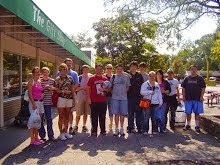
More Students with Disabilities Attending College, Volunteering
http://blogs.edweek.org/edweek/speced/2010/11/more_students_with_disabilitie.html
By Christina Samuels on November 30, 2010 5:50 PM
3 Comments
Recommend
The latest report from a longitudinal study of students with disabilities shows that these youth are attending college and participating in community and volunteer activities in far greater percentages than they were 15 years ago.
SRI International, a research institute, compared outcomes using two long-term studies of youth with disabilities.
The first federally funded study, called the National Longitudinal Transition Study lasted from 1983 to 1990, and followed youth ages 13 to 21 at the time the study began. The NLTS-2 study collected data on youth from 2001 to 2009, and the students were ages 13 through 16 at the time the research began.
The researchers compared student information gathered in 1990 to reports gathered in 2005. According to the report, within four years of leaving high school, 46 percent of young adults in 2005 were reported to have enrolled in a postsecondary school versus 26 percent in 1990.
The gains spanned across a broad range of postsecondary programs: an 18 percentage-point increase in community college enrollment, a 13 percentage-point increase in postsecondary vocational, business, or technical school enrollment and a 9 percentage-point difference in enrollment at four-year universities.
However, students with disabilities were still less likely than youth in the general population to be enrolled in some postsecondary institution. In 2005, 63 percent of young adults in the general population attended some kind of postsecondary institution, a 17 percentage-point difference.
Youth with disabilities also increased their involvement in volunteer or community service. The participation rate rose from 13 percent in 1990 to 25 percent in 2005.
However, the job outlook for youth with disabilities has not changed as dramatically as the postsecondary education rate. According to the researchers, 62 percent of youth reported being employed in 1990 compared to 56 percent in 2005; youth worked an average of 38 hours per week in 1990 vs. 35 hours a week in 2005, and the average wages were $9.10 an hour in 1990 compared to $9 an hour in 2005, adjusting for inflation.
Friday, April 1, 2011

Learning beyond the classroom
Learning beyond the classroom
SELF 30 program helps special needs students
http://www.kxan.com/dpp/news/education/learning-beyond-the-classroom
AUSTIN (KXAN) - Special needs students often need continuing education after they've graduate from high school.
That's why Concordia University has recently teamed up with the Leander school district to create a program that is changing the lives of some special students.
Joel Schiltwachter is studying to be a teacher at Concordia University, but it turns out he's learning a lot more outside of the classroom and loves it.
"Oh man everything, you can't pick one thing they are awesome kids so much fun," said Schiltwachter, education major Concordia University.
He's one of more than a dozen students helping out with the new SELF 30 program.
"We work on life skills and job skills," said Aline Crompton, Teacher SELF 30 program.
The program is for special needs students who have graduated from high school in Leander but still need to be educated.
"We were looking for opportunities for our kids to be with their same aged peers," said Crompton.
With Concordia's recent move up north it worked out perfect -especially with their new special education program. Concordia students work with their peers on day to day tasks most of us take for granted as being easy.
David Wright, 21, is about to graduate from the program and he has a job ready to go.
"Cups and cones," said Wright.
It's one learning experience that offers a new perspective of the world outside of the classroom.
"Whenever I didn't see them I almost felt empty, I just wanted to hang out with them," said Schiltwachter.
SELF 30 program helps special needs students
http://www.kxan.com/dpp/news/education/learning-beyond-the-classroom
AUSTIN (KXAN) - Special needs students often need continuing education after they've graduate from high school.
That's why Concordia University has recently teamed up with the Leander school district to create a program that is changing the lives of some special students.
Joel Schiltwachter is studying to be a teacher at Concordia University, but it turns out he's learning a lot more outside of the classroom and loves it.
"Oh man everything, you can't pick one thing they are awesome kids so much fun," said Schiltwachter, education major Concordia University.
He's one of more than a dozen students helping out with the new SELF 30 program.
"We work on life skills and job skills," said Aline Crompton, Teacher SELF 30 program.
The program is for special needs students who have graduated from high school in Leander but still need to be educated.
"We were looking for opportunities for our kids to be with their same aged peers," said Crompton.
With Concordia's recent move up north it worked out perfect -especially with their new special education program. Concordia students work with their peers on day to day tasks most of us take for granted as being easy.
David Wright, 21, is about to graduate from the program and he has a job ready to go.
"Cups and cones," said Wright.
It's one learning experience that offers a new perspective of the world outside of the classroom.
"Whenever I didn't see them I almost felt empty, I just wanted to hang out with them," said Schiltwachter.
Students, guests make Rann Thanksgiving feast special
Students, guests make Rann Thanksgiving feast special
http://www.shorenewstoday.com/index.php/galloway-twp/galloway-twp-general-news/6357-students-guests-make-rann-thanksgiving-feast-special.html
GALLOWAY TOWNSHIP – Thanksgiving came early this year for some friends of a multiple disabilities class taught by Pam Bruckler and Colleen DeFoney at Arthur Rann Elementary School.
"This has become a tradition," Bruckler said before the dinner Friday, Nov. 19. "We're in our 10th year. Our kids spend the entire week preparing holiday dishes from scratch."
She said this allows the students to practice essential workplace readiness skills like cooperation and teamwork as well as to build a greater skill-set for independent living.
"This year is special because we have invited members of the Board of Education to join us," Bruckler said.
"We are also fortunate to have been offered help by some of our community's finest – members of Galloway's emergency medical tech squad."
She said the serving offer came from EMT Lt. Ray Adams Jr., a close family friend.
"He asked if some members of his crew might partner with us in an attempt to build a more positive relationship between our special needs students and the professional folks they might encounter in the event of an emergency," Bruckler said. "His hope is that this interaction might help to reduce fears and instill greater understanding and trust."
The students' "labor of love" provided a soup-to-nuts home-cooked banquet for about 60 people including students' family members, teachers and administrators, the director of special education, Superintendent Annette Giaquinto and board members.
"I would love it if we could shine some light on the positive things happening in our multiple disabilities program, especially during American Education Week," Bruckler said.
A year ago, the district changed the program so that students receive academic studies in the morning and life skills instruction in the afternoon.
"This is working out great – and today shows that," Bruckler said. "They learn skills to help with independent living such as cooking, doing laundry and practical things."
The feast was "fit for a king," she said, with everything but the turkey and gravy made by students.
"We have a no-kid zone for three feet around the oven," she said. "This year they made corn muffins and stuffing from scratch. The stuffing is made from my mom's recipe. Everything's fresh. They used real butter, fresh vegetables, broth from the turkey. And they peeled 20 pounds of apples and 20 pounds of potatoes to make applesauce and mashed potatoes."
Back by popular demand each year is "no-bake pumpkin cheese pie."
Second-grade student Liam Thompson, 8, wore a new sweater and had lunch with school board member Beverly Evensen.
"I worked on everything," Thompson said. "I made the layered pumpkin pie and I helped make mashed potatoes. I was a peeler.”
Another 8-year-old second-grader, Jahsir Brown, mixed ingredients for the stuffing.
"That was my favorite part," Brown said. "I'm glad I got to do that."
Sixth-grader Meet Patel, 13, said that after preparing the Thanksgiving dinner at school, he could make anything at home that he had made in class.
"I like the applesauce," Patel said. "We made the pumpkin pie. I made corn muffins, too. I could make all these at home."
He said his best studies were life skills and math.
"I'm good at math," he said. "I'm one of the leaders, and that makes me happy."
http://www.shorenewstoday.com/index.php/galloway-twp/galloway-twp-general-news/6357-students-guests-make-rann-thanksgiving-feast-special.html
GALLOWAY TOWNSHIP – Thanksgiving came early this year for some friends of a multiple disabilities class taught by Pam Bruckler and Colleen DeFoney at Arthur Rann Elementary School.
"This has become a tradition," Bruckler said before the dinner Friday, Nov. 19. "We're in our 10th year. Our kids spend the entire week preparing holiday dishes from scratch."
She said this allows the students to practice essential workplace readiness skills like cooperation and teamwork as well as to build a greater skill-set for independent living.
"This year is special because we have invited members of the Board of Education to join us," Bruckler said.
"We are also fortunate to have been offered help by some of our community's finest – members of Galloway's emergency medical tech squad."
She said the serving offer came from EMT Lt. Ray Adams Jr., a close family friend.
"He asked if some members of his crew might partner with us in an attempt to build a more positive relationship between our special needs students and the professional folks they might encounter in the event of an emergency," Bruckler said. "His hope is that this interaction might help to reduce fears and instill greater understanding and trust."
The students' "labor of love" provided a soup-to-nuts home-cooked banquet for about 60 people including students' family members, teachers and administrators, the director of special education, Superintendent Annette Giaquinto and board members.
"I would love it if we could shine some light on the positive things happening in our multiple disabilities program, especially during American Education Week," Bruckler said.
A year ago, the district changed the program so that students receive academic studies in the morning and life skills instruction in the afternoon.
"This is working out great – and today shows that," Bruckler said. "They learn skills to help with independent living such as cooking, doing laundry and practical things."
The feast was "fit for a king," she said, with everything but the turkey and gravy made by students.
"We have a no-kid zone for three feet around the oven," she said. "This year they made corn muffins and stuffing from scratch. The stuffing is made from my mom's recipe. Everything's fresh. They used real butter, fresh vegetables, broth from the turkey. And they peeled 20 pounds of apples and 20 pounds of potatoes to make applesauce and mashed potatoes."
Back by popular demand each year is "no-bake pumpkin cheese pie."
Second-grade student Liam Thompson, 8, wore a new sweater and had lunch with school board member Beverly Evensen.
"I worked on everything," Thompson said. "I made the layered pumpkin pie and I helped make mashed potatoes. I was a peeler.”
Another 8-year-old second-grader, Jahsir Brown, mixed ingredients for the stuffing.
"That was my favorite part," Brown said. "I'm glad I got to do that."
Sixth-grader Meet Patel, 13, said that after preparing the Thanksgiving dinner at school, he could make anything at home that he had made in class.
"I like the applesauce," Patel said. "We made the pumpkin pie. I made corn muffins, too. I could make all these at home."
He said his best studies were life skills and math.
"I'm good at math," he said. "I'm one of the leaders, and that makes me happy."
Project Search helps students with disabilities learn skills on the job
Project Search helps students with disabilities learn skills on the job
Project Search provides opportunities to students with disabilities, and employers can consider hiring them after their internships end.
http://www.roanoke.com/news/roanoke/wb/268389
Tamara Thomas, 18, has her own office complete with a leather-bound navy blue diploma from William Fleming High School atop her metal filing cabinet and a photo of her boyfriend on her desk.
It's hard for her high school counselor to believe, because when Thomas was a freshman, she was painfully shy and uninterested in school, said Cindy Goldstein, transition specialist at William Fleming.
Thomas has a milder variant of an autistic disorder called Asperger's syndrome. It affects her social skills mostly, said her mother, Katina Thomas. It's hard for shy, introverted Tamara Thomas to make eye contact with people.
During Thomas' senior year, Goldstein advised her to apply for a national program called Project Search, aimed at giving students with disabilities on-the-job training through internships to compete for jobs. She is now one of 12 students in the Roanoke Valley involved in the competitive program's first year in Roanoke.
Thomas is an unpaid intern at a materials management facility for Carilion Clinic. There she keeps track of medical supplies for health care facilities.
"I really like my job here. People are so nice and treat me with respect," she said.
Thomas' goal is to get a permanent job with benefits and to be independent, she said.
Students such as Thomas rotate through work sites at Carilion Roanoke Memorial Hospital, the Carilion Clinic materials management facility and the Virginia Tech Carilion School of Medicine. They work in various departments including nursing, materials management and food service.
Because Thomas is in a work environment where she has to communicate with people around her, she is talking more and becoming less shy, her mother said.
"Already in a short time, I have seen her coming out of her shell," she said.
There are more than 40 Project Search programs nationwide. Roanoke's program is one of five in the state and boasts the largest and most diverse collaborative effort in Virginia.
Partners in the program include school systems in Roanoke and Roanoke County, Botetourt and Franklin counties, and Salem; the Virginia Department of Rehabilitative Services; Blue Ridge Behavioral Healthcare; local parent representatives; Goodwill Industries of the Valleys; Carilion Clinic; and Virginia Tech Carilion School of Medicine and Research Institute.
Funding for the program comes from each school district and the Department of Rehabilitative Services. Goodwill operates the program.
Students in the program must have a developmental and/or other significant disability, communicate effectively, meet state eligibility requirements and have independent daily living skills among other criteria.
Students attend morning classes at the Virginia Tech Carilion medical school that teach them career and life skills before heading to their internships for the rest of the day. Each student has a job coach on-site to help him or her develop skills. Students are encouraged to get to work on their own.
The program allows students to be treated like everyone else, said Michele Wells, vocational rehabilitation counselor for Project Search.
"It allows students to see what they can do for a company and the company to see what the students can do for them," she said.
Carilion Clinic is the program's sole corporate sponsor, and coordinators said they are seeking more businesses to become involved.
Project Search allows a company that may not have considered hiring someone with a disability to do so at little to no cost.
Hiring employees with a disability is a strength for a company, Goldstein said.
"It's all about acceptance," Goldstein said. "We need to focus on each student's unique strengths instead of their disabilities."
Project Search provides opportunities to students with disabilities, and employers can consider hiring them after their internships end.
http://www.roanoke.com/news/roanoke/wb/268389
Tamara Thomas, 18, has her own office complete with a leather-bound navy blue diploma from William Fleming High School atop her metal filing cabinet and a photo of her boyfriend on her desk.
It's hard for her high school counselor to believe, because when Thomas was a freshman, she was painfully shy and uninterested in school, said Cindy Goldstein, transition specialist at William Fleming.
Thomas has a milder variant of an autistic disorder called Asperger's syndrome. It affects her social skills mostly, said her mother, Katina Thomas. It's hard for shy, introverted Tamara Thomas to make eye contact with people.
During Thomas' senior year, Goldstein advised her to apply for a national program called Project Search, aimed at giving students with disabilities on-the-job training through internships to compete for jobs. She is now one of 12 students in the Roanoke Valley involved in the competitive program's first year in Roanoke.
Thomas is an unpaid intern at a materials management facility for Carilion Clinic. There she keeps track of medical supplies for health care facilities.
"I really like my job here. People are so nice and treat me with respect," she said.
Thomas' goal is to get a permanent job with benefits and to be independent, she said.
Students such as Thomas rotate through work sites at Carilion Roanoke Memorial Hospital, the Carilion Clinic materials management facility and the Virginia Tech Carilion School of Medicine. They work in various departments including nursing, materials management and food service.
Because Thomas is in a work environment where she has to communicate with people around her, she is talking more and becoming less shy, her mother said.
"Already in a short time, I have seen her coming out of her shell," she said.
There are more than 40 Project Search programs nationwide. Roanoke's program is one of five in the state and boasts the largest and most diverse collaborative effort in Virginia.
Partners in the program include school systems in Roanoke and Roanoke County, Botetourt and Franklin counties, and Salem; the Virginia Department of Rehabilitative Services; Blue Ridge Behavioral Healthcare; local parent representatives; Goodwill Industries of the Valleys; Carilion Clinic; and Virginia Tech Carilion School of Medicine and Research Institute.
Funding for the program comes from each school district and the Department of Rehabilitative Services. Goodwill operates the program.
Students in the program must have a developmental and/or other significant disability, communicate effectively, meet state eligibility requirements and have independent daily living skills among other criteria.
Students attend morning classes at the Virginia Tech Carilion medical school that teach them career and life skills before heading to their internships for the rest of the day. Each student has a job coach on-site to help him or her develop skills. Students are encouraged to get to work on their own.
The program allows students to be treated like everyone else, said Michele Wells, vocational rehabilitation counselor for Project Search.
"It allows students to see what they can do for a company and the company to see what the students can do for them," she said.
Carilion Clinic is the program's sole corporate sponsor, and coordinators said they are seeking more businesses to become involved.
Project Search allows a company that may not have considered hiring someone with a disability to do so at little to no cost.
Hiring employees with a disability is a strength for a company, Goldstein said.
"It's all about acceptance," Goldstein said. "We need to focus on each student's unique strengths instead of their disabilities."
College offers cooking class for disabled students
College offers cooking class for disabled students
http://abclocal.go.com/wls/story?section=news/disability_issues&id=7802964
November 21, 2010 (CHICAGO) (WLS) -- Cooking brings families together, especially around the holidays.
The head chef of Harper College's dining services created cooking classes for young adults with developmental disabilities.
Washing and cutting vegetables, mixing condiments, whipping up smoothies and organizing sandwiches meats are all activities done by students in John Filler's continuing education class. They're getting a chance to learn some basic culinary skills.
"It's more how to teach them to take care of themselves at home, feed themselves," Filler said.
"For the sanitation, we spent really the first week kind of going over things: how to wipe down sinks, things like that. After that, we moved more quickly into putting food together. A lot of this whole class is cold stuff right now. So, it's sandwiches, salads, and we're just started smoothies and shakes this last week," he said.
Filler started this class for his daughter, Diana, and her peers.
"A lot of it for me, was more life skills because watching my daughter, I wasn't teaching her everything she needed to learn. So, she we would wait for us, and if you know we weren't around, she'd just wait to eat. We're like, 'No start making yourself a sandwich, do those things,'" the instructor said.
Students in the class are 18 and older. They are from the Chicago area. Classes meet for an hour and half, once a week for 8 weeks.
"They all understand about cleaning up, safety. So, we always wash our hands to start with. At the end, we clean our knives up. Then, we clean down our cutting boards wipe our areas down," said Filler.
"I learn from John showing us how to we do different spreads, how we do different ingredients, how we put ingredients together in bowl," said student Stefanie Dreksler, 27.
John Filler'ss daughter, Diana, is 26 years old.
"I've been making more sandwiches, pasta salads , chef salad and sandwiches on sourdough bread," she said.
"Their parents tell me that they'll look forward to it now," said Filler.
After all that hard work, students get to create their own meal and enjoy it.
There is a $99r charge for the eight-week course. For more information, visit http://goforworld.harpercollege.edu.
http://abclocal.go.com/wls/story?section=news/disability_issues&id=7802964
November 21, 2010 (CHICAGO) (WLS) -- Cooking brings families together, especially around the holidays.
The head chef of Harper College's dining services created cooking classes for young adults with developmental disabilities.
Washing and cutting vegetables, mixing condiments, whipping up smoothies and organizing sandwiches meats are all activities done by students in John Filler's continuing education class. They're getting a chance to learn some basic culinary skills.
"It's more how to teach them to take care of themselves at home, feed themselves," Filler said.
"For the sanitation, we spent really the first week kind of going over things: how to wipe down sinks, things like that. After that, we moved more quickly into putting food together. A lot of this whole class is cold stuff right now. So, it's sandwiches, salads, and we're just started smoothies and shakes this last week," he said.
Filler started this class for his daughter, Diana, and her peers.
"A lot of it for me, was more life skills because watching my daughter, I wasn't teaching her everything she needed to learn. So, she we would wait for us, and if you know we weren't around, she'd just wait to eat. We're like, 'No start making yourself a sandwich, do those things,'" the instructor said.
Students in the class are 18 and older. They are from the Chicago area. Classes meet for an hour and half, once a week for 8 weeks.
"They all understand about cleaning up, safety. So, we always wash our hands to start with. At the end, we clean our knives up. Then, we clean down our cutting boards wipe our areas down," said Filler.
"I learn from John showing us how to we do different spreads, how we do different ingredients, how we put ingredients together in bowl," said student Stefanie Dreksler, 27.
John Filler'ss daughter, Diana, is 26 years old.
"I've been making more sandwiches, pasta salads , chef salad and sandwiches on sourdough bread," she said.
"Their parents tell me that they'll look forward to it now," said Filler.
After all that hard work, students get to create their own meal and enjoy it.
There is a $99r charge for the eight-week course. For more information, visit http://goforworld.harpercollege.edu.
Subscribe to:
Comments (Atom)