Pages

Tuesday, October 25, 2011

Special Needs Kids Learn Life Skills

Special-needs kids learn life skills at Mountain Pointe High

by Coty Dolores Miranda - Oct. 5, 2011 11:18 AM
Special for the Republic

Ten years ago, Jamaica Drowne helped start a Special Education and Life Skills program at Mountain Pointe High School that opened the door of opportunity for special-needs teens and young adults.

The program was close to her heart: She had grown up in Ahwatukee as the older sister of her only sibling, Ben, who has dealt with severe and multiple disabilities since birth.

Drowne, a 1997 Mountain Pointe grad who later graduated from Arizona State University, said growing up with Ben inspired her to become a teacher.

"Because of my brother, it was obvious to me I should be a special-education teacher because it was like second nature to me," she said. "When I started teaching in 2001, we had about seven students who started with me; it was a learning experience for all of us."

Today's MPHS Life Skills program has 28 students, ranging from freshman beginning at age 14 to young adults age 22. There are four teachers, including Drowne: Heidi Klepfer, Jenny Thompson, and Anne Schumann.

"By law, it's appropriate placement for students to stay until they're 22, depending on their IEP - individualized education plan," Klepfer said. "We have students with various intellectual disabilities, including multiple disabilities and autism. Our biggest goal for the Special Education and Life Skills is to get them ready for adulthood."

To accomplish that, students receive a variety of educational information, experiences and hands-on skills.

In the Functional Academics, students learn basics like handling money, how to prepare menus and then shop for the ingredients, prepare simple meals and similar basic activities.

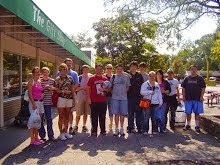
A recent shopping trip to an Ahwatukee grocery store - a journey made twice weekly - underlined how multiple lessons meld.

"Before we let them go, we prepare the students; we shop with them but I let them lead. Like if we need flour, I ask, 'Where would we go in the store to find it?' Our goal is that they know and understand the grocery store. If they can't find what they want, we teach them who to go to and how to appropriately ask," Klepfer said. "Then they come up with a recipe, we shop for the ingredients and then cook it."

As any shopper knows, keeping track of money is a necessity.

"Understanding money is very important. We make sure they know how to use it, and understand what change is correct," said Klepfer, who taught Life Skills at Centennial Middle School and Kyrene de las Lomas Elementary before coming to MPHS seven years ago.

Preparing meals in the classroom kitchen varies according to the students' abilities. Some require "hand-over-hand assistance," with teachers literally placing their hands over their students' while adding ingredients or cooking. A student in a wheelchair may require help scooping flour. Some use "picture recipes" because they're unable to read.

Life Skills students are also exposed to Vocational Exploration, such as catering and basic art. Field trips that correlate with educational projects are also in the curriculum.

Sometimes, says Drowne, progress must be counted in years: "Many times we see slow moving progress that gradually gains momentum over time. I had one student and we worked on telling time on a traditional analog clock. We probably worked on that for about five years, and I didn't see much progress at school. Then one day, his mother told me he'd told her the correct time while at home. It was awesome to hear.

"From that day on, it clicked and he got it!" she said, which helps explain why "I truly love working with the students within Life Skills."

Read more:
http://www.azcentral.com/community/ahwatukee/articles/2011/10/05/20111005mountain-pointe-high-school-life-skills-program.html##ixzz1bpoJZKKE

New centre helps youths with autism move to adulthood

http://www.canada.com/health/centre+helps+youths+with+autism+move+adulthood/5511186/story.html

New centre helps youths with autism move to adulthood


BY VALERIE BERENYI, POSTMEDIA NEWSOCTOBER 6, 2011

CALGARY — An innovative centre designed to help youth with autism spectrum disorder or ASD transition to adulthood officially opened in Calgary earlier this week.

The Ability Hub, a specially designed 17,000-square-foot facility located on the University of Calgary campus, has ASD-sensitive architectural features such as sound dampening panelling and floor tiles, lights that don't flicker or buzz, and colour-coded signage.

It also has classrooms, therapy rooms and a self-contained apartment where clients can practise independent living skills such as cooking and laundry.

The Ability Hub is funded by the Sinneave Family Foundation, a Calgary-based national organization established in 2008 to help build better futures for teens and adults with ASD.

Autism diagnoses have risen dramatically, from one in 10,000 two decades ago to one in 110 today, says Dr. Margaret Clarke, executive director of the foundation.

A complex and lifelong condition, ASD is associated with problems with social relatedness, difficulties with communication and language, and repetitive patterns of behaviour or activities. Those with the disorder may also experience mental health problems such as anxiety and depression.

ASD is typically diagnosed in early childhood, and while a variety of programs have sprung up to help children, there is little available for adolescents and those on the cusp of adulthood, says Clarke, a pediatrician and professor in medicine, pediatrics and psychiatry at U of C.

Focusing on this older age group will improve the quality of life for those with ASD and reduce costs, she says.

"The average lifetime cost of care for a person with autism is $3.4 million. Three-quarters of those costs end up being in late adolescence and adulthood. And they're largely about enabling and facilitating individuals to be in environments outside the family home."

Like other young people, those with ASD want a more independent life, says Clarke. To help them achieve that, the Sinneave Family Foundation partnered with the Society for Treatment of Autism to run a skills-for-life program at The Ability Hub called Pursuits.

Those over age 13 can participate in 11-week programs to learn about personal hygiene, job interview skills and social skills.

They can also master business skills, including office administration, data entry and computer technology, or service skills such as commercial food preparation.

Families living with ASD have been deluged with an "information explosion," says Clarke. The Ability Hub's resource centre is designed to help them navigate systems of care and education, and sift through the reams of ASD information.

The facility also offers training programs to improve the skills of caregivers and health care professionals working with ASD patients.

October is Autism Awareness Month.

For more information about The Ability Hub, visit http://www.sinneavefoundation.org/.

Special Needs Students Work as a Team at Football Games


Special needs students work as a team at football games
2011-10-06 15:58:00

http://www.yumasun.com/news/students-73535-popcorn-football.html

After living in a small town in Washington state, Tammy James was surprised when she came to Yuma eight years ago and learned that her new class of special education students at Cibola High School had gone most of their high school years without ever attending a football game.

But now, the Career Exploration Club adviser said that statistic has changed drastically. Amidst the throngs of people that frequent the Cibola varsity football home games are a group of special education students who sell popcorn and other items to those in attendance.

James recalled that she found an old, unused popcorn maker owned by the Cibola band and borrowed it for the first few years of the program until the group could afford their own machine.

"Making popcorn is relatively cheap, safe and easy," she said. "After two seasons, we were able to purchase our own popcorn machine."

Although Career Exploration Club students have been selling popcorn on campus for the past seven years, they have since expanded to selling of Cibola beaded necklaces and cake pops in addition to manning a punting game for kids to win free "Kickin' it with the Raiders" T-shirts, paid for by community businesses and organizations.

After each game, James estimated that they make about $200 in popcorn sales equalling out to about $1,000 during the course of the football season.

Current Career Exploration Club student Kayla Ramon, 15, said she helps to make the popcorn and necklaces, commenting that she enjoys being included to help fundraise for the program.

Even though the number of people waiting in line to get their popcorn can sometimes be a little stressful, she said, making the popcorn is still her favorite activity to help with.

Her fellow classmate, Karla Monroy, 19, said that before she started helping, she didn't come to the football games. "Now I have a good time. I like to help with everything."

James noted, "Because of this event, our special needs students are included in our school more than ever, to the point that once they exit high school, they are returning to the football game for socialization."

During the past home game, she added, she had four graduated students return to socialize with friends and help out at their booth.

"It's now their social event," James said. "When I see our past special needs students at the football game after exiting, I am very proud in knowing that I have been part of a movement to include our special needs students in our school and breaking a barrier that once was present at our school and that I have given our students a memory that they once never had."

In addition to providing an extra opportunity for special education students to socialize with their fellow classmates, she said, students have the chance to gain valuable job skills that cannot be duplicated in the classroom.

"Students work as a team, learn to communicate with customers, learn food safety through the popcorn making, learn how to make popcorn, develop money skills and are included at our home football games," said James.

"They also have to go up into the stands and sell popcorn, which means that they have to go out of their comfort zone and speak to unknown people. Many of students have difficulty communicating and receive speech services, so giving them an opportunity to develop their speech with teacher support has allowed them to have growth in the area of speech. Also, they are working with real money and using a cash register."

Special education graduate Curtis Champagne, 24, was one of the first students to enter into the Career Exploration Club, James said.

Champagne said he feels that his time working with the group helped him to be better prepared for his job now, where he works with the U.S. Border Patrol as a janitor.

Other past students Katie Sorensen, 21, and Ashley Baker, 22, both agree that because of this program, they gained valuable job skills to work at Yuma Endodontics and Achieve Human Services, respectively.

"It helped me work with other people and have a good work ethic," said Sorensen.

Baker added, "It helped me to get along with other people and learn to work well together."

Sorensen and Baker concluded that they also enjoy coming back to football games to visit and support their former classmates.

Sarah Womer can be reached at
swomer@yumasun.com or 539-6858.

Disability Mentoring Day pairs students, employers

Disability Mentoring Day pairs students, employers


JESSICA McCARTHY / News Herald Writer

2011-10-19 19:09:55

http://www.newsherald.com/news/mentoring-97752-pairs-students.html
PANAMA CITY — Disability Mentoring Day created the opportunity this week for student and adult job seekers to shadow employees in their workplace of interest and gain workplace knowledge and experience.

Pamela Cramer from Vocational Rehabilitation said this kind of opportunity is important to job seekers in determining their career path.

“It exposes people to working; everybody in this room wants to get a job, either now or eventually,” she said. “It gets them thinking about what job they might want, gets them exploring the career for the day. Sometimes people come out of it knowing they don’t want to do that and others come out of it loving it and wanting to do that job.”

Cramer said this day of mentoring occurs nationwide during October, which is Disability Awareness Month, and this is Bay County’s fourth year of participation.

Each year, several local businesses offer their employees as mentors for the job seekers, which allows them to learn related skills.

“It allows people to explore a career for a day, and on the flip side of that, it exposes employers to people with disabilities,” Cramer said. “Hopefully, they will consider hiring people with disabilities after this experience.”

Cramer said internships have resulted from this experience in the past and she hopes that will continue this year.

Finding businesses to participate is never a problem.

“Luckily, we have a good relationship now — this is our fourth year — so I can call the businesses that have participated before and they always say yes. Some are national sponsors, like Publix and Darden restaurants, and they always participate locally,” she said.

Mike, a student who shadowed at Publix, said the day went well.

"I learned how to fit in with everyone else," he said.

Linda Johnson said she and Nashira Jackson, directors of the Chapman Early Education Center, feel rewarded when they participate in the Disability Mentoring Day.

“It’s very rewarding, both for the students and us as directors, as well. The teachers enjoy it and our students do, too,” Johnson said. “They all have smiles on their faces while they are here. We let them (shadowers) choose the age category they work with. This is first year we were able to participate with wheelchair students, and they had a good time; they danced and observed the teachers in the classroom.”

The students and mentors celebrated their experiences with a banquet in the Springfield Community Center Wednesday and businesses associated with the event provided food for the job seekers, mentors and families.

The banquet gave each job shadower the chance to share with the crowd what they did during their work time and how they liked it. Those who spoke all said they had a good time with their mentors and several said they wanted to get a permanent job with their mentor’s company after their experience.

Students with disabilities learn skills through job-shadowing

Originally appeared on News-Journal Online at
http://www.news-journalonline.com/news/local/flagler/2011/10/22/students-with-disabilities-learn-skills-through-job-shadowing.html

| Print This Page


Students with disabilities learn skills through job-shadowing

By ANNIE MARTIN, Staff Writer

  October 22, 2011 12:05 AM

Posted in:

Tagged:


Flagler Palm Coast student Ashleigh Doeing shadows Florida Hospital Flagler volunteer Barbara Cerasa during Florida Disability Mentoring Day Wednesday in Palm Coast. (N-J | Nigel Cook)

PALM COAST -- Ashleigh Doeing helped volunteer Barbara Cerasa move a supply cart down a hallway in the emergency room at Florida Hospital Flagler on a recent morning.

The two made sure each room had enough bandages, tape, socks and other staples.

Doeing, a student at Flagler Palm Coast High School, said she sees herself working or volunteering at a hospital. The soft-spoken 20-year-old was able to experience that on Wednesday, when close to 20 Flagler County students with disabilities spent an hour with hospital volunteers.

"It's a way to help people and make them feel better," Doeing said about working in a hospital.

October is National Disability Employment Awareness Month and Flagler students with disabilities are job-shadowing volunteers and employees this month at several local workplaces. Those sites include Whispering Meadows Ranch, Target, Publix, Outback Steakhouse and the cities of Palm Coast and Flagler Beach.

"It's important so that these employers can see these kids and realize the abilities that they have," said Susan Brady, who runs the Transitions program for young adults with disabilities at the Flagler Technical Institute. "It's important for these kids to see what kinds of jobs are out there."

People with disabilities may not be able to work eight hours per day, but many can handle a part-time job. Going to work and receiving a paycheck can give them a sense of purpose, Brady said.

"People need to realize people with disabilities have a lot of ability," Brady said. "Everybody deserves to contribute to society."

Hiring additional people with disabilities can even help employers save money, said Susanne Chirco, a vocational rehab counselor in the Department of Education's School to Work program. For example, a person who can't drive can still work as a meter reader if they ride with another reader who can drive. The driver can drop off the other employee on one street and then drive to another nearby area. Both can read the meters in their assigned areas and then the driver can pick up the other employee. That way, the employer can save money on gas and use fewer vehicles, said Chirco, who works with students in Volusia and Flagler counties.

Many of the students in the Transitions program are able to work part-time while they attend school, Brady said. One of them, Tyler Jacobs, has worked at Flagler Organics three days per week for the last five months.

"It's very, very hard work and I'm good at it," the 22-year-old said about his job.

Jacobs, who attends FTI, also volunteers once per week in the hospital cafeteria, where he puts dishes away, takes out the trash and makes the french fries. He has his food-handlers permit and has attended culinary school in Orlando.

"It's very interesting," Jacobs said. "I've been wanting to cook for a long time."

After watching the emergency room volunteers, Doeing said she learned that "everybody needs a little help now and then."

"It just felt special to me," Doeing said. "I felt like I belonged here."

Wednesday, October 19, 2011

Transition House

Lincoln-Way Transition House helps give special-needs students a brighter future
By Susan DeMar Lafferty

It looks just like any other house in this Frankfort neighborhood — but it’s not.

It’s also not — as some have believed — a halfway house, a group home nor a drug rehab center.

What it is, is a doorway to opportunity — a place where special-needs students learn to
be independent, responsible citizens.

The Lincoln-Way Transition House, at 310 Colorado Ave., is a fully functional, handicapped-accessible home, with a kitchen, a bedroom, two bathrooms and laundry and living rooms. The home, built by the Lincoln-Way Area Special Education Cooperative District 843, also has plenty of meeting space.

But for the students who go there, it’s also a classroom Monday through Friday from 8:30 a.m. to 2:30 p.m.
“It’s innovative,” District 843 board president Kathy Moore said. “It’s very forward thinking,”

Here, on a recent afternoon, Alyssa was making pancakes for the first time. She and her three classmates (identified only by first name for privacy at the request of District 843 staff) were learning how to read a recipe, how to measure accurately and how to neatly flip those blueberry-filled blobs over a hot stove.

Then, they set the table, sat down to enjoy them and cleaned up their mess.
Melinda Green, transition specialist and social worker, and instructor Steve Stacel were taking students through it one step at a time.

Students prepare their own lunch every day and plan meals weekly, with an emphasis on nutrition and budgeting. They scour ads and clip coupons before they shop.

“You really have to break it down into steps to make sure they understand it,” Green said. “Here, we teach them, we support them and let them be independent.”
That may also mean allowing students to make mistakes and experience the consequences for their choices. If they use up their weekly $25 budget, students may not have enough money to go to a restaurant on Friday, Aaron, another student, explained.
“I like doing different things every day. I’m learning to live by myself,” said Alyssa, who is hoping to land a job in data entry and get her own apartment. They will learn skills many take for granted.

Among the “different things” students learn at the transition house are social skills — how to greet people, act appropriately, order from a menu or ask for help. They will learn how to open a checking account, schedule appointments, wash and fold laundry and clean a toilet.

“Our focus is on increased independence,” Barb Luoma, the transition house’s supervisor, said. “We need them to be as independent as possible.”

And what better place to learn than in a real-life setting. Otherwise, it would be like “teaching mechanics without a car,” Luoma said.

In just the first two months, the growth in students has been “amazing,” she said. Students are opening up and communicating more. They are thinking about their future and making plans to attend college or find a job.
The new Lincoln-Way Transition House is on “the cutting edge,” director Sally Bintz said. It’s the only co-op to build a new facility exclusively for this purpose.

Similar programs are held in rented spaces or in schools, not fully designed for handicapped accessibility, she said.
The house opened to students in August and is available to those 18 to 22 years of age who have completed all high school graduation requirements but aren’t quite ready to be on their own.

Transition is a huge concern of their parents, Bintz said.
About 70 students are eligible for the Transition House program, which could accommodate 15 at a time, Bintz and Louma said.

With only four current students, it may be off to a slow start, but it has generated a lot of interest, they said.
“Many people are not sure of what we’re all about, but word is spreading,” Luoma said. “It’s evolving. It’s exciting. It’s positive.”
The $470,000 house — built largely with grants and donated labor — belongs to the six school districts that comprise the co-op — Manhattan 114, New Lenox 122, Frankfort 157C, Mokena 159, Summitt Hill 161 and Lincoln-Way 210.
Many of their special education classes come here for field trips to learn daily living skills, Bintz said.
“This house represents their future,” she said.
“It says a lot about this community to build this house in these economic times,” Bintz said. “These students have needs just like students in band and athletics and they deserve a quality environment.”

Moore predicted that “many will see the benefits of the Transition House.”

Some students may be reluctant to try something new because they are so comfortable with current programs, but once they see it, they will embrace it, she said.

“I can’t wait to see more people using it,” Moore said.

Tuesday, October 18, 2011

Learning-disabled students get firmer grip on college – USATODAY.com

http://www.usatoday.com/news/education/story/2011-10-17/college-and-learning-disabilities/50807620/1

Learning-disabled students get firmer grip on college
By Mary Beth Marklein, USA TODAY
PUTNEY, Vt. – They have developed strategies to stay focused when lectures get boring, picked up tips for staying on top of homework and brushed up on their rights as college students with documented learning disabilities.

Now, they are working on their handshakes.

"No wet dishrags. Look me right in the eye," Landmark College professor Roxanne Hamilton coaches her students, who would soon scatter to campuses across the nation to start their freshman year. She tells them that a firm grip will project confidence when they ask for what they need to succeed — be it extra time on tests, access to an instructor's notes or a distraction-free place to study.

A growing number of students with learning disabilities are enrolling in college, yet few are likely to get the level of support and encouragement available at Landmark College, one of a few small, private colleges that specialize in educating students who struggle with conditions such as dyslexia or attention-deficit disorder.

Nearly nine out of 10 of the nation's two- and four-year colleges enroll students with disabilities, and of the 86% of those that enroll students with learning disabilities, only 24% say they can help disabled students "to a major extent," says an Education Department report published in June.

That's why a growing number of short-term opportunities are cropping up to help college students with learning disabilities hone the skills they will need on a mainstream campus. Landmark, which runs three such boot camps on its campus here each summer, last year added a fourth, in Oregon. The non-profit College Internship Program this year offered similar residential programs on five campuses, up from one program three years ago. And a biopharmaceutical company awarded scholarships this year to 25 students with ADHD. Those scholarships include cash plus one-on-one coaching.

Through the programs, students learn to build on their strengths, navigate the terrain and, perhaps most of all, how to advocate for themselves.

Many students "don't have the ability to speak up for themselves, because their parents were advocating for them" in high school, says Robert Tudisco of the non-profit Edge Foundation, which pairs coaches with college students with ADHD. Even when students do speak up, he says, "colleges, to a certain degree, don't have a good handle on what these students need."

The sessions at Landmark have made a difference for Brandon Tobasky, 18, who has an anxiety disorder that sometimes impedes his ability to focus on schoolwork. Now, as a first-year student at Colby-Sawyer College in New London, N.H., Tobasky says he feels "a lot more confident and a lot more prepared in general about just about every aspect" of college, both academically and socially.

While at Landmark, Tobasky worked on his note-taking, something he never had to do in high school for students with special needs because teachers gave study guides. He also fretted about whether he would make friends. Now, he says, "I'm thinking, wow, I have so many friends. I hope I don't have too much fun."

But students participating in another Landmark program warn that the transition can be bumpy. Ksenia Bradner, 19, a sophomore at Goucher College in Baltimore, says she had a professor last year who insisted "there's no such thing" as attention-deficit disorder or depression. "I was shocked because all my life people had been understanding," Bradner says.

"You feel under attack sometimes," says Benjamin Staton, 20, a George Washington University sophomore with attention-deficit hyperactivity disorder and dyslexia. Last year, he says, one professor "was angry at me because I was asking for help. She had to go out of her way to help me." This semester, he says, he is communicating more effectively with faculty and staying on top of his course load. "It's really important to not, like, sink, which would have happened in the past," he says.

Rising numbers

The proportion of college students with any sort of disability has inched upward, to about 11% in 2008 from 9% in 2000, but the number who report learning-related disabilities is growing far faster, says a 2009 report by the Government Accountability Office, the investigative arm of Congress. Dyslexia and similar language-based disabilities increased from 5% to 8.9% in that period.

Students reporting attention-deficit and related disorders, which affect things such as the ability to organize thoughts or manage time, more than tripled to 19%, making it the most commonly reported disability after emotional, psychological or psychiatric conditions, which sometimes accompany learning disabilities. The GAO report identifies students with autism-spectrum disorders, which have to do with social skills, as an "emerging population." In contrast, the percentage of students with mobility problems dropped, from 29% to 15.1%; also down were reports of visual or hearing impairments.

"It's not about intellect — they're capable of doing high-level work," says Landmark professor MacLean Gander. Rather, he says, their brains are wired differently, so they learn differently. Here, it's not unusual to see some students doodling instead of taking notes, and some instructors hand out squeeze balls during class; both tools help some students concentrate. (But professors are not pushovers. Hamilton scolded several students on this afternoon for falling asleep during a talk by a guest speaker the previous day. "Do you know how annoyed your professor is going to be with you?" she asked. "They're going to think you don't care.")

Under the Americans with Disabilities Act, all colleges are required to provide accommodations to college students. But they can decline to do anything they consider unreasonable. And, unlike grade schools and high schools, which are required by law to identify, evaluate and help students with disabilities, colleges don't have to do anything — unless a student asks for help and provides proof of a learning disability.

Some mainstream schools are catering to the special needs of this population. Sage and Excelsior colleges in Troy and Albany, N.Y., are taking applications for a new online bachelor's degree program for people with autism-spectrum disorders or other learning disabilities, to be launched in January.

Since 2006, the University of Alabama has offered a program for students with autism. The University of Arizona's Strategic Alternative Learning Techniques Center has been around since the 1980s.

Why colleges fall short

A number of factors help explain why many colleges may fall short. Colleges responding to the recent Education Department survey cite costs as the primary barrier to making more of those kinds of changes, along with a lack of incentives for faculty to make their coursework more accessible. Other research suggests that some disabilities-services offices, particularly at large institutions, are mired in bureaucracy, exactly the kind of thing that trips up students who struggle with things like memory and self-management skills.

"Right now, the burden really is on the student," says Marsha Glines, dean of a program for learning-disabled students at Lynn University in Boca Raton, Fla., which is preparing to host its third annual conference aimed at helping high school students with learning disabilities explore their college options.

And therein lies another factor: Most learning-disabled students don't seek out the services available to them. Of about 67% of such students who pursued college or vocational school after high school, only 24% disclosed their impairment to college officials, a necessary first step toward getting accommodations, says a federally funded study that has tracked students from their teen years into young adulthood. Study director Lynn Newman says those students could be setting themselves up for failure.

"One of the reasons they were able to get into college in the first place (was) they got the support they needed in high school to succeed," says Newman, of Menlo Park, Calif., who hopes to compare completion rates between students who do and don't disclose their learning disabilities. Overall, her research shows, 40% of students with learning disabilities, about a fifth of whom pursued bachelor's degrees, complete their post-secondary programs, compared with about 52% of a similar population, but the data are limited. (By comparison, about half the students who come to Landmark full-time have failed or withdrawn from somewhere else, and 80% of those who graduate go on to earn bachelor's degrees.)

In some cases, students don't realize they needed help until it is too late. "I didn't reach out for support because I thought I was just lazy. I saw it as a moral and personal failure," says Taylor Burks, 25, of Jefferson City, Tenn., who has withdrawn from the University of Chicago but hopes to return.

The key reason many students don't disclose: They want a fresh start in college without the stigma associated with a disability, says the GAO report. One of the benefits of Landmark's program is that the stigma is taken away.

And that may be the biggest confidence-booster. "We're not that weird," says Morgan Behr, 20, who transferred this fall to Landmark from the University of Denver. "We're normal. We just learn differently."