http://www.ajc.com/news/gwinnett-schools-helps-metro-224823.html
The state’s largest school system is paving the way to help more metro Atlanta students with physical, emotional and learning needs continue their education in college.
Gwinnett County Public Schools will host a college fair Saturday to help inform disabled students about opportunities and support available. Representatives from 30 colleges and universities will talk about making the transition to post-secondary education. Students will learn how to access services they may need to participate in lectures, complete assignments and survive on a college campus.
The fair is free and open to families across metro Atlanta.
“We want to make sure our students know all of the options ahead of them when they are looking at life beyond the K-12 experience,” said Jennifer Fornek, Gwinnett School's director of Instructional Services. “We want the students to be successful when they leave us."
Students can visit booths to speak with university liaisons or attend seminars on everything from finding financial aid to qualifying for special accommodations on campus. Military recruiters also will set up shop to discuss other pathways open to students.
About 11 percent of Georgia's 1.6 million public school children have disabilities.
Lawrenceville mom Chris Owens said the relationships she cultivated at Gwinnett's special needs college fair through the years helped her son A.J., 18, make the transition to a four-year institution. They attended the fair during his eighth-, 10th- and 11th-grade years looking for the perfect fit. A.J., who suffered brain cancer in fifth grade, continued to reach for his academic goals. He graduated from Brookwood High in 2009 with a 3.6 grade point average and a 1660 on the SAT.
Owens said she wanted A.J. to land at a college that would challenge and support him when he needed it.
"With a technical diploma, it got a little sticky," she said. "Most colleges want them to have a college prep degree to get in. But Georgia Gwinnett College accepted him because of his grades and his SAT scores. He did extremely well. All that he had to do was to take a couple of remedial classes to get him on track for the college level."
Jennifer Arrocena, director of GGC's Office of Disability Services, even came to Gwinnett Schools to attend A.J. Owens' final special education program evaluation. "She was due with a baby that week and just wanted to be there to meet his teachers in case he needed any accommodations [for college]," Owens said. "They have always been available for us."
Mirroring the statewide figure, about 11 percent of students in Gwinnett have disabilities. But graduation rates for them are higher in Gwinnett than the state as a whole. Graduation rates for special needs students in Gwinnett rose from 45 percent in 2008 to 48.2 percent in 2009. Statewide, the rates were 37.7 in 2008 and 41.4 percent in 2009.
GGC, one of several University System of Georgia institutions to be represented at the college fair, is expanding its services for students with disabilities. It is building 1,029 dorm rooms and nearly 100 of them will have wheelchair accessible showers and wide doors. About 3.5 percent of the college's 3,000 students are registered with GGC's disability services office.
“We provide extended testing time for students who need it, priority registration, use of a tape recorder, note-takers, readers or scribes,” said Merri Brantley, GGC's director of external affairs. "We encourage all students to reach their full potential, both academically and personally."
College Fair for Students with Disabilities
Noon-3 p.m., Saturday, 437 Old Peachtree Road, Suwanee
Wednesday, January 27, 2010

A New Transition Program
http://www.ocregister.com/news/-223775--.html
High school prepares disabled students for future
LAGUNA BEACH – Special education students in the Laguna Beach School District are now getting extra support to find jobs.
The district introduced this year the Transition Partnership Program, which so far has paired up 11 students with the Department of Rehabilitation as well as teaching them how to find jobs. The program works in addition to the district's Workability program, which begins identifying career interests of students with an individual education plan at age 16.
"It was pretty clear there was a missing piece," said Irene White, director of special education and student services.
The new program focuses on students' transition from high school to the workforce. Corey Brown, the district's new transition service coordinator, works with students individually or in small groups on skills like writing a resume and cover letter, finding job opportunities and how to prepare for an interview.
"The whole goal is to prepare kids for life after high school," White said.
White said district will begin working to renew the grant that funds it in January. In the future, White said she hopes the program reaches more kids in the district. Most students in special education qualify, she said, adding disabilities range from simple language and comprehension difficulties to more challenging conditions. Though 11 have been accepted into the partnership with the Department of Rehabilitation, Brown's job skills workshops can reach an entire class. So far, the program has been well received, White said.
"Everyone claps when we talk about Corey's services," she said.
Though the program is new to Laguna Beach, other schools have already successfully implemented it.
"We've been able to access the TPP program through Saddleback, but our kids don't want to go, our parents don't want to go that far," White said, adding bring the program to Laguna Beach High School allows local businesses to get involved.
Brown's responsibilities include working out partnerships with local businesses and larger companies, he said. For now in Laguna, there are few openings, but businesses have been receptive to working with the program. Students continue to fill out applications with the hope that openings will come available in the spring, when tourists return. Brown said he encourages students to continue to put themselves out into the job market. One student applied at 10 or 12 businesses before finding a position, he said.
"That's what I'm really trying to tell students," Brown said.
By working with the Department of Rehabilitation, students qualify for state money to pay for on-the-job training, he said, meaning companies can then hire them without additional costs. The TPP program also allows students access to resources for up to two years after graduation, allowing Brown to follow their progress and help as needed.
McKenzie Wensman, an 18-year-old senior at Laguna Beach High School, said Brown's teaching has helped her. Though she found a position at Laguna Drug on her own, she said she hopes better interview skills will land her a job in a clothing store. Working in retail will help her learn what it takes to one day run her own business or clothing line, she said. Next year, she plans to begin community college, and Brown will continue to be a resource for her.
Without the program, Wensman said she knows she would survive because she learns from her mistakes. But with the program, those mistakes can be avoided.
"I've finally learned how to do a resume," she said. "I'm really happy about that."
High school prepares disabled students for future
LAGUNA BEACH – Special education students in the Laguna Beach School District are now getting extra support to find jobs.
The district introduced this year the Transition Partnership Program, which so far has paired up 11 students with the Department of Rehabilitation as well as teaching them how to find jobs. The program works in addition to the district's Workability program, which begins identifying career interests of students with an individual education plan at age 16.
"It was pretty clear there was a missing piece," said Irene White, director of special education and student services.
The new program focuses on students' transition from high school to the workforce. Corey Brown, the district's new transition service coordinator, works with students individually or in small groups on skills like writing a resume and cover letter, finding job opportunities and how to prepare for an interview.
"The whole goal is to prepare kids for life after high school," White said.
White said district will begin working to renew the grant that funds it in January. In the future, White said she hopes the program reaches more kids in the district. Most students in special education qualify, she said, adding disabilities range from simple language and comprehension difficulties to more challenging conditions. Though 11 have been accepted into the partnership with the Department of Rehabilitation, Brown's job skills workshops can reach an entire class. So far, the program has been well received, White said.
"Everyone claps when we talk about Corey's services," she said.
Though the program is new to Laguna Beach, other schools have already successfully implemented it.
"We've been able to access the TPP program through Saddleback, but our kids don't want to go, our parents don't want to go that far," White said, adding bring the program to Laguna Beach High School allows local businesses to get involved.
Brown's responsibilities include working out partnerships with local businesses and larger companies, he said. For now in Laguna, there are few openings, but businesses have been receptive to working with the program. Students continue to fill out applications with the hope that openings will come available in the spring, when tourists return. Brown said he encourages students to continue to put themselves out into the job market. One student applied at 10 or 12 businesses before finding a position, he said.
"That's what I'm really trying to tell students," Brown said.
By working with the Department of Rehabilitation, students qualify for state money to pay for on-the-job training, he said, meaning companies can then hire them without additional costs. The TPP program also allows students access to resources for up to two years after graduation, allowing Brown to follow their progress and help as needed.
McKenzie Wensman, an 18-year-old senior at Laguna Beach High School, said Brown's teaching has helped her. Though she found a position at Laguna Drug on her own, she said she hopes better interview skills will land her a job in a clothing store. Working in retail will help her learn what it takes to one day run her own business or clothing line, she said. Next year, she plans to begin community college, and Brown will continue to be a resource for her.
Without the program, Wensman said she knows she would survive because she learns from her mistakes. But with the program, those mistakes can be avoided.
"I've finally learned how to do a resume," she said. "I'm really happy about that."
Remodeled Life Skills Rooms (WI)
http://www.wauwatosanow.com/news/79422077.html
Special ed students learning life skills
Remodeled classrooms give more hands-on role
By ISRAL DEBRUIN
Posted: Dec. 16, 2009 (0) Comments
Classrooms remodeled using federal stimulus money are helping special education students at both Wauwatosa high schools learn practical life skills that will help them live more independently.
The repurposed rooms, one at each high school, have been equipped with kitchen-style cabinets and a variety of home appliances to help cognitively disabled students learn to cook and clean. It was all paid for by $2,500 in stimulus funding and a $1,260 grant from the Education Foundation of Wauwatosa.
Parents of some of the students are already seeing their kids help out more at home with chores and cooking, said Deni Wessel, Wauwatosa West High School special education teacher.
"Some parents have said they're really seeing a gain in confidence in the students," she said.
The apartment classrooms were Wessel's idea, and she wrote the EFW grant that helped fund them.
Teaching through holiday projects
Wessel said her classes use the new equipment daily, practicing baking, washing dishes, dusting and vacuuming while focusing on kitchen safety and cleanup skills.
Recently, they've focused on projects related to the holidays. Last month, students prepared a Thanksgiving feast and lately they have been baking Christmas cookies.
Most of the projects are simple, and Wessel breaks them down into individual tasks.
For example, when the students made turtle pretzel cookies Dec. 11, one student was assigned to line up the pretzels on a baking sheet while another unwrapped Rolo candies and placed them in a bowl. Another student placed the candies on top of the pretzels and another placed the filled baking sheets into the oven and set a timer. When the cookies were done baking, yet another student placed a pecan on top of the melted candy.
By performing the same simple tasks over and over, students can master different skills, Wessel said. This same approach is also used when teaching students how to do things like wash dishes, make cinnamon toast or bake cinnamon rolls.
Opening up career paths
Wessel said her ultimate goal is for students to work toward independence by being able to cook and clean for themselves safely and effectively. So far, the growth toward that goal is "small, but it's what we're looking for," she said.
Once students have successfully completed some of the simpler projects, Wessel said she hopes to have them prepare a staff lunch or coffee social.
The students are learning functional life skills that will stay with them long after they leave Wauwatosa West, said Therese Kwiatkowski, district director for students services. In addition, the projects actively engage all of the students, helping them develop socially while teaching them time management and how to understand directions. These are abilities that could help open career pathways, Kwiatkowski said.
"It gives them some skills that they could possibly take beyond high school," she said.
Other students help, too
Though the new apartment classroom is home to Wessel's special education class, others in Wauwatosa West's student community are benefiting from it. Throughout the school day, regular education students spend class periods helping out in Wessel's class.
Junior Ashley Reed said she comes in once a day to lend a hand, earning class credit while gaining career experience.
"I want to be a special education teacher when I'm older," she said.
But for Reed, the experience is also deeply personal. One of the special education students is her 20-year-old sister, Amy. Coming in to Wessel's class allows her to spend more time with her big sister.
Amy said she's having fun cooking with her sister, and Ashley said she's already seeing Amy benefit from the new classroom. Since the beginning of the school year, Amy has started helping make her dinner at home.
"I think it's really good," she said. "Having everything right in the room is really easy."
This type of interaction between the special education and regular education students is what makes the apartment classroom special, Kwiatkowski said.
"Everybody brings something to the table," she said.
"I think we're lucky to be able to have something like this in our school buildings," she said.
AT A GLANCE
Wauwatosa received a total of $2.2 million in federal stimulus.
So far, $1.62 million of that has been spent on instructional materials to help special education students learn to read. In addition, $30,000 has been spent on staff training, $10,000 on consultants, $9,000 on assessment materials and $2,000 on software.
Another $70,000 is available for use this year and $456,000 is available for next year.
The $2.2 million is Wauwatosa's share of $366 million in federal stimulus funds allocated to Wisconsin schools for spending on special education and services for low-income students. It's all part of the $787 billion American Recovery and Reinvestment Act, of which Wisconsin has received about $7.7 billion so far.
Special ed students learning life skills
Remodeled classrooms give more hands-on role
By ISRAL DEBRUIN
Posted: Dec. 16, 2009 (0) Comments
Classrooms remodeled using federal stimulus money are helping special education students at both Wauwatosa high schools learn practical life skills that will help them live more independently.
The repurposed rooms, one at each high school, have been equipped with kitchen-style cabinets and a variety of home appliances to help cognitively disabled students learn to cook and clean. It was all paid for by $2,500 in stimulus funding and a $1,260 grant from the Education Foundation of Wauwatosa.
Parents of some of the students are already seeing their kids help out more at home with chores and cooking, said Deni Wessel, Wauwatosa West High School special education teacher.
"Some parents have said they're really seeing a gain in confidence in the students," she said.
The apartment classrooms were Wessel's idea, and she wrote the EFW grant that helped fund them.
Teaching through holiday projects
Wessel said her classes use the new equipment daily, practicing baking, washing dishes, dusting and vacuuming while focusing on kitchen safety and cleanup skills.
Recently, they've focused on projects related to the holidays. Last month, students prepared a Thanksgiving feast and lately they have been baking Christmas cookies.
Most of the projects are simple, and Wessel breaks them down into individual tasks.
For example, when the students made turtle pretzel cookies Dec. 11, one student was assigned to line up the pretzels on a baking sheet while another unwrapped Rolo candies and placed them in a bowl. Another student placed the candies on top of the pretzels and another placed the filled baking sheets into the oven and set a timer. When the cookies were done baking, yet another student placed a pecan on top of the melted candy.
By performing the same simple tasks over and over, students can master different skills, Wessel said. This same approach is also used when teaching students how to do things like wash dishes, make cinnamon toast or bake cinnamon rolls.
Opening up career paths
Wessel said her ultimate goal is for students to work toward independence by being able to cook and clean for themselves safely and effectively. So far, the growth toward that goal is "small, but it's what we're looking for," she said.
Once students have successfully completed some of the simpler projects, Wessel said she hopes to have them prepare a staff lunch or coffee social.
The students are learning functional life skills that will stay with them long after they leave Wauwatosa West, said Therese Kwiatkowski, district director for students services. In addition, the projects actively engage all of the students, helping them develop socially while teaching them time management and how to understand directions. These are abilities that could help open career pathways, Kwiatkowski said.
"It gives them some skills that they could possibly take beyond high school," she said.
Other students help, too
Though the new apartment classroom is home to Wessel's special education class, others in Wauwatosa West's student community are benefiting from it. Throughout the school day, regular education students spend class periods helping out in Wessel's class.
Junior Ashley Reed said she comes in once a day to lend a hand, earning class credit while gaining career experience.
"I want to be a special education teacher when I'm older," she said.
But for Reed, the experience is also deeply personal. One of the special education students is her 20-year-old sister, Amy. Coming in to Wessel's class allows her to spend more time with her big sister.
Amy said she's having fun cooking with her sister, and Ashley said she's already seeing Amy benefit from the new classroom. Since the beginning of the school year, Amy has started helping make her dinner at home.
"I think it's really good," she said. "Having everything right in the room is really easy."
This type of interaction between the special education and regular education students is what makes the apartment classroom special, Kwiatkowski said.
"Everybody brings something to the table," she said.
"I think we're lucky to be able to have something like this in our school buildings," she said.
AT A GLANCE
Wauwatosa received a total of $2.2 million in federal stimulus.
So far, $1.62 million of that has been spent on instructional materials to help special education students learn to read. In addition, $30,000 has been spent on staff training, $10,000 on consultants, $9,000 on assessment materials and $2,000 on software.
Another $70,000 is available for use this year and $456,000 is available for next year.
The $2.2 million is Wauwatosa's share of $366 million in federal stimulus funds allocated to Wisconsin schools for spending on special education and services for low-income students. It's all part of the $787 billion American Recovery and Reinvestment Act, of which Wisconsin has received about $7.7 billion so far.
School Bakery
http://www.post-gazette.com/pg/09358/1023117-55.stm
Mt. Lebanon catering class makes special deliveries
Thursday, December 24, 2009
By Jonathan Barnes, Pittsburgh Post-Gazette
On the third floor of Mt. Lebanon High School, a small group of cooks are quietly churning out cookies, breads, coffee and tea for customers within the school district. The business, 341 Catering, is a class within a class that teaches special needs students baking, customer service and other skills needed to run a catering or other foods business.
If Santa wants take-out, he just might stop here.
Named after the room in which the class meets, the catering service provides goods daily. So, most weekday afternoons before the Mt. Lebanon school day is over, it's time to make the coffee. One student in the class handles the task: readying the two professional coffee makers for the morning brewing. Otherwise, the school's technology department, which orders it, will be missing its morning perk.
The center of the catering business's activity is the large walk-in-closet-sized corner room in the classroom. The small room has a kitchen with a stove and oven, a refrigerator, sink and a metal storage cabinet serving as a pantry.
Sometimes Matthew Krut, 16, is making the java, if not helping to make the cookies that the catering program bakes for various meetings and gatherings in the school district. Life Skills is a class in which students with autism, Down syndrome and other special needs learn skills for everyday life, including those that will help them get employment.
Earlier this week, students were baking holiday cookies.
The program started somewhat casually, sparked by a conversation earlier this year between teachers in the district's special education program. Speaking with his supervisor, Connie Lewis, Mt. Lebanon High School special education teacher Adam Vlcek stumbled upon the idea for teaching his Life Skills class students more about dealing with the wider world.
Ms. Lewis told Mr. Vlcek she bought a lot of baked goods for meetings she has with parents and faculty.
" 'Wouldn't it be great if you guys could make those baked goods that I normally would buy at the grocery store?' " Mr. Vlcek recalled his supervisor saying. "I thought if she would want this, maybe others in the school district would want it."
Mr. Vlcek spoke with several teachers about the idea and they said they would use the service if it were provided. He also spoke with district administrators and those in the human resources department about how they might support the program.
"I think people were surprised that [such a program] hadn't been done before," Mr. Vlcek said.
Knowing he had the backing the district, Mr. Vlcek wrote a proposal asking Mt. Lebanon Foundation for Education for help. The nonprofit group gave 341 Catering a startup grant to buy equipment including the coffee makers, pans and other utensils and baking supplies.
The idea behind the catering program is to teach an alternate set of skills to the students, Mr. Vlcek said. Because the Life Skills class stresses teaching social skills and vocational skills, catering is a perfect fit for the students, Mr. Vleck said.
"I like doing the coffee, prepping and cooking. I want to do this the rest of my life," Matthew Krut, 16, said. He added that his favorite recipe is for lemon cookies.
"We've got a lot of support from other [district] schools, but we only have one crew," Mr. Vlcek said. "We are within walking distance of an elementary and a middle school, and my goal is to deliver to them. From there, maybe we could have sales to the general public."
Setting up the catering program took some effort, though. After he got the grant from the foundation last summer, Mt. Lebanon's technology department worked with Mr. Vlcek to see what technology could add to the venture, said Chris Stengel, district director of technology.
The technology department set up an electronic order form for the catering service and installed a link enabling employees to easily order goods.
For $2 per day, Mr. Stengel gets a small carafe of coffee delivered to his department.
"It's always on time and hot," Mr. Stengel said. "Students deliver with a smile and pick up the empties every day at 2:30 p.m.."
Occasionally the technology office will be locked when the staff is out. Those situations serve as part of the lesson involved in the catering work, Mr. Stengel said.
"Adam wanted to make sure the kids learned how to react when something unexpected happens. So we set up an alternate location - the AV office - where the coffee can be delivered when we're not in the office," he said.
Since September, 341 Catering has filled dozens of orders and generated more than $600 in revenues. The largest order filled by the group was 20 dozen cookies baked for the district's fall sports banquet.
The new program has taught students how to process orders online and print the order forms.
Students are not paid and revenues are being put back into the program. Mr. Vlcek said he would like the business to be successful enough to give some financial support to start similar programs in other district schools.
Earlier this year, the U.S. Department of Labor released a report detailing rates of unemployment among people with disabilities, citing that only 21 percent of the available working disabled population is employed, compared with the 65 percent of nondisabled workers, Mr. Vlcek said.
Many studies indicate the majority of people with disabilities are willing to work, but they lack the skills to get jobs, he said.
"First and foremost, we're trying to get the kids better trained," Mr. Vlcek said. "I do expect the kids to become more social, to become more independent and to learn how to follow directions."
In the near future, the class is hoping to expand its service to other organizational meetings, such as PTA meetings and student clubs, as well as begin taking orders from Washington Elementary and Mellon Middle schools, which are a short walk from the high school.
Mt. Lebanon catering class makes special deliveries
Thursday, December 24, 2009
By Jonathan Barnes, Pittsburgh Post-Gazette
On the third floor of Mt. Lebanon High School, a small group of cooks are quietly churning out cookies, breads, coffee and tea for customers within the school district. The business, 341 Catering, is a class within a class that teaches special needs students baking, customer service and other skills needed to run a catering or other foods business.
If Santa wants take-out, he just might stop here.
Named after the room in which the class meets, the catering service provides goods daily. So, most weekday afternoons before the Mt. Lebanon school day is over, it's time to make the coffee. One student in the class handles the task: readying the two professional coffee makers for the morning brewing. Otherwise, the school's technology department, which orders it, will be missing its morning perk.
The center of the catering business's activity is the large walk-in-closet-sized corner room in the classroom. The small room has a kitchen with a stove and oven, a refrigerator, sink and a metal storage cabinet serving as a pantry.
Sometimes Matthew Krut, 16, is making the java, if not helping to make the cookies that the catering program bakes for various meetings and gatherings in the school district. Life Skills is a class in which students with autism, Down syndrome and other special needs learn skills for everyday life, including those that will help them get employment.
Earlier this week, students were baking holiday cookies.
The program started somewhat casually, sparked by a conversation earlier this year between teachers in the district's special education program. Speaking with his supervisor, Connie Lewis, Mt. Lebanon High School special education teacher Adam Vlcek stumbled upon the idea for teaching his Life Skills class students more about dealing with the wider world.
Ms. Lewis told Mr. Vlcek she bought a lot of baked goods for meetings she has with parents and faculty.
" 'Wouldn't it be great if you guys could make those baked goods that I normally would buy at the grocery store?' " Mr. Vlcek recalled his supervisor saying. "I thought if she would want this, maybe others in the school district would want it."
Mr. Vlcek spoke with several teachers about the idea and they said they would use the service if it were provided. He also spoke with district administrators and those in the human resources department about how they might support the program.
"I think people were surprised that [such a program] hadn't been done before," Mr. Vlcek said.
Knowing he had the backing the district, Mr. Vlcek wrote a proposal asking Mt. Lebanon Foundation for Education for help. The nonprofit group gave 341 Catering a startup grant to buy equipment including the coffee makers, pans and other utensils and baking supplies.
The idea behind the catering program is to teach an alternate set of skills to the students, Mr. Vlcek said. Because the Life Skills class stresses teaching social skills and vocational skills, catering is a perfect fit for the students, Mr. Vleck said.
"I like doing the coffee, prepping and cooking. I want to do this the rest of my life," Matthew Krut, 16, said. He added that his favorite recipe is for lemon cookies.
"We've got a lot of support from other [district] schools, but we only have one crew," Mr. Vlcek said. "We are within walking distance of an elementary and a middle school, and my goal is to deliver to them. From there, maybe we could have sales to the general public."
Setting up the catering program took some effort, though. After he got the grant from the foundation last summer, Mt. Lebanon's technology department worked with Mr. Vlcek to see what technology could add to the venture, said Chris Stengel, district director of technology.
The technology department set up an electronic order form for the catering service and installed a link enabling employees to easily order goods.
For $2 per day, Mr. Stengel gets a small carafe of coffee delivered to his department.
"It's always on time and hot," Mr. Stengel said. "Students deliver with a smile and pick up the empties every day at 2:30 p.m.."
Occasionally the technology office will be locked when the staff is out. Those situations serve as part of the lesson involved in the catering work, Mr. Stengel said.
"Adam wanted to make sure the kids learned how to react when something unexpected happens. So we set up an alternate location - the AV office - where the coffee can be delivered when we're not in the office," he said.
Since September, 341 Catering has filled dozens of orders and generated more than $600 in revenues. The largest order filled by the group was 20 dozen cookies baked for the district's fall sports banquet.
The new program has taught students how to process orders online and print the order forms.
Students are not paid and revenues are being put back into the program. Mr. Vlcek said he would like the business to be successful enough to give some financial support to start similar programs in other district schools.
Earlier this year, the U.S. Department of Labor released a report detailing rates of unemployment among people with disabilities, citing that only 21 percent of the available working disabled population is employed, compared with the 65 percent of nondisabled workers, Mr. Vlcek said.
Many studies indicate the majority of people with disabilities are willing to work, but they lack the skills to get jobs, he said.
"First and foremost, we're trying to get the kids better trained," Mr. Vlcek said. "I do expect the kids to become more social, to become more independent and to learn how to follow directions."
In the near future, the class is hoping to expand its service to other organizational meetings, such as PTA meetings and student clubs, as well as begin taking orders from Washington Elementary and Mellon Middle schools, which are a short walk from the high school.
Teaching Cooking
http://latimesblogs.latimes.com/dailydish/2010/01/teaching-cooking-and-much-more-to-kids-with-special-needs.html
Teaching cooking and much more to kids with special needs
A boy who took classes at a recreational program for children with special needs was – like most children – a major pizza fan. His mother wanted to find a cooking class for him.
Thus was born a partnership between Piccolo Chef, which offers cooking classes for kids, and Leaps...n...Boundz, a recreational program for children with special needs.
“Not only have the children slowly become tolerant of the loudest of kitchen appliances, but because they’re involved with the food from start to finish, they’ve touched, tasted and, in some cases, added new foods to their limited repertoire,” said Joclynn Benjamin, one of the Founders of Leaps...n...Boundz.
The first classes were successful enough that a second session has been scheduled, beginning Wednesday.
Leaps...n...Boundz had started a dinner club, Benjamin said. The participants bought and prepared food and then sat down for a meal. But it was held in a gym -- and at Piccolo, the students can work in a professional kitchen, she said.
In the first set of classes at Piccolo, younger children learned about foods by color. Older children made California favorites, including sushi and fish tacos, Benjamin said.
“It’s very sensory for the kids. Some of them like it. And some of the kids do not like it, because the different textures are unnerving. Some kids don’t want to mush the dough with their hands; they’d rather use the rolling pin,” Benjamin said.
The classes aim to teach nutrition and healthful eating as well as self-confidence, cooperation and other skills; the children come with a range of abilities, Benjamin said.
“We realized that cooking and time in the kitchen was another activity that some of their kids might enjoy as part of social skills and life skills classes,” said Lilian Palmieri, who founded Piccolo with Tina Fanelli Moraccini.
The next set of five-week classes begins Wednesday; tuition runs $225 to $450 and includes social skills lessons. For information, contact Leaps...n...Boundz.
The course for younger children will include such items as strawberry oatmeal scones, pizza and quiche. For older children, the foods will be “Classic Comfort Foods -- Revamped,” including pot pies and meatloaf.
Piccolo Chef is located in Culver City at the Westside Children’s Center, which provides foster care and reunification services to children who experience child abuse or neglect.
Teaching cooking and much more to kids with special needs
A boy who took classes at a recreational program for children with special needs was – like most children – a major pizza fan. His mother wanted to find a cooking class for him.
Thus was born a partnership between Piccolo Chef, which offers cooking classes for kids, and Leaps...n...Boundz, a recreational program for children with special needs.
“Not only have the children slowly become tolerant of the loudest of kitchen appliances, but because they’re involved with the food from start to finish, they’ve touched, tasted and, in some cases, added new foods to their limited repertoire,” said Joclynn Benjamin, one of the Founders of Leaps...n...Boundz.
The first classes were successful enough that a second session has been scheduled, beginning Wednesday.
Leaps...n...Boundz had started a dinner club, Benjamin said. The participants bought and prepared food and then sat down for a meal. But it was held in a gym -- and at Piccolo, the students can work in a professional kitchen, she said.
In the first set of classes at Piccolo, younger children learned about foods by color. Older children made California favorites, including sushi and fish tacos, Benjamin said.
“It’s very sensory for the kids. Some of them like it. And some of the kids do not like it, because the different textures are unnerving. Some kids don’t want to mush the dough with their hands; they’d rather use the rolling pin,” Benjamin said.
The classes aim to teach nutrition and healthful eating as well as self-confidence, cooperation and other skills; the children come with a range of abilities, Benjamin said.
“We realized that cooking and time in the kitchen was another activity that some of their kids might enjoy as part of social skills and life skills classes,” said Lilian Palmieri, who founded Piccolo with Tina Fanelli Moraccini.
The next set of five-week classes begins Wednesday; tuition runs $225 to $450 and includes social skills lessons. For information, contact Leaps...n...Boundz.
The course for younger children will include such items as strawberry oatmeal scones, pizza and quiche. For older children, the foods will be “Classic Comfort Foods -- Revamped,” including pot pies and meatloaf.
Piccolo Chef is located in Culver City at the Westside Children’s Center, which provides foster care and reunification services to children who experience child abuse or neglect.
Program helps students after graduation
http://www.sequimgazette.com/news/article.exm/2010-01-11_sequim_works_for_better_hs_transitions_
A new post-graduation transitions program for Sequim High School students could put them one step ahead at graduation.
The high school’s special education program, Seattle University’s Center for Change and educators in Belleview, Othello and Spokane are working together on the Transition Systemic Framework Pilot Project to brainstorm ways to better help students with learning disabilities stay on their career paths after graduation.
“Our push is to prevent them from graduating and spending time on their parents’ couches,” said Wendy Turner, transitions specialist for Sequim.
The project serves 90 Sequim students with individualized education plans, IEPs. Students ages 16-21 have IEPs if they have an ailment or condition that makes it difficult for them to learn at full capacity. These might be learning disabilities, behavioral and/or health issues.
“Transitions drive all secondary IEPs. It’s more than a career path, it’s a life path,” said Shelley Langston, special services director.
Planning for the future
The group met in November for an online audio slideshow of new ideas and techniques for post-graduation transitions. Turner said they will meet again in February.
Between now and the end of the school year, Turner and others will gather data for the Center for Change to compile and present for other schools to use in their transitions programs.
They will contact all 2008 leavers or graduates with IEPs to see if they are on track with their career goals.
“Last year all our data that we received said that graduated kids were on their post-school plans,” said Langston.
Partnering with Center for Change allows Sequim teachers to receive the newest and most pertinent information on transitions.
“We are happily putting our transitions out there for future schools to use us as an example,” Langston said.
Why Sequim?
Turner said Sequim was chosen for the pilot project because of past successful transitions.
“There’s been more of a push for kids to have a transition plan,” she said.
“The hardest part is implementing these plans.”
Students are given the choice of what they want to do after graduation but sometimes the goals are lofty, so counselors encourage them to choose realistically.
Karen Huber, special education math teacher, said the pilot program will help her and others identify needs that aren’t being met and help provide for those needs.
“What we’re learning right now is what we need to improve,” Turner said.
“This will help us become more educated on what the state is pushing for transitions.”
A new post-graduation transitions program for Sequim High School students could put them one step ahead at graduation.
The high school’s special education program, Seattle University’s Center for Change and educators in Belleview, Othello and Spokane are working together on the Transition Systemic Framework Pilot Project to brainstorm ways to better help students with learning disabilities stay on their career paths after graduation.
“Our push is to prevent them from graduating and spending time on their parents’ couches,” said Wendy Turner, transitions specialist for Sequim.
The project serves 90 Sequim students with individualized education plans, IEPs. Students ages 16-21 have IEPs if they have an ailment or condition that makes it difficult for them to learn at full capacity. These might be learning disabilities, behavioral and/or health issues.
“Transitions drive all secondary IEPs. It’s more than a career path, it’s a life path,” said Shelley Langston, special services director.
Planning for the future
The group met in November for an online audio slideshow of new ideas and techniques for post-graduation transitions. Turner said they will meet again in February.
Between now and the end of the school year, Turner and others will gather data for the Center for Change to compile and present for other schools to use in their transitions programs.
They will contact all 2008 leavers or graduates with IEPs to see if they are on track with their career goals.
“Last year all our data that we received said that graduated kids were on their post-school plans,” said Langston.
Partnering with Center for Change allows Sequim teachers to receive the newest and most pertinent information on transitions.
“We are happily putting our transitions out there for future schools to use us as an example,” Langston said.
Why Sequim?
Turner said Sequim was chosen for the pilot project because of past successful transitions.
“There’s been more of a push for kids to have a transition plan,” she said.
“The hardest part is implementing these plans.”
Students are given the choice of what they want to do after graduation but sometimes the goals are lofty, so counselors encourage them to choose realistically.
Karen Huber, special education math teacher, said the pilot program will help her and others identify needs that aren’t being met and help provide for those needs.
“What we’re learning right now is what we need to improve,” Turner said.
“This will help us become more educated on what the state is pushing for transitions.”
Community Based Program Teaches Independence
http://www.indystar.com/article/20100117/NEWS08/1170380/Tully-Meeting-special-needs-is-her-specialty
The students, six of them ranging in age from 17 to 20 and all with severe developmental disabilities, walked smiling onto the school bus sitting in front of Manual High School.
Justin Cunningham, 19 years old and the most talkative of the bunch, hurried to the back of the bus, falling into a seat and chuckling. Some of his classmates joined him. However, the last two hesitated. They stood near the driver, unsure whether to sit in the front or back.
"Come on, slowpokes," Justin said, waving them back and bouncing in his seat. "Come sit back here. It's more fun back here with us."
The two hesitant classmates eventually agreed. And a minute later, as the bus pulled away, the students looked out the windows. Some waved goodbye to their school.
They were heading to Hollyhock Hill, a Far-Northside restaurant 14 miles away. For weeks, they'd heard from their teacher about the restaurant -- about its white tablecloths, attentive wait staff and family-style tradition.
"It's fancy," Tony Fugate, 18, assured me as we headed up College Avenue.
The six students in Linda Thatcher's special-needs class earned the field trip by collecting points for attending to such basics as coming to school bathed and with their hair combed, bringing their identification cards and remembering their umbrellas on days when it rained.
The underlying goal of the point system echoes the mission of Thatcher's class, which is to prepare the students to function independently as adults -- or at least as independently as possible.
With 11 a.m. approaching, the bus cruised past gritty Near-Northside neighborhoods and the colorful bars and stores of Broad Ripple. Along the way, the students talked about everything from the fried chicken and mashed potatoes they were going to eat to their thoughts about the Colts and Pacers.
Tony and Justin laughed as they discussed monster trucks and professional wrestling. A student named Ashley Anderson told me about her hope to someday have a job working with animals; Rodney Phelps, sitting next to her, said he would like to load boxes onto planes.
As they talked, Thatcher, their teacher, peppered her students with reminders of lessons she had spent weeks delivering.
"Remember what we talked about," she said. "There are other people eating here today, so we have to use our manners. We're representing Manual, so we're going to be polite and talk softly."
"You got it," Justin said.
He and the other students are part of Manual's community-based program, a compassionate and dynamic effort that treats students with severe disabilities ranging from autism to Down syndrome.
The students aren't on a track toward graduation. Most will never drive a car or be able to read. But they work toward a certificate of completion, and by the time they leave the school, which sometimes isn't until their early 20s, many have learned to shop, ride the bus and manage a checkbook.
At the same time, they are exposed every semester to multiple job sites, spending time each week working in places such as grocery stores, restaurants or an animal shelter. They are taught to show up on time, work hard and call if they can't make it one day.
"The ultimate goal," said Sally Standley, the program's jobs coach, "is for us to train them on the job and slowly fade away so they can go to work and do the job and get home -- and do all of that independently. It doesn't work out for everyone, but it is the ultimate goal."
Two of the students already have paid jobs washing dishes and doing other chores at a local diner. Others stack boxes and clean up at a hardware store. By the time they leave Manual, they all will have a resume.
But Tuesday, the focus was on lunch.
"Boy, this was a long ride," Tony said as the bus pulled into Hollyhock Hill's parking lot.
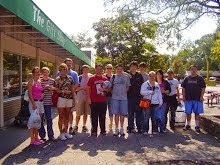
As the students left the bus and walked toward the restaurant, which sits in a quaint white house on a tree-covered lot, Thatcher once again showed her motherly side, asking the students to huddle for one of several pictures she took of them during the trip. After another reminder about manners, the students entered the restaurant.
Justin held the door for the female teachers and students.
"Ladies first," he told them. Then he looked at me, smiled broadly, pointed to his head and added, "Smart thinking, right?"
The students sat with Thatcher and her classroom assistants at a long table overlooking the lawn. Most carefully laid their cloth napkins on their laps. With each course, they tossed eager thank-yous at the waitress.
Thatcher said she picked Hollyhock Hill because of its family-style theme, thinking the students would learn a lesson from a meal spent passing bowls and plates to one another. She thinks her students should have as many opportunities as possible to see different parts of the city and to blend into their community.
Lessons learned about manners were on full display during lunch. When Tony, for instance, wanted sugar for his tea, he politely asked Justin to pass it to him, even though the sugar container was only a few inches away. Justin reached in front of his friend, picked up the sugar and handed it over.
"Thank you," Tony said.
Rodney, 18, then looked over, holding a salad bowl.
"Tony, would you like some salad?" he asked.
"Yes, I would like some."
An hour later -- after eating multiple helpings -- the students looked tired.
"Stick a fork in me. I'm done," Tony said.
"This was better than Subway," Justin added.
Nonetheless, they and the others soon began digging into their ice cream dessert. Just then, Hollyhock owner Jay Snyder stopped by.
Snyder has been reading about Manual in recent months, and when Thatcher called to see if she could get a discount for the class trip, the restaurant owner called back to say, "I'm a Manual fan," and that he'd love to help. On Tuesday, he walked up to Thatcher, leaned down and said lunch was on him.
Thatcher began to cry, saying the offer was too generous. The adults, she said, should at least pay their bill.
"That's OK," Snyder said. "If it wasn't for you, these kids wouldn't be doing as well as they are. What you do is very important."
There's no question about that.
Thatcher joined the Indianapolis Public Schools special-education department 36 years ago. She treats her students like members of her family, working through mind-boggling challenges to help them move toward independence.
She worked with Ashley for a year before the now-20-year-old student began to talk to her. Many of her students come from poverty, and some of their parents face severe disabilities of their own.
But Thatcher remains enthusiastic.
"I can't wait to get here in the morning," she said. "I love these students, and I really feel we can make a huge difference in the quality of their lives if we do our jobs."
As the group drove back to Manual, Thatcher and Rodney sang an old Nestle jingle. She and Justin laughed while talking about his opposition to the Colts. An 18-year-old girl with cerebral palsy rarely talks, but she nodded yes when I asked if she enjoyed her lunch. Then she went back to quietly watching her classmates.
The class is another reminder that there are no easy fixes to the problems facing Indianapolis schools. But despite all the failures, there are many inspiring stories. One that isn't often told is the tremendous work IPS does with students who have developmental disabilities. Many parents from outside the district send their children with severe disabilities to IPS because of people like Thatcher and because of the district's tradition of going to great lengths for these students.
"I've talked to parents who talk about their fights and struggles with school districts, but at IPS they've always been willing to work with us," said Rodney's mom, Patty Phelps.
She and her late husband adopted Rodney 12 years ago after he'd bounced through the foster care system. Rodney, who suffers from mental illness and is classified as moderately delayed, spent two years in institutions. He hears voices, his mom said.
When it comes to his teachers, Phelps said, "there has never been a mountain they weren't willing to climb. They have always worked to make sure these kids would have some kind of future that wasn't in a group home."
As the outing ended, Justin leaned over and gave his teacher a hug.
"Thank you, Mrs. Thatcher," he said.
"Ahh, you know how to get a brownie point," she said.
Then, as the students listened, she delivered another lesson.
"But you know what?" she said. "You all earned this. You come to school every day. You come prepared and well-groomed. And when you go out into the community, you are fine representatives of Manual High School."
Many challenges lie ahead for these students. But they have a much better chance because of Linda Thatcher and their time together at Manual.
The students, six of them ranging in age from 17 to 20 and all with severe developmental disabilities, walked smiling onto the school bus sitting in front of Manual High School.
Justin Cunningham, 19 years old and the most talkative of the bunch, hurried to the back of the bus, falling into a seat and chuckling. Some of his classmates joined him. However, the last two hesitated. They stood near the driver, unsure whether to sit in the front or back.
"Come on, slowpokes," Justin said, waving them back and bouncing in his seat. "Come sit back here. It's more fun back here with us."
The two hesitant classmates eventually agreed. And a minute later, as the bus pulled away, the students looked out the windows. Some waved goodbye to their school.
They were heading to Hollyhock Hill, a Far-Northside restaurant 14 miles away. For weeks, they'd heard from their teacher about the restaurant -- about its white tablecloths, attentive wait staff and family-style tradition.
"It's fancy," Tony Fugate, 18, assured me as we headed up College Avenue.
The six students in Linda Thatcher's special-needs class earned the field trip by collecting points for attending to such basics as coming to school bathed and with their hair combed, bringing their identification cards and remembering their umbrellas on days when it rained.
The underlying goal of the point system echoes the mission of Thatcher's class, which is to prepare the students to function independently as adults -- or at least as independently as possible.
With 11 a.m. approaching, the bus cruised past gritty Near-Northside neighborhoods and the colorful bars and stores of Broad Ripple. Along the way, the students talked about everything from the fried chicken and mashed potatoes they were going to eat to their thoughts about the Colts and Pacers.
Tony and Justin laughed as they discussed monster trucks and professional wrestling. A student named Ashley Anderson told me about her hope to someday have a job working with animals; Rodney Phelps, sitting next to her, said he would like to load boxes onto planes.
As they talked, Thatcher, their teacher, peppered her students with reminders of lessons she had spent weeks delivering.
"Remember what we talked about," she said. "There are other people eating here today, so we have to use our manners. We're representing Manual, so we're going to be polite and talk softly."
"You got it," Justin said.
He and the other students are part of Manual's community-based program, a compassionate and dynamic effort that treats students with severe disabilities ranging from autism to Down syndrome.
The students aren't on a track toward graduation. Most will never drive a car or be able to read. But they work toward a certificate of completion, and by the time they leave the school, which sometimes isn't until their early 20s, many have learned to shop, ride the bus and manage a checkbook.
At the same time, they are exposed every semester to multiple job sites, spending time each week working in places such as grocery stores, restaurants or an animal shelter. They are taught to show up on time, work hard and call if they can't make it one day.
"The ultimate goal," said Sally Standley, the program's jobs coach, "is for us to train them on the job and slowly fade away so they can go to work and do the job and get home -- and do all of that independently. It doesn't work out for everyone, but it is the ultimate goal."
Two of the students already have paid jobs washing dishes and doing other chores at a local diner. Others stack boxes and clean up at a hardware store. By the time they leave Manual, they all will have a resume.
But Tuesday, the focus was on lunch.
"Boy, this was a long ride," Tony said as the bus pulled into Hollyhock Hill's parking lot.
As the students left the bus and walked toward the restaurant, which sits in a quaint white house on a tree-covered lot, Thatcher once again showed her motherly side, asking the students to huddle for one of several pictures she took of them during the trip. After another reminder about manners, the students entered the restaurant.
Justin held the door for the female teachers and students.
"Ladies first," he told them. Then he looked at me, smiled broadly, pointed to his head and added, "Smart thinking, right?"
The students sat with Thatcher and her classroom assistants at a long table overlooking the lawn. Most carefully laid their cloth napkins on their laps. With each course, they tossed eager thank-yous at the waitress.
Thatcher said she picked Hollyhock Hill because of its family-style theme, thinking the students would learn a lesson from a meal spent passing bowls and plates to one another. She thinks her students should have as many opportunities as possible to see different parts of the city and to blend into their community.
Lessons learned about manners were on full display during lunch. When Tony, for instance, wanted sugar for his tea, he politely asked Justin to pass it to him, even though the sugar container was only a few inches away. Justin reached in front of his friend, picked up the sugar and handed it over.
"Thank you," Tony said.
Rodney, 18, then looked over, holding a salad bowl.
"Tony, would you like some salad?" he asked.
"Yes, I would like some."
An hour later -- after eating multiple helpings -- the students looked tired.
"Stick a fork in me. I'm done," Tony said.
"This was better than Subway," Justin added.
Nonetheless, they and the others soon began digging into their ice cream dessert. Just then, Hollyhock owner Jay Snyder stopped by.
Snyder has been reading about Manual in recent months, and when Thatcher called to see if she could get a discount for the class trip, the restaurant owner called back to say, "I'm a Manual fan," and that he'd love to help. On Tuesday, he walked up to Thatcher, leaned down and said lunch was on him.
Thatcher began to cry, saying the offer was too generous. The adults, she said, should at least pay their bill.
"That's OK," Snyder said. "If it wasn't for you, these kids wouldn't be doing as well as they are. What you do is very important."
There's no question about that.
Thatcher joined the Indianapolis Public Schools special-education department 36 years ago. She treats her students like members of her family, working through mind-boggling challenges to help them move toward independence.
She worked with Ashley for a year before the now-20-year-old student began to talk to her. Many of her students come from poverty, and some of their parents face severe disabilities of their own.
But Thatcher remains enthusiastic.
"I can't wait to get here in the morning," she said. "I love these students, and I really feel we can make a huge difference in the quality of their lives if we do our jobs."
As the group drove back to Manual, Thatcher and Rodney sang an old Nestle jingle. She and Justin laughed while talking about his opposition to the Colts. An 18-year-old girl with cerebral palsy rarely talks, but she nodded yes when I asked if she enjoyed her lunch. Then she went back to quietly watching her classmates.
The class is another reminder that there are no easy fixes to the problems facing Indianapolis schools. But despite all the failures, there are many inspiring stories. One that isn't often told is the tremendous work IPS does with students who have developmental disabilities. Many parents from outside the district send their children with severe disabilities to IPS because of people like Thatcher and because of the district's tradition of going to great lengths for these students.
"I've talked to parents who talk about their fights and struggles with school districts, but at IPS they've always been willing to work with us," said Rodney's mom, Patty Phelps.
She and her late husband adopted Rodney 12 years ago after he'd bounced through the foster care system. Rodney, who suffers from mental illness and is classified as moderately delayed, spent two years in institutions. He hears voices, his mom said.
When it comes to his teachers, Phelps said, "there has never been a mountain they weren't willing to climb. They have always worked to make sure these kids would have some kind of future that wasn't in a group home."
As the outing ended, Justin leaned over and gave his teacher a hug.
"Thank you, Mrs. Thatcher," he said.
"Ahh, you know how to get a brownie point," she said.
Then, as the students listened, she delivered another lesson.
"But you know what?" she said. "You all earned this. You come to school every day. You come prepared and well-groomed. And when you go out into the community, you are fine representatives of Manual High School."
Many challenges lie ahead for these students. But they have a much better chance because of Linda Thatcher and their time together at Manual.
Article on Community Outings
http://www.news-sentinel.com/apps/pbcs.dll/article?AID=/20100120/NEWS/1200320
Life lessons; students with special needs go grocery shopping
By Ellie Bogue of The News-Sentinel
Students with special needs at Holland Elementary are learning, through experience, how to shop for food and behave in a grocery store.
Surrounded by five students, special-needs teacher Lisa Andreas holds up a picture of an orange. “Orange,” she said, pointing to the card and then making the sign for the word.
“Let's find an orange,” she said, leading the children through the produce area at the Scott's grocery store at Stellhorn Village. Eventually they found an orange. Repeating the process, they found a banana and broccoli.
Holland special-needs teacher Kathy Weibel organized the new program.
“A lot of our parents would like to take their children with them to the grocery store, but their kids don't know how to behave in that setting,” said Weibel. “Special-needs students do these sorts of things in middle and high school, so this is helping to prepare them for that, too.”
They started by taking the students bowling. From there they progressed to the public library, and now they are taking on a crowded grocery store.
Weibel said it is extremely important for students to learn early on how to behave in public places. In addition to basic behavior skills, the children also learn how to identify foods, shop and make healthy choices. The foods they buy will be used in the classroom for a nutritious snack.
First through fifth graders are participating in the new program, and each class has one field trip a week. Students took their first field trip to the store last week and will continue for six to eight weeks.
Life lessons; students with special needs go grocery shopping
By Ellie Bogue of The News-Sentinel
Students with special needs at Holland Elementary are learning, through experience, how to shop for food and behave in a grocery store.
Surrounded by five students, special-needs teacher Lisa Andreas holds up a picture of an orange. “Orange,” she said, pointing to the card and then making the sign for the word.
“Let's find an orange,” she said, leading the children through the produce area at the Scott's grocery store at Stellhorn Village. Eventually they found an orange. Repeating the process, they found a banana and broccoli.
Holland special-needs teacher Kathy Weibel organized the new program.
“A lot of our parents would like to take their children with them to the grocery store, but their kids don't know how to behave in that setting,” said Weibel. “Special-needs students do these sorts of things in middle and high school, so this is helping to prepare them for that, too.”
They started by taking the students bowling. From there they progressed to the public library, and now they are taking on a crowded grocery store.
Weibel said it is extremely important for students to learn early on how to behave in public places. In addition to basic behavior skills, the children also learn how to identify foods, shop and make healthy choices. The foods they buy will be used in the classroom for a nutritious snack.
First through fifth graders are participating in the new program, and each class has one field trip a week. Students took their first field trip to the store last week and will continue for six to eight weeks.
Dog Biscuit Business-My class does this!
http://www.detnews.com/article/20100126/SCHOOLS/1260360/1026/Autism-students-find-success-with--Puppy-Love--treats
Students find success with 'Puppy Love' treats Jennifer Chambers
By Jennifer Chambers
The Detroit News
Birmingham — The enticing aroma of baking biscuits envelopes the room, but workers at a nearby table remain focused on the task at hand: making more biscuits.
There's Alex, who kneads the dough standing up, pushing the light-brown mixture of flour and oil around the bowl. Josh sits, grasping the handles of a rolling pin, transforming a lump into a pancake. And finally, Evan pushes a dog-bone shaped biscuit cutter deep into the dough, pulling out tiny shapes for baking.
The well-tuned trio is part of a student-run business at Seaholm High School designed for students with autism.
Seaholm teacher Debra Lloyd started the program last year to help the teens, who range in age from 14 to 18, with their vocational training for life in the outside world.
Their product is "Puppy Love" biscuits and natural treats for canines in peanut butter and beef flavors. And business for the teen entrepreneurs just took off.
Last month, online retailer Fidodogtreats.com, a Michigan-based company, announced it would include a free sample of the treats baked by the students with any order.
In the classroom, with teacher supervision, students are in charge of following a recipe, preparing and cutting the dough along with weighing the biscuits, packaging and record-keeping.
The goal of the program is to get the kids involved now in the world of work so they can make the transition into the work force once they leave school. The school district pays for the program, and all profits are reinvested.
"I wanted to start a business that my students could participate in that involved a lot of kids with a range of ability levels. Some kids work hand over hand and some are totally independent," Lloyd said.
Autism is a developmental disorder affecting 1 in 110 U.S. children. It makes communication and social interaction difficult, according to the advocacy group Autism Speaks.
Lessons in money-management, accounting and self-achievement are worked in while teachers work with students on fine motor skills, their ability to begin and finish a task and be a part of meaningful work, teacher Madelyn Phillips said.
Employment rates for adults with autism are low: 6 percent, according to the Web site autismatwork.org. Yet high-functioning autistic adults can offer employers sought-after skills, Phillips said, such as intense attention to detail, a single-minded focus and a willingness to work on something until perfection.
At Seaholm, there are other micro-businesses in the autism program. Some students make beaded jewelry, from bracelets to necklaces to key chains. Other craft greeting cards, and others sew gift bags from donated cloth.
"It teaches them to work as a group," Lloyd said. "It gives them stamina. They sometimes can only work a minute at a time and take a break. We work to expand that."
Initially, teachers were buying the biscuits for their dogs or as gifts. Then Lloyd got the idea to sell them and worked with the owner of Premier Pet Supply in Beverly Hills, which carries them in the store.
The owners of Fidodogtreats.com, which has offices in Huntington Woods and Jackson, called the school and said they wanted to purchase the students' product and include them in their orders as a community service.
Company co-owner L. Hope Hesano has a brother with Asperger's syndrome, which is a form of autism. He said the first sample of Puppy Love treats was mailed last week with an order.
"So many online companies have no connection to the local community and we wanted to make sure we had one," Hesano said.
Buy a biscuit
Products created by students in Seaholm High School's autism program can be purchased at the school by calling (248) 203-3844.
jchambers@detnews.com
My thoughts:
I have done this activity in the past. We made dog biscuits and sold them at Christmas time. We called them Santa Paws. People were always very excited to order them every year. It provided a great deal of work skills and social skills.
Students find success with 'Puppy Love' treats Jennifer Chambers
By Jennifer Chambers
The Detroit News
Birmingham — The enticing aroma of baking biscuits envelopes the room, but workers at a nearby table remain focused on the task at hand: making more biscuits.
There's Alex, who kneads the dough standing up, pushing the light-brown mixture of flour and oil around the bowl. Josh sits, grasping the handles of a rolling pin, transforming a lump into a pancake. And finally, Evan pushes a dog-bone shaped biscuit cutter deep into the dough, pulling out tiny shapes for baking.
The well-tuned trio is part of a student-run business at Seaholm High School designed for students with autism.
Seaholm teacher Debra Lloyd started the program last year to help the teens, who range in age from 14 to 18, with their vocational training for life in the outside world.
Their product is "Puppy Love" biscuits and natural treats for canines in peanut butter and beef flavors. And business for the teen entrepreneurs just took off.
Last month, online retailer Fidodogtreats.com, a Michigan-based company, announced it would include a free sample of the treats baked by the students with any order.
In the classroom, with teacher supervision, students are in charge of following a recipe, preparing and cutting the dough along with weighing the biscuits, packaging and record-keeping.
The goal of the program is to get the kids involved now in the world of work so they can make the transition into the work force once they leave school. The school district pays for the program, and all profits are reinvested.
"I wanted to start a business that my students could participate in that involved a lot of kids with a range of ability levels. Some kids work hand over hand and some are totally independent," Lloyd said.
Autism is a developmental disorder affecting 1 in 110 U.S. children. It makes communication and social interaction difficult, according to the advocacy group Autism Speaks.
Lessons in money-management, accounting and self-achievement are worked in while teachers work with students on fine motor skills, their ability to begin and finish a task and be a part of meaningful work, teacher Madelyn Phillips said.
Employment rates for adults with autism are low: 6 percent, according to the Web site autismatwork.org. Yet high-functioning autistic adults can offer employers sought-after skills, Phillips said, such as intense attention to detail, a single-minded focus and a willingness to work on something until perfection.
At Seaholm, there are other micro-businesses in the autism program. Some students make beaded jewelry, from bracelets to necklaces to key chains. Other craft greeting cards, and others sew gift bags from donated cloth.
"It teaches them to work as a group," Lloyd said. "It gives them stamina. They sometimes can only work a minute at a time and take a break. We work to expand that."
Initially, teachers were buying the biscuits for their dogs or as gifts. Then Lloyd got the idea to sell them and worked with the owner of Premier Pet Supply in Beverly Hills, which carries them in the store.
The owners of Fidodogtreats.com, which has offices in Huntington Woods and Jackson, called the school and said they wanted to purchase the students' product and include them in their orders as a community service.
Company co-owner L. Hope Hesano has a brother with Asperger's syndrome, which is a form of autism. He said the first sample of Puppy Love treats was mailed last week with an order.
"So many online companies have no connection to the local community and we wanted to make sure we had one," Hesano said.
Buy a biscuit
Products created by students in Seaholm High School's autism program can be purchased at the school by calling (248) 203-3844.
jchambers@detnews.com
My thoughts:
I have done this activity in the past. We made dog biscuits and sold them at Christmas time. We called them Santa Paws. People were always very excited to order them every year. It provided a great deal of work skills and social skills.
Work Experience for Haiti Relief
http://www.walb.com/Global/story.asp?S=11884988
Special needs students package meals for Haiti
By LeiLani Golden - bio email
CAIRO, GA (WALB) - Some special needs students from Thomas County Central High School are helping to feed the Haiti earthquake survivors.
They spent the day putting together pre-packaged meals as part of the Kids Against Hunger program based out of Cairo.
Dominic Reddick saw the images of Haiti after the devastating earthquake and knew something needed to be done.
"Earthquake has been erupted in Haiti and they need some kind of help," said an emotional Reddick.
So help is what these special needs students are giving. They're packaging non-perishable meals to send to a country so desperately in need.
"Wherever it goes in the world it is nutritionally sound," said co-founder and director of Kids Against Hunger Cairo, Anne Horne. "It doesn't just fill the hollow hole, it rebuilds their immune system."
But the joy of lending a helping hand isn't the only lesson these kids are learning.
"Very good job skill training for these kids to get opportunities to work in the community when they graduate," said their teacher, Betty Worthington.
Each student has a job at one of the three tables on the assembly line.
"Kids put the labels on the bags," continued Worthington. "Then they go to the assembly line. And the first step is the yellow protein, then our vegetables, then our soy and then we have our rice. Then we take the bags and they are weighed and vacuumed sealed."
The last step of the assembly process happens to also be my favorite, pounding the bags to make them flat for the boxes.
The boxes contains 36 bags of food which feed six people each. That means one box, which costs only $55, can feed 216 people.
"Last Saturday we had a group that packaged 50,000 meals and they are already in Haiti as we speak," said a proud Horne.
The special needs students are proud to be a part of the Haitian relief.
"I'll do whatever I can to make Haiti feel better," exclaimed Reddick.
And these kids are doing just that, making Haiti feel better with every completed bag of food.
If you'd like to sponsor a Kids Against Hunger meal packaging event, you can call their office at (229) 377-0968 or visit their web site at http://www.kahcairo.org/.
My thoughts:
What a great way to incorporate functional skills into giving back! Such a valuable opportunity this educator jumped on! I am definitely going to keep this sort of activity in mind for future reference. I think it is important for my students to give back. I know their own lives present many challenges, but I think learning to give back, especially being able to do it while working on other skills, is extremely valuable.
Special needs students package meals for Haiti
By LeiLani Golden - bio email
CAIRO, GA (WALB) - Some special needs students from Thomas County Central High School are helping to feed the Haiti earthquake survivors.
They spent the day putting together pre-packaged meals as part of the Kids Against Hunger program based out of Cairo.
Dominic Reddick saw the images of Haiti after the devastating earthquake and knew something needed to be done.
"Earthquake has been erupted in Haiti and they need some kind of help," said an emotional Reddick.
So help is what these special needs students are giving. They're packaging non-perishable meals to send to a country so desperately in need.
"Wherever it goes in the world it is nutritionally sound," said co-founder and director of Kids Against Hunger Cairo, Anne Horne. "It doesn't just fill the hollow hole, it rebuilds their immune system."
But the joy of lending a helping hand isn't the only lesson these kids are learning.
"Very good job skill training for these kids to get opportunities to work in the community when they graduate," said their teacher, Betty Worthington.
Each student has a job at one of the three tables on the assembly line.
"Kids put the labels on the bags," continued Worthington. "Then they go to the assembly line. And the first step is the yellow protein, then our vegetables, then our soy and then we have our rice. Then we take the bags and they are weighed and vacuumed sealed."
The last step of the assembly process happens to also be my favorite, pounding the bags to make them flat for the boxes.
The boxes contains 36 bags of food which feed six people each. That means one box, which costs only $55, can feed 216 people.
"Last Saturday we had a group that packaged 50,000 meals and they are already in Haiti as we speak," said a proud Horne.
The special needs students are proud to be a part of the Haitian relief.
"I'll do whatever I can to make Haiti feel better," exclaimed Reddick.
And these kids are doing just that, making Haiti feel better with every completed bag of food.
If you'd like to sponsor a Kids Against Hunger meal packaging event, you can call their office at (229) 377-0968 or visit their web site at http://www.kahcairo.org/.
My thoughts:
What a great way to incorporate functional skills into giving back! Such a valuable opportunity this educator jumped on! I am definitely going to keep this sort of activity in mind for future reference. I think it is important for my students to give back. I know their own lives present many challenges, but I think learning to give back, especially being able to do it while working on other skills, is extremely valuable.
Subscribe to:
Comments (Atom)