http://www.indystar.com/article/20100117/NEWS08/1170380/Tully-Meeting-special-needs-is-her-specialty
The students, six of them ranging in age from 17 to 20 and all with severe developmental disabilities, walked smiling onto the school bus sitting in front of Manual High School.
Justin Cunningham, 19 years old and the most talkative of the bunch, hurried to the back of the bus, falling into a seat and chuckling. Some of his classmates joined him. However, the last two hesitated. They stood near the driver, unsure whether to sit in the front or back.
"Come on, slowpokes," Justin said, waving them back and bouncing in his seat. "Come sit back here. It's more fun back here with us."
The two hesitant classmates eventually agreed. And a minute later, as the bus pulled away, the students looked out the windows. Some waved goodbye to their school.
They were heading to Hollyhock Hill, a Far-Northside restaurant 14 miles away. For weeks, they'd heard from their teacher about the restaurant -- about its white tablecloths, attentive wait staff and family-style tradition.
"It's fancy," Tony Fugate, 18, assured me as we headed up College Avenue.
The six students in Linda Thatcher's special-needs class earned the field trip by collecting points for attending to such basics as coming to school bathed and with their hair combed, bringing their identification cards and remembering their umbrellas on days when it rained.
The underlying goal of the point system echoes the mission of Thatcher's class, which is to prepare the students to function independently as adults -- or at least as independently as possible.
With 11 a.m. approaching, the bus cruised past gritty Near-Northside neighborhoods and the colorful bars and stores of Broad Ripple. Along the way, the students talked about everything from the fried chicken and mashed potatoes they were going to eat to their thoughts about the Colts and Pacers.
Tony and Justin laughed as they discussed monster trucks and professional wrestling. A student named Ashley Anderson told me about her hope to someday have a job working with animals; Rodney Phelps, sitting next to her, said he would like to load boxes onto planes.
As they talked, Thatcher, their teacher, peppered her students with reminders of lessons she had spent weeks delivering.
"Remember what we talked about," she said. "There are other people eating here today, so we have to use our manners. We're representing Manual, so we're going to be polite and talk softly."
"You got it," Justin said.
He and the other students are part of Manual's community-based program, a compassionate and dynamic effort that treats students with severe disabilities ranging from autism to Down syndrome.
The students aren't on a track toward graduation. Most will never drive a car or be able to read. But they work toward a certificate of completion, and by the time they leave the school, which sometimes isn't until their early 20s, many have learned to shop, ride the bus and manage a checkbook.
At the same time, they are exposed every semester to multiple job sites, spending time each week working in places such as grocery stores, restaurants or an animal shelter. They are taught to show up on time, work hard and call if they can't make it one day.
"The ultimate goal," said Sally Standley, the program's jobs coach, "is for us to train them on the job and slowly fade away so they can go to work and do the job and get home -- and do all of that independently. It doesn't work out for everyone, but it is the ultimate goal."
Two of the students already have paid jobs washing dishes and doing other chores at a local diner. Others stack boxes and clean up at a hardware store. By the time they leave Manual, they all will have a resume.
But Tuesday, the focus was on lunch.
"Boy, this was a long ride," Tony said as the bus pulled into Hollyhock Hill's parking lot.
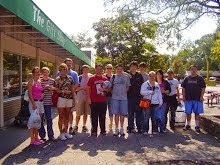
As the students left the bus and walked toward the restaurant, which sits in a quaint white house on a tree-covered lot, Thatcher once again showed her motherly side, asking the students to huddle for one of several pictures she took of them during the trip. After another reminder about manners, the students entered the restaurant.
Justin held the door for the female teachers and students.
"Ladies first," he told them. Then he looked at me, smiled broadly, pointed to his head and added, "Smart thinking, right?"
The students sat with Thatcher and her classroom assistants at a long table overlooking the lawn. Most carefully laid their cloth napkins on their laps. With each course, they tossed eager thank-yous at the waitress.
Thatcher said she picked Hollyhock Hill because of its family-style theme, thinking the students would learn a lesson from a meal spent passing bowls and plates to one another. She thinks her students should have as many opportunities as possible to see different parts of the city and to blend into their community.
Lessons learned about manners were on full display during lunch. When Tony, for instance, wanted sugar for his tea, he politely asked Justin to pass it to him, even though the sugar container was only a few inches away. Justin reached in front of his friend, picked up the sugar and handed it over.
"Thank you," Tony said.
Rodney, 18, then looked over, holding a salad bowl.
"Tony, would you like some salad?" he asked.
"Yes, I would like some."
An hour later -- after eating multiple helpings -- the students looked tired.
"Stick a fork in me. I'm done," Tony said.
"This was better than Subway," Justin added.
Nonetheless, they and the others soon began digging into their ice cream dessert. Just then, Hollyhock owner Jay Snyder stopped by.
Snyder has been reading about Manual in recent months, and when Thatcher called to see if she could get a discount for the class trip, the restaurant owner called back to say, "I'm a Manual fan," and that he'd love to help. On Tuesday, he walked up to Thatcher, leaned down and said lunch was on him.
Thatcher began to cry, saying the offer was too generous. The adults, she said, should at least pay their bill.
"That's OK," Snyder said. "If it wasn't for you, these kids wouldn't be doing as well as they are. What you do is very important."
There's no question about that.
Thatcher joined the Indianapolis Public Schools special-education department 36 years ago. She treats her students like members of her family, working through mind-boggling challenges to help them move toward independence.
She worked with Ashley for a year before the now-20-year-old student began to talk to her. Many of her students come from poverty, and some of their parents face severe disabilities of their own.
But Thatcher remains enthusiastic.
"I can't wait to get here in the morning," she said. "I love these students, and I really feel we can make a huge difference in the quality of their lives if we do our jobs."
As the group drove back to Manual, Thatcher and Rodney sang an old Nestle jingle. She and Justin laughed while talking about his opposition to the Colts. An 18-year-old girl with cerebral palsy rarely talks, but she nodded yes when I asked if she enjoyed her lunch. Then she went back to quietly watching her classmates.
The class is another reminder that there are no easy fixes to the problems facing Indianapolis schools. But despite all the failures, there are many inspiring stories. One that isn't often told is the tremendous work IPS does with students who have developmental disabilities. Many parents from outside the district send their children with severe disabilities to IPS because of people like Thatcher and because of the district's tradition of going to great lengths for these students.
"I've talked to parents who talk about their fights and struggles with school districts, but at IPS they've always been willing to work with us," said Rodney's mom, Patty Phelps.
She and her late husband adopted Rodney 12 years ago after he'd bounced through the foster care system. Rodney, who suffers from mental illness and is classified as moderately delayed, spent two years in institutions. He hears voices, his mom said.
When it comes to his teachers, Phelps said, "there has never been a mountain they weren't willing to climb. They have always worked to make sure these kids would have some kind of future that wasn't in a group home."
As the outing ended, Justin leaned over and gave his teacher a hug.
"Thank you, Mrs. Thatcher," he said.
"Ahh, you know how to get a brownie point," she said.
Then, as the students listened, she delivered another lesson.
"But you know what?" she said. "You all earned this. You come to school every day. You come prepared and well-groomed. And when you go out into the community, you are fine representatives of Manual High School."
Many challenges lie ahead for these students. But they have a much better chance because of Linda Thatcher and their time together at Manual.

Subscribe to:
Post Comments (Atom)
No comments:
Post a Comment