http://www.news-leader.com/article/20100623/NEWS01/6230411/Blind-students-get-a-taste-of-college-life-at-Drury
Blind students get a taste of college life at Drury
Her first night in a Drury dorm, Kelcey Schlichting exclaimed, "I'm going to Drury," laughed Hayley Scholes of Rogers, Ark.
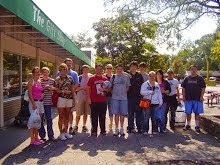
Schlichting, a freshman at Carthage High School, was part of a pilot program at Drury this week. The university hosted blind and visually impaired students on campus and taught them about college life -- how to live in a dorm and navigate campus, disability services, and useful technologies.
"You help kids coming from different backgrounds understand what the possibilities could be, what the dream could be. If you work hard, you can go here and we want you here," says Chris Craig, director of the Drury School of Education and Child Development.
The program is part of an over-arching mission at Drury, says Craig. With a grant from the Greene County Developmental Disabilities Board, the school is in the initial stages of launching the Drury University Children's Center for the Visually Impaired.
The idea is to get students prepared for kindergarten and then prepared for the transition from high school to college, said Calvin Churchwell, a certified orientation mobility specialist.
If blind students don't get what they need, the likelihood of them dropping out of college is higher, he says.
"If we can get them ready, they can go anywhere (to any college) and be successful," Churchwell says.
This is important because unemployment among the blind is about 70 percent, said Scott Truax, CareerConnect program manager for the American Foundation for the Blind in New York.
New skills
Making the transition to college is hard enough, but imagine doing it when you can't see, says Truax.
In public schools, blind students have teachers who are trained to teach them.
"In college, that person is no longer there," Truax says.
They have to learn their away around campus, and how to order books that can be downloaded electronically and turned from text to speech.
This week, they learned to use an adapted form of Blackboard, a standard tool on many college campuses.
They are learning to be independent travelers, says Angela Meadors, a Missouri State University student who is planning to become an orientation mobility specialist and was working with the students as part of her internship.
Drury graduate education students and students from other colleges worked with the group.
Another skill is finding the balance of independence: making them comfortable asking for help, without asking too often, Meadors says.
Then, there's social interaction.
"I think it's important to understand the whole breadth of what college life is all about," Craig says.
One session included dealing with roommates.
Roommates might not realize that if they leave something on the floor, their blind roommate could trip and fall, says Schlichting, who said she found the program very useful.
Technology
On Tuesday, representatives of NanoPac Inc., a company in Tulsa, Okla., that specializes in assisted technology, showed students how to use a barcode scanner.
The scanner has 1 million barcodes in its database and you can add barcodes, says Dave Wilkinson, a product specialist.
It's not only useful when grocery shopping, but people can color-code their clothes and make up a barcode so they can identify their clothes, he explained.
Freddy Marcos of Anderson held the scanner, and slowly rotated a can of tuna until the scanner found the barcode. The scanner said "Bumble Bee Tuna," and Marcos erupted in a smile.
"It's a really nice technology," Marcos says.
There were portable GPS devices with braille readers, so users could find the closest Andy's Frozen Custard.
For low vision students, there was a magnifying glass powerful enough to read something on the board.
Some of the technology is not new, but like other technology, it's smaller and more user-friendly, Wilkinson said.
Future
The students ranged in age from freshmen in high school to a community college student.
It was free to the students, made possible with funds from Rehab Services for the Blind and a grant from the Musgrave Foundation and from Drury's Office of Diversity Support Services.
This year's group included students from Missouri and Arkansas, but organizers hope to include Oklahoma and Kansas next year.
Ryan Wood, a senior at Joplin High School, liked the social aspect as much as the technology.
"I don't get out much, so I enjoy being here. It is useful," Wood.
He compared the experience to being at camp.
The best part was making new friends, said Marcos.
Hayley Scholes, who plans to attend the University of Arkansas this fall, says this week made her feel more prepared for college.
"The program is really awesome," Scholes says.
Monday, June 28, 2010

Wednesday, June 23, 2010
Job Skills Gained Through Internships
http://www2.timesdispatch.com/news/2009/jun/07/b4-ches07_20090606-201202-ar-41094/
Chesterfield students with disabilities find jobs through program
All seven members of the first graduating class of Project SEARCH Chesterfield have jobs.
Such is the purpose of the program, which provides education and opportunities for high school students with intellectual disabilities.
In a partnership between Chesterfield Employment Services and the county school system, students worked as interns throughout the year in various county departments to build their résumés and gain work experience.
"It gives them the opportunity to build employability skills, and it makes it easier for me to go out and look for a job for them," said Frances Schiavone, employment supervisor for Chesterfield Employment Services.
Stephanie Hancock, the Project SEARCH teacher, worked with the students in the morning to help them work toward independent living, holding mock job interviews and other skills before heading off to their internships in the afternoon.
"In school, their teachers are always there to support them every single day, and it's a big step for them to graduate," she said. "The amazing thing about this program is that it's a seamless transition from school to the community and to employment. It's all about choice. And the students really have their voice and their choice about their future."
Chesterfield is the first locality in Virginia to replicate the Project SEARCH model, which originated in Cincinnati 12 years ago.
"It was great -- interesting and fun," said April Moss, a Meadowbrook High School graduate who is working at T.J. Maxx after interning for the Chesterfield Parks and Recreation Department and others. She processes clothes as they arrive and manages the fitting room.
"I like making money," she said, adding that she hopes to eventually attend college and get a driver's license.
David Yancey, a Matoaca High School graduate, was able to parlay his internship installing county emergency vehicle radios into a job at Wal-Mart in the tire and lube department.
"It feels good," he said.
Three of this year's graduates will work for Wal-Mart, two for Virginia State University, one for T.J. Maxx and one for Community Christian Childcare Center.
Nine students are enrolled in next year's program.
Chesterfield students with disabilities find jobs through program
All seven members of the first graduating class of Project SEARCH Chesterfield have jobs.
Such is the purpose of the program, which provides education and opportunities for high school students with intellectual disabilities.
In a partnership between Chesterfield Employment Services and the county school system, students worked as interns throughout the year in various county departments to build their résumés and gain work experience.
"It gives them the opportunity to build employability skills, and it makes it easier for me to go out and look for a job for them," said Frances Schiavone, employment supervisor for Chesterfield Employment Services.
Stephanie Hancock, the Project SEARCH teacher, worked with the students in the morning to help them work toward independent living, holding mock job interviews and other skills before heading off to their internships in the afternoon.
"In school, their teachers are always there to support them every single day, and it's a big step for them to graduate," she said. "The amazing thing about this program is that it's a seamless transition from school to the community and to employment. It's all about choice. And the students really have their voice and their choice about their future."
Chesterfield is the first locality in Virginia to replicate the Project SEARCH model, which originated in Cincinnati 12 years ago.
"It was great -- interesting and fun," said April Moss, a Meadowbrook High School graduate who is working at T.J. Maxx after interning for the Chesterfield Parks and Recreation Department and others. She processes clothes as they arrive and manages the fitting room.
"I like making money," she said, adding that she hopes to eventually attend college and get a driver's license.
David Yancey, a Matoaca High School graduate, was able to parlay his internship installing county emergency vehicle radios into a job at Wal-Mart in the tire and lube department.
"It feels good," he said.
Three of this year's graduates will work for Wal-Mart, two for Virginia State University, one for T.J. Maxx and one for Community Christian Childcare Center.
Nine students are enrolled in next year's program.
Ontario Camp Teaches Independence
http://www.thestar.com/freshairfund/article/823385--camp-helps-kids-discover-their-abilities
Camp helps kids discover their abilities
Growing pains.
They’re hard on many kids. They can be harder on those with disabilities.
Last year was among the toughest for Paul Manieri. A growth spurt twisted his feet and legs. It took a round of surgeries followed by three months in a rehabilitation hospital for the teen to get back on his feet. It’s likely the 17-year-old, who was born with cerebral palsy, will face more operations in the coming months — but not before he goes to camp.
A seasoned camp veteran, he’s spent many blissful days in the great outdoors. It wouldn’t be summer without it.
The Ontario March of Dimes Conductive Camp was a new adventure last year.
“It was very nice and a great experience,” said Manieri. “I learned a lot of things.”
Like any kid who’s gone through this summer rite of passage, he’s gained some invaluable skills — stuff you can’t learn in books, such as when the s’mores are done to perfection, how loud he can sing camp songs without losing his voice, and how easy it is to make friends.
“I learned a lot about myself,” said the easygoing student at Michael Power High School in Etobicoke, who’s raring to go back. Each camp experience has reinforced what he already knew: “I learned that you can do anything you put your mind to and I learned not to let your disability hold you back,” he said.
As if anything could stop this active teen and avid sports fan from doing what he loves, including playing a mean game of sledge hockey. At camp, it’s no-holds-barred for Manieri, who can’t wait to get back into a canoe and paddle out onto the lake.
“I’m going back to camp this year and am looking forward to having a good time and being with my friends,” he said.
The Ontario March of Dimes camp, at the YMCA’s Geneva Park in Orillia, is the highlight of a three-week in-class conductive education program held in Toronto. It focuses on kids 15 to 19 and teaches them to be more independent while working on mobility skills.
“They apply what they learn in class at camp while having a lot of fun,” said Mhairi Watson, senior conductor.
Just as important, they discover the only barriers are those they put on themselves. And though help is always close by, most kids would rather do it themselves at camp. That’s what happens when you start to grow up.
“That’s fabulous to see,” said Watson, noting that even small steps, such as taking their dirty dishes back to the kitchen for washing, are a move in the right direction.
“For many kids at camp, it’s their first time away from home,” she said. In some cases, parents are very protective. “Even though children can do a lot for themselves, some aren’t given the opportunity.”
And there’s no better place than camp to push boundaries. It’s where kids can just be themselves, said Paul’s mom, Anna Maria Manieri. “It’s absolutely wonderful.”
Camp helps kids discover their abilities
Growing pains.
They’re hard on many kids. They can be harder on those with disabilities.
Last year was among the toughest for Paul Manieri. A growth spurt twisted his feet and legs. It took a round of surgeries followed by three months in a rehabilitation hospital for the teen to get back on his feet. It’s likely the 17-year-old, who was born with cerebral palsy, will face more operations in the coming months — but not before he goes to camp.
A seasoned camp veteran, he’s spent many blissful days in the great outdoors. It wouldn’t be summer without it.
The Ontario March of Dimes Conductive Camp was a new adventure last year.
“It was very nice and a great experience,” said Manieri. “I learned a lot of things.”
Like any kid who’s gone through this summer rite of passage, he’s gained some invaluable skills — stuff you can’t learn in books, such as when the s’mores are done to perfection, how loud he can sing camp songs without losing his voice, and how easy it is to make friends.
“I learned a lot about myself,” said the easygoing student at Michael Power High School in Etobicoke, who’s raring to go back. Each camp experience has reinforced what he already knew: “I learned that you can do anything you put your mind to and I learned not to let your disability hold you back,” he said.
As if anything could stop this active teen and avid sports fan from doing what he loves, including playing a mean game of sledge hockey. At camp, it’s no-holds-barred for Manieri, who can’t wait to get back into a canoe and paddle out onto the lake.
“I’m going back to camp this year and am looking forward to having a good time and being with my friends,” he said.
The Ontario March of Dimes camp, at the YMCA’s Geneva Park in Orillia, is the highlight of a three-week in-class conductive education program held in Toronto. It focuses on kids 15 to 19 and teaches them to be more independent while working on mobility skills.
“They apply what they learn in class at camp while having a lot of fun,” said Mhairi Watson, senior conductor.
Just as important, they discover the only barriers are those they put on themselves. And though help is always close by, most kids would rather do it themselves at camp. That’s what happens when you start to grow up.
“That’s fabulous to see,” said Watson, noting that even small steps, such as taking their dirty dishes back to the kitchen for washing, are a move in the right direction.
“For many kids at camp, it’s their first time away from home,” she said. In some cases, parents are very protective. “Even though children can do a lot for themselves, some aren’t given the opportunity.”
And there’s no better place than camp to push boundaries. It’s where kids can just be themselves, said Paul’s mom, Anna Maria Manieri. “It’s absolutely wonderful.”
Students with Autism Learn Work Skills and Social Skills
http://www.npr.org/templates/story/story.php?storyId=127831876
Students With Autism Learn How To Succeed At Work
People with autism often have a hard time finding and keeping jobs, so more schools are creating programs to help students with autism get prepared for the workplace. One of those programs helped change the life of Kevin Sargeant.
Just a few years ago, when Kevin was still in elementary school, things weren't looking good for him. He was antisocial, desperately unhappy and doing poorly in school.
"He was pretty much a broken child, the way I would describe it," says his mother, Jennifer Sargeant. "We really didn't see that he would be able to go to college, even have a job. That just wasn't in our future for him."
Kevin, now 18, says his autism left him unable to handle the social interactions at school.
"I'd always have my head in my jacket and my hood up, and I wouldn't want to talk to anybody just because I didn't know what they were going to do," he says. "I'd always play with my Legos and, you know, I was rude all the time, and I had fits of anger and stuff like that — just because I didn't understand people."
The school had classified Kevin as ADHD. But his mother took him for more extensive testing and found out he had autism. That meant Kevin was eligible for special services. His mother fought hard to get him into a school program at the Kennedy Krieger Institute in Baltimore, which specializes in kids with autism and other disorders or disabilities.
Kennedy Krieger High School is also one of a growing number of schools that have created special programs to prepare kids with autism and other disabilities for the workplace.
Turnaround
Six years later, Kevin is a lot more social. He's a good student. And he's working — as an intern in the IT department at the Parks & People Foundation. Kevin says computers are a good fit for him.
"When you click something, something happens, and it happens for an exact reason," he says. "And, you know, there's no guesswork. With people, sometimes I'm not able to read facial expressions or take nonverbal cues."
But Kevin needed a lot of help turning his love for computers into a marketable skill.
The process began several years ago, when Kevin was required to choose one of five industries to focus on as part of his education, says Derek Glaaser, the principal of Kennedy Krieger High School.
Kevin chose information technology, which meant that preparing for a job in that industry became a part of his daily schedule.
Learning about computers and software was the easy part for Kevin. He also had to learn skills that can be especially hard for people with autism, like accepting directions from supervisors, working with other people, showing up on time and dressing appropriately.
'The Sky's The Limit'
The internship at Parks & People has been a sort of final exam for Kevin. And he's aced it, says Jean DuBose, director of development and promotions.
"It's been a pleasure having him," DuBose says. "He's been great. He's quiet but he works very hard. And we've enjoyed having him here."
Kevin says it's helped him to realize he really does have job skills that people need.
"I still have problems in some areas like with anxiety and sometimes depression, but I've definitely come a long way and I'm a lot happier," he says.
As for Kevin's mother, nowadays she tends to say things about her son's future that make him squirm.
"The sky's the limit," she says.
Kevin Sargeant graduated from Kennedy Krieger High School a week ago. He'll start at Montgomery College this fall. Eventually, Kevin hopes to design computer games.
Students With Autism Learn How To Succeed At Work
People with autism often have a hard time finding and keeping jobs, so more schools are creating programs to help students with autism get prepared for the workplace. One of those programs helped change the life of Kevin Sargeant.
Just a few years ago, when Kevin was still in elementary school, things weren't looking good for him. He was antisocial, desperately unhappy and doing poorly in school.
"He was pretty much a broken child, the way I would describe it," says his mother, Jennifer Sargeant. "We really didn't see that he would be able to go to college, even have a job. That just wasn't in our future for him."
Kevin, now 18, says his autism left him unable to handle the social interactions at school.
"I'd always have my head in my jacket and my hood up, and I wouldn't want to talk to anybody just because I didn't know what they were going to do," he says. "I'd always play with my Legos and, you know, I was rude all the time, and I had fits of anger and stuff like that — just because I didn't understand people."
The school had classified Kevin as ADHD. But his mother took him for more extensive testing and found out he had autism. That meant Kevin was eligible for special services. His mother fought hard to get him into a school program at the Kennedy Krieger Institute in Baltimore, which specializes in kids with autism and other disorders or disabilities.
Kennedy Krieger High School is also one of a growing number of schools that have created special programs to prepare kids with autism and other disabilities for the workplace.
Turnaround
Six years later, Kevin is a lot more social. He's a good student. And he's working — as an intern in the IT department at the Parks & People Foundation. Kevin says computers are a good fit for him.
"When you click something, something happens, and it happens for an exact reason," he says. "And, you know, there's no guesswork. With people, sometimes I'm not able to read facial expressions or take nonverbal cues."
But Kevin needed a lot of help turning his love for computers into a marketable skill.
The process began several years ago, when Kevin was required to choose one of five industries to focus on as part of his education, says Derek Glaaser, the principal of Kennedy Krieger High School.
Kevin chose information technology, which meant that preparing for a job in that industry became a part of his daily schedule.
Learning about computers and software was the easy part for Kevin. He also had to learn skills that can be especially hard for people with autism, like accepting directions from supervisors, working with other people, showing up on time and dressing appropriately.
'The Sky's The Limit'
The internship at Parks & People has been a sort of final exam for Kevin. And he's aced it, says Jean DuBose, director of development and promotions.
"It's been a pleasure having him," DuBose says. "He's been great. He's quiet but he works very hard. And we've enjoyed having him here."
Kevin says it's helped him to realize he really does have job skills that people need.
"I still have problems in some areas like with anxiety and sometimes depression, but I've definitely come a long way and I'm a lot happier," he says.
As for Kevin's mother, nowadays she tends to say things about her son's future that make him squirm.
"The sky's the limit," she says.
Kevin Sargeant graduated from Kennedy Krieger High School a week ago. He'll start at Montgomery College this fall. Eventually, Kevin hopes to design computer games.
Program helps people with disabilities find meaningful work
http://www.nj.com/news/local/index.ssf/2010/05/employment_horizons_helps_the.html
Hanover organization Employment Horizons helps the disabled find meaningful work
The question from the employee on the other end of the phone line was unique.
“Barbara, I’m in the hospital. Do I still have my job?” recalled Barbara S. Brown, the administrator for a pediatric and adult ophthamology practice based in Cedar Knolls.
Gary Sloane, 53, of Morristown, a clerical assistant at the office had had another psychological breakdown.
Despite the possibility of another hospitalization, his efficiency and reliability over nearly 10 years of work meant his job would be waiting for him.
“He’s an essential member of our staff,” Brown said.
Sloane is one of 375 people working in jobs throughout greater Morris County and
surrounding counties with the help of Employment Horizons, a 53-year-old Cedar Knolls organization that provides training and support for the disabled. An additional 125 disabled workers perform everything from the relabeling of Mennen deodorant sticks for Russian consumers to refurbishment of electronics for Cablevision.
Formed in 1957 by a group of seven Morris County families seeking day-time activity for their disabled children, the organization has blossomed and now derives 70 percent of its budget, or more than $4-million, from business services. The agency estimates that for every dollar it spends on employing, training or supporting a disabled worker, three dollars are generated in income taxes and other economic activity.
Employment Horizons is one of 37 similar services around the state, many of them founded by parents seeking fulfilling work for their adult children.
The organization covers many aspects of employment for the disabled. There is training for disabled people coming out of high school to transition into the job market, training in particular skills, like document handling, data-entry and other clerical tasks, and on-the-job support. Some participants with physical disabilities have used the organization to get jobs in computer science and chemical engineering.
Employees placed by Employment Horizons are paid competitive wages.
The organization is funded partially with state vocational rehabilitation money and private grants. It is also a business that includes clients ranging from a local resident seeking to scan family pictures to Australian entrepreneurs seeking to assemble their invention, a styrofoam-stuffed book support, in the United States.
In the past few years, nearly 125 workers at the airy and bright Employment Horizons center have worked assembling the Robin’s-egg-blue boxes for the Tiffany jewelry company, cleaning and refurbishing gray remote-controls and ethernet routers for Cablevision, and scanning and formatting documents for conversion to electronic records.
The inside of the nearly 20-foot high warehouse has the feel of a quiet production line. There is soft conversation and laughter, and a loud bell announces lunch time for a group of workers.
Some participants in the programs have developmental disabilities like autism or Down syndrome. Others have been physically disabled by a traumatic accident later in life, or are impaired by a chemical imbalance.
Sloane, the aide at the ophthamological office, is diagnosed as manic depressive and for years had bounced from job-to-job. He has to carefully balance his medications and watch for psychological breakdowns. But, he has flourished at his job, expanding his responsibilities to tracking patient records and reviewing doctors’ notes for grammatical errors.
The most important benefit is not necessarily the work, he said, as he pulled a misfiled document from a stack.
The job, Sloane said, “makes me feel I am wanted.”
Hanover organization Employment Horizons helps the disabled find meaningful work
The question from the employee on the other end of the phone line was unique.
“Barbara, I’m in the hospital. Do I still have my job?” recalled Barbara S. Brown, the administrator for a pediatric and adult ophthamology practice based in Cedar Knolls.
Gary Sloane, 53, of Morristown, a clerical assistant at the office had had another psychological breakdown.
Despite the possibility of another hospitalization, his efficiency and reliability over nearly 10 years of work meant his job would be waiting for him.
“He’s an essential member of our staff,” Brown said.
Sloane is one of 375 people working in jobs throughout greater Morris County and
surrounding counties with the help of Employment Horizons, a 53-year-old Cedar Knolls organization that provides training and support for the disabled. An additional 125 disabled workers perform everything from the relabeling of Mennen deodorant sticks for Russian consumers to refurbishment of electronics for Cablevision.
Formed in 1957 by a group of seven Morris County families seeking day-time activity for their disabled children, the organization has blossomed and now derives 70 percent of its budget, or more than $4-million, from business services. The agency estimates that for every dollar it spends on employing, training or supporting a disabled worker, three dollars are generated in income taxes and other economic activity.
Employment Horizons is one of 37 similar services around the state, many of them founded by parents seeking fulfilling work for their adult children.
The organization covers many aspects of employment for the disabled. There is training for disabled people coming out of high school to transition into the job market, training in particular skills, like document handling, data-entry and other clerical tasks, and on-the-job support. Some participants with physical disabilities have used the organization to get jobs in computer science and chemical engineering.
Employees placed by Employment Horizons are paid competitive wages.
The organization is funded partially with state vocational rehabilitation money and private grants. It is also a business that includes clients ranging from a local resident seeking to scan family pictures to Australian entrepreneurs seeking to assemble their invention, a styrofoam-stuffed book support, in the United States.
In the past few years, nearly 125 workers at the airy and bright Employment Horizons center have worked assembling the Robin’s-egg-blue boxes for the Tiffany jewelry company, cleaning and refurbishing gray remote-controls and ethernet routers for Cablevision, and scanning and formatting documents for conversion to electronic records.
The inside of the nearly 20-foot high warehouse has the feel of a quiet production line. There is soft conversation and laughter, and a loud bell announces lunch time for a group of workers.
Some participants in the programs have developmental disabilities like autism or Down syndrome. Others have been physically disabled by a traumatic accident later in life, or are impaired by a chemical imbalance.
Sloane, the aide at the ophthamological office, is diagnosed as manic depressive and for years had bounced from job-to-job. He has to carefully balance his medications and watch for psychological breakdowns. But, he has flourished at his job, expanding his responsibilities to tracking patient records and reviewing doctors’ notes for grammatical errors.
The most important benefit is not necessarily the work, he said, as he pulled a misfiled document from a stack.
The job, Sloane said, “makes me feel I am wanted.”
Amazing Race Life Skills Trip (WI)
http://www.fdlreporter.com/article/20100523/FON0101/100521108/-Amazing-race-teaches-valuable-skills
'Amazing race' teaches valuable skills
An “Amazing Race” through the city of Fond du Lac challenged students from Lomira schools to stretch their limits.
Special education teacher Patty Bollman, who describes herself as a “reality TV” junkie, came up with the idea after watching the Emmy award-winning ‘The Amazing Race.” The CBS show just finished its 16th season.
“At first, there were reservations, and some anxiety. Many students had never done anything like this before,” Bollman said.
About 45 special education students in sixth through 12th grades were split into three teams and tasked with traveling through the city by maneuvering on the Fond du Lac Area Transit System. Transition activities that mirror life skills were planned at local businesses that included Target, Pick ’n Save on Pioneer Road, Kohl’s, and other stores within the Forest Mall,
“I learned for bagging (groceries) you want to keep all of the chemicals separate. You also want to keep your bread and chips on top,” said 15-year-old Mike Stark.
Skills learned
The “Amazing Race” succeeded in teaching students skills they will need to thrive in the real world once they leave high school, said Chris Keilor, Lomira’s special education director.
“It’s one thing to talk to students about how a city’s transportation system operates, how to pay, and how a bus schedule works. It’s another thing to experience it,” he said.
For some of the kids in Lomira’s special education program, it may be difficult to obtain a driver’s license in adulthood, Bollman said. Student disabilities range from cognitive (learning) to emotional and behavior issues to autism.
“We tried to tailor the experiences to the needs of the students, and we changed some activities so they were more specific to certain individuals,” she said.
Local businesses welcomed the students with open arms, said Principal Shannon Stein. The Fond du Lac Police Department invited the group to a presentation at the downtown station, and from there, everyone headed to a cookout at Lakeside Park. The Amazing Race challenge ended with team-building activities hosted by members of the Army National Guard.
“It was a collaborative idea — how to facilitate all this and make it happen. Talking with the students, they were proud of themselves. For them, it was a valuable experience,” Stein said.
Lomira High School student Kristie Mitchell said she listened to Officer Steve Olson’s advice on decision-making.
“I learned what you wear represents you. Also, the right thing isn’t always the easiest thing to do but it’s always the right thing to do,” she said.
Cherie Schellinger described the activities as hectic and designed to teach students how to follow a tight time schedule. Her 16-year-old son, Brandin, was among the travelers that day.
“It was a busy day, and it mimicked real life. They had to hop from one bus to another. They had to approach people in the various businesses and ask them certain questions,” she said.
Solving problems
Keilor said students were challenged to use their problem-solving skills, prompted to advocate for themselves, and pushed to overcome obstacles.
The Amazing Race taught students that teamwork and cooperation can be fun, he said. The exercise was designed to be non-competitive. The prize — a sense of accomplishment.
“I’d never asked for a (job) application by myself, but I did fine,” said 16-year-old Julieanne Keifer.
“I learned you need other people to help you to be successful in life,” said her classmate, Joe Black.
Along with Bollman, a special education teacher since 1981, students were accompanied by special education instructors Bridgette Johnson and Shawn Schraufnagel.
“We knew in our heads this would all work out, but to see it all pan out and watch how the kids interacted with employers and each other, we will absolutely be doing this again next year,” Bollman said.
'Amazing race' teaches valuable skills
An “Amazing Race” through the city of Fond du Lac challenged students from Lomira schools to stretch their limits.
Special education teacher Patty Bollman, who describes herself as a “reality TV” junkie, came up with the idea after watching the Emmy award-winning ‘The Amazing Race.” The CBS show just finished its 16th season.
“At first, there were reservations, and some anxiety. Many students had never done anything like this before,” Bollman said.
About 45 special education students in sixth through 12th grades were split into three teams and tasked with traveling through the city by maneuvering on the Fond du Lac Area Transit System. Transition activities that mirror life skills were planned at local businesses that included Target, Pick ’n Save on Pioneer Road, Kohl’s, and other stores within the Forest Mall,
“I learned for bagging (groceries) you want to keep all of the chemicals separate. You also want to keep your bread and chips on top,” said 15-year-old Mike Stark.
Skills learned
The “Amazing Race” succeeded in teaching students skills they will need to thrive in the real world once they leave high school, said Chris Keilor, Lomira’s special education director.
“It’s one thing to talk to students about how a city’s transportation system operates, how to pay, and how a bus schedule works. It’s another thing to experience it,” he said.
For some of the kids in Lomira’s special education program, it may be difficult to obtain a driver’s license in adulthood, Bollman said. Student disabilities range from cognitive (learning) to emotional and behavior issues to autism.
“We tried to tailor the experiences to the needs of the students, and we changed some activities so they were more specific to certain individuals,” she said.
Local businesses welcomed the students with open arms, said Principal Shannon Stein. The Fond du Lac Police Department invited the group to a presentation at the downtown station, and from there, everyone headed to a cookout at Lakeside Park. The Amazing Race challenge ended with team-building activities hosted by members of the Army National Guard.
“It was a collaborative idea — how to facilitate all this and make it happen. Talking with the students, they were proud of themselves. For them, it was a valuable experience,” Stein said.
Lomira High School student Kristie Mitchell said she listened to Officer Steve Olson’s advice on decision-making.
“I learned what you wear represents you. Also, the right thing isn’t always the easiest thing to do but it’s always the right thing to do,” she said.
Cherie Schellinger described the activities as hectic and designed to teach students how to follow a tight time schedule. Her 16-year-old son, Brandin, was among the travelers that day.
“It was a busy day, and it mimicked real life. They had to hop from one bus to another. They had to approach people in the various businesses and ask them certain questions,” she said.
Solving problems
Keilor said students were challenged to use their problem-solving skills, prompted to advocate for themselves, and pushed to overcome obstacles.
The Amazing Race taught students that teamwork and cooperation can be fun, he said. The exercise was designed to be non-competitive. The prize — a sense of accomplishment.
“I’d never asked for a (job) application by myself, but I did fine,” said 16-year-old Julieanne Keifer.
“I learned you need other people to help you to be successful in life,” said her classmate, Joe Black.
Along with Bollman, a special education teacher since 1981, students were accompanied by special education instructors Bridgette Johnson and Shawn Schraufnagel.
“We knew in our heads this would all work out, but to see it all pan out and watch how the kids interacted with employers and each other, we will absolutely be doing this again next year,” Bollman said.
Cuts to Summer School program for Adults with Disabilities
http://www.dailynews.com/news/ci_15105202
Dennis McCarthy: Teacher protests special education cuts
When you've devoted your professional life to fighting for the underdog, you don't just shut up and walk away when the fight comes to you.
You can't, Robert Zazula says. It's impossible. It goes against everything he stands for.
So the 53-year-old teacher speaks out when the politically correct thing would be to take the hit and keep quiet. He makes waves that may come back to drown him someday, but he's willing to take the chance.
It comes with the turf when you make your living fighting for people who can't fight for themselves.
Zazula has been a special education teacher in the adult school division of the Los Angeles Unified School District for 27 years.
His job is to take developmentally disabled adults as far as their abilities allow - work with them to stand proud and be part of the community. Give them the skills to get a job and live on their own.
He's a passionate kind of guy, which makes him a very good teacher, says Ken Lane, who founded The Adult Skills Center in Van Nuys where Zazula teaches. He also teaches at Ability First in Woodland Hills.
Until next month, at least - June 18 to be exact. Then Zazula will be sent home along with dozens of other LAUSD adult school special ed teachers until the second week of September - about three months.
For the first time in 20 years, there will be no summer classes for developmentally disabled adults and seniors because of the budget crisis.
Sure, the financial hit is going to hurt, Zazula says, but that's not the main story here. The people he teaches are.
"My people matter, and for anyone to say they don't, whatever the reason, is wrong," the Bronx, N.Y.-born teacher says.
"These people were born into a world where they are not as fortunate as the rest of us. They need our continued support. Now that there's a budget crisis we're going to forget about them?"
When push came to shove, the district had some tough financial choices to make. Nobody's arguing that.
But it rankles many that the developmentally disabled and senior citizen classes got the axe for three months, while English-as-second-language classes survived the summer.
It all comes down to something called "measurable outcomes," according to district officials.
ESL is a tier one program, meaning enough educational improvements have been shown to make it eligible for more federal and state funding.
The developmentally disabled adult and senior citizen classes are tier two - "lower on the totem pole for funding," said an adult school official who asked not to be identified.
In other words, they don't pay as well for their supper.
Zazula's not buying it. "Why ESL classes all year and not the disabled? We don't matter anymore?
"For 27 years I've taught my people with passion and I'm going to fight for them the same way."
PC be damned.
Dennis McCarthy: Teacher protests special education cuts
When you've devoted your professional life to fighting for the underdog, you don't just shut up and walk away when the fight comes to you.
You can't, Robert Zazula says. It's impossible. It goes against everything he stands for.
So the 53-year-old teacher speaks out when the politically correct thing would be to take the hit and keep quiet. He makes waves that may come back to drown him someday, but he's willing to take the chance.
It comes with the turf when you make your living fighting for people who can't fight for themselves.
Zazula has been a special education teacher in the adult school division of the Los Angeles Unified School District for 27 years.
His job is to take developmentally disabled adults as far as their abilities allow - work with them to stand proud and be part of the community. Give them the skills to get a job and live on their own.
He's a passionate kind of guy, which makes him a very good teacher, says Ken Lane, who founded The Adult Skills Center in Van Nuys where Zazula teaches. He also teaches at Ability First in Woodland Hills.
Until next month, at least - June 18 to be exact. Then Zazula will be sent home along with dozens of other LAUSD adult school special ed teachers until the second week of September - about three months.
For the first time in 20 years, there will be no summer classes for developmentally disabled adults and seniors because of the budget crisis.
Sure, the financial hit is going to hurt, Zazula says, but that's not the main story here. The people he teaches are.
"My people matter, and for anyone to say they don't, whatever the reason, is wrong," the Bronx, N.Y.-born teacher says.
"These people were born into a world where they are not as fortunate as the rest of us. They need our continued support. Now that there's a budget crisis we're going to forget about them?"
When push came to shove, the district had some tough financial choices to make. Nobody's arguing that.
But it rankles many that the developmentally disabled and senior citizen classes got the axe for three months, while English-as-second-language classes survived the summer.
It all comes down to something called "measurable outcomes," according to district officials.
ESL is a tier one program, meaning enough educational improvements have been shown to make it eligible for more federal and state funding.
The developmentally disabled adult and senior citizen classes are tier two - "lower on the totem pole for funding," said an adult school official who asked not to be identified.
In other words, they don't pay as well for their supper.
Zazula's not buying it. "Why ESL classes all year and not the disabled? We don't matter anymore?
"For 27 years I've taught my people with passion and I'm going to fight for them the same way."
PC be damned.
Group Home
http://www.pressherald.com/news/a-moving-gesture-that-means-the-world_2010-05-16.html
Nemitz: A moving gesture that means the world
- SOUTH PORTLAND -Today is the first day of the rest of Anna Bulger's life.
Literally.
"I feel pretty excited," Anna said with a shy smile Saturday morning as she and her parents, Mary Chris and Paul Bulger, moved her clothes, books and other belongings into her new digs at 20 E St.
Anna has autism. For every one of her 21 years, she's lived under the watchful eyes of her parents and two younger siblings at their home in Cape Elizabeth.
If she were like most Mainers with developmental disabilities, she'd have two choices as she steps from the cocoon of adolescence into the uncertainties of young adulthood:
She could continue to live with her parents, stuck in her role as a dependent child as she and they grow ever older.
Or she could get on one of many waiting lists and spend months or even years waiting for an apartment or group home operated and paid for by the state or various social service agencies.
Instead, Anna and seven others like her, starting this weekend, are moving into a nine-bedroom, beautifully renovated home in the heart of South Portland's Knightville neighborhood. And while it may look from a distance like one of those group homes, there's one fundamental difference.
Their families own it.
"I say it's like an elephant with stripes," said a smiling Paul Bulger, a Portland attorney who happens to specialize in real estate law. "It wasn't an animal anyone had seen before in Maine."
It all started back in 2006. Anna was nearing the end of her years as a special-needs students in the Cape Elizabeth School system, where she'd sung in the chorus, run with the cross-country team, and, as best she could, tried to keep up with the often dizzying world around her.
By that time, of course, Paul and Mary Chris Bulger knew all about the challenges of raising an autistic child -- the "echolalic speech" patterns in which Anna converses by repeating dialogue from her favorite movies, the "tactile sensitivity" that leaves her goosebumped and shivering in a warm summer breeze, the obsessive need to stuff tissues back into their boxes, the overwhelming anxiety that washes over her the moment her beloved Boston Red Sox fall even one run behind...
"They're hypersensitive to life in so many ways," noted Mary Chris, who also had to weather the widely-held myth back in the 1980s that autism was somehow caused by a mother's unconscious desire to detach from her child.
Less clear to the Bulgers was what awaited Anna once she aged out of the school system -- and all the services that came with it -- when she turned 20.
"It was during that time that I said, 'Well, I've got to go out and figure out what this adult world looks like,"' recalled Mary Chris.
It was by no means an encouraging picture. The Bulgers soon realized that in these days of ever-shrinking state budgets, with a relatively high-functioning child like Anna, they were on their own.
"So we said, 'We're going to have to take this into our own hands,"' recalled Mary Chris.
They haven't let go since.
In March of 2008, the Bulgers bought what was then the shell of a 116-year-old former Grange hall on E Street.
Their plan: Rather than wait for state-funded housing that might never materialize, transform the property into a nine-bedroom condominium for young adults with developmental disabilities. Each resident's family would own his or her bedroom and share a common kitchen, living room and other communal space.
Working with Specialized Housing Inc., a Massachusetts-based nonprofit that has used the same model successfully in that state, the Bulgers spent the next two years making it happen.
They got a much needed zoning adjustment from City Hall.
They got the Maine State Housing Authority to approve Section 8 housing vouchers for the residents. While all of them are expected to have regular jobs -- Anna works two days a week hanging clothes at Marshall's -- their low incomes still qualify them for the assistance.
Through Specialized Housing, they hired staff -- two live-ins with apartments on the third floor and a 40-hour-a-week house manager with an office just off the kitchen -- to help the residents keep their lives on track.
They even got the Maine Department of Health and Human Services to kick in $80,000 in operational support for the first year -- a fraction of what it would cost if Anna and her new house mates were entirely dependent on the state.
Brian Scanlon, the DHHS team leader for adult developmental services in southern Maine, spearheaded the grant. While he knows not everyone has the means to do this kind of thing, he sees it as "a laboratory" for future private-public partnerships in Maine.
"We're still there for parents who have no means and we're there for those folks who have no family at all," Scanlon said. "But to have these parents step up and take so much on themselves, I think, is truly commendable."
And what about the neighbors? What do they think about this one-of-a-kind condo development?
"We think it's wonderful," replied Dan Hogan, who lives a few houses down E Street and stopped by Saturday to welcome Anna to the neighborhood. "We all talked together and said, 'This is a good thing."'
It's also, as Mary Chris put it, still "a huge leap of faith."
In order to break even on what is now a $1.2 million investment, all nine condos must sell for between $125,000 and $150,000. So far, closings have been completed or scheduled on only eight.
There's also a $1,700-per-month fee that each resident's family must pay to cover staffing, food and other operations. While much of that might ultimately be offset by Supplemental Security Insurance and other government benefits, it's nevertheless a tall order for families still recovering from the worst recession in recent memory.
But it's happening. And the Bulgers aren't the only ones who see this as a dream come true.
"We've been working on this for so long," said Karen Atkinson of Portland, who along with her husband, Tom, were the first to come aboard the Bulgers' vision back in 2008. Their 33-year-old daughter Ellen, who is severely hearing impaired and has learning disabilities, moved in Saturday down the hall from her longtime friend Anna.
"The fact that it's coming to fruition just seems surreal," said Atkinson. "Ellen has wanted for 10 years to live with other kids who are just like her."
There is, of course, a downside to this weekend's flurry of cardboard boxes, wall hangings and decisions on what goes where. For every bedroom that fills up at 20 E St., another one back home is now empty.
That would explain the tears in Mary Chris' eyes as she stood in the entrance of her daughter's new home and realized that Anna, starting today, calls someplace else "home."
"I showed my husband my calendar for next week and I said, 'Look! It's blank!"' Mary Chris said. "It's always been so full -- not just with E Street stuff, but with Anna stuff."
And how, after 21 years, does that feel?
Mary Chris blinked back the tears and forced a smile.
"Scary," she said.
The way life should be.
Nemitz: A moving gesture that means the world
- SOUTH PORTLAND -Today is the first day of the rest of Anna Bulger's life.
Literally.
"I feel pretty excited," Anna said with a shy smile Saturday morning as she and her parents, Mary Chris and Paul Bulger, moved her clothes, books and other belongings into her new digs at 20 E St.
Anna has autism. For every one of her 21 years, she's lived under the watchful eyes of her parents and two younger siblings at their home in Cape Elizabeth.
If she were like most Mainers with developmental disabilities, she'd have two choices as she steps from the cocoon of adolescence into the uncertainties of young adulthood:
She could continue to live with her parents, stuck in her role as a dependent child as she and they grow ever older.
Or she could get on one of many waiting lists and spend months or even years waiting for an apartment or group home operated and paid for by the state or various social service agencies.
Instead, Anna and seven others like her, starting this weekend, are moving into a nine-bedroom, beautifully renovated home in the heart of South Portland's Knightville neighborhood. And while it may look from a distance like one of those group homes, there's one fundamental difference.
Their families own it.
"I say it's like an elephant with stripes," said a smiling Paul Bulger, a Portland attorney who happens to specialize in real estate law. "It wasn't an animal anyone had seen before in Maine."
It all started back in 2006. Anna was nearing the end of her years as a special-needs students in the Cape Elizabeth School system, where she'd sung in the chorus, run with the cross-country team, and, as best she could, tried to keep up with the often dizzying world around her.
By that time, of course, Paul and Mary Chris Bulger knew all about the challenges of raising an autistic child -- the "echolalic speech" patterns in which Anna converses by repeating dialogue from her favorite movies, the "tactile sensitivity" that leaves her goosebumped and shivering in a warm summer breeze, the obsessive need to stuff tissues back into their boxes, the overwhelming anxiety that washes over her the moment her beloved Boston Red Sox fall even one run behind...
"They're hypersensitive to life in so many ways," noted Mary Chris, who also had to weather the widely-held myth back in the 1980s that autism was somehow caused by a mother's unconscious desire to detach from her child.
Less clear to the Bulgers was what awaited Anna once she aged out of the school system -- and all the services that came with it -- when she turned 20.
"It was during that time that I said, 'Well, I've got to go out and figure out what this adult world looks like,"' recalled Mary Chris.
It was by no means an encouraging picture. The Bulgers soon realized that in these days of ever-shrinking state budgets, with a relatively high-functioning child like Anna, they were on their own.
"So we said, 'We're going to have to take this into our own hands,"' recalled Mary Chris.
They haven't let go since.
In March of 2008, the Bulgers bought what was then the shell of a 116-year-old former Grange hall on E Street.
Their plan: Rather than wait for state-funded housing that might never materialize, transform the property into a nine-bedroom condominium for young adults with developmental disabilities. Each resident's family would own his or her bedroom and share a common kitchen, living room and other communal space.
Working with Specialized Housing Inc., a Massachusetts-based nonprofit that has used the same model successfully in that state, the Bulgers spent the next two years making it happen.
They got a much needed zoning adjustment from City Hall.
They got the Maine State Housing Authority to approve Section 8 housing vouchers for the residents. While all of them are expected to have regular jobs -- Anna works two days a week hanging clothes at Marshall's -- their low incomes still qualify them for the assistance.
Through Specialized Housing, they hired staff -- two live-ins with apartments on the third floor and a 40-hour-a-week house manager with an office just off the kitchen -- to help the residents keep their lives on track.
They even got the Maine Department of Health and Human Services to kick in $80,000 in operational support for the first year -- a fraction of what it would cost if Anna and her new house mates were entirely dependent on the state.
Brian Scanlon, the DHHS team leader for adult developmental services in southern Maine, spearheaded the grant. While he knows not everyone has the means to do this kind of thing, he sees it as "a laboratory" for future private-public partnerships in Maine.
"We're still there for parents who have no means and we're there for those folks who have no family at all," Scanlon said. "But to have these parents step up and take so much on themselves, I think, is truly commendable."
And what about the neighbors? What do they think about this one-of-a-kind condo development?
"We think it's wonderful," replied Dan Hogan, who lives a few houses down E Street and stopped by Saturday to welcome Anna to the neighborhood. "We all talked together and said, 'This is a good thing."'
It's also, as Mary Chris put it, still "a huge leap of faith."
In order to break even on what is now a $1.2 million investment, all nine condos must sell for between $125,000 and $150,000. So far, closings have been completed or scheduled on only eight.
There's also a $1,700-per-month fee that each resident's family must pay to cover staffing, food and other operations. While much of that might ultimately be offset by Supplemental Security Insurance and other government benefits, it's nevertheless a tall order for families still recovering from the worst recession in recent memory.
But it's happening. And the Bulgers aren't the only ones who see this as a dream come true.
"We've been working on this for so long," said Karen Atkinson of Portland, who along with her husband, Tom, were the first to come aboard the Bulgers' vision back in 2008. Their 33-year-old daughter Ellen, who is severely hearing impaired and has learning disabilities, moved in Saturday down the hall from her longtime friend Anna.
"The fact that it's coming to fruition just seems surreal," said Atkinson. "Ellen has wanted for 10 years to live with other kids who are just like her."
There is, of course, a downside to this weekend's flurry of cardboard boxes, wall hangings and decisions on what goes where. For every bedroom that fills up at 20 E St., another one back home is now empty.
That would explain the tears in Mary Chris' eyes as she stood in the entrance of her daughter's new home and realized that Anna, starting today, calls someplace else "home."
"I showed my husband my calendar for next week and I said, 'Look! It's blank!"' Mary Chris said. "It's always been so full -- not just with E Street stuff, but with Anna stuff."
And how, after 21 years, does that feel?
Mary Chris blinked back the tears and forced a smile.
"Scary," she said.
The way life should be.
Tough Job Hunt for Students with Disabilities
http://www.heraldtribune.com/article/20100514/ARTICLE/5141042/2055/NEWS?Title=Tougher-job-hunt-for-special-needs-students
Tougher job hunt for special-needs students
Terry Davis was driving one of her special education students through Venice when she saw a new ice cream parlor that was preparing to open.
There was no "Help Wanted" sign, but Davis, who helps special education students find work, took the girl inside to ask for a job for her.
The owner told her 300 people had already applied.
Jobs like shop server used to be good hunting grounds for Davis and other school staff who help special education students find mostly low-skilled jobs.
But now, with unemployment at 13 percent, the students are competing with out-of-work adults desperate for any job.
In Sarasota, only 40 percent of special education students graduating in 2008 found work within six months of leaving school, down from 60 percent four years ago. In Manatee County that figure has fallen 21 percent over the same period, to 42 percent.
Special education teachers worry that after a few rejections, some students will give up looking for a career.
"Who would you hire now? The 30- or 40-year-old who has a family or the person right out of high school -- there's just no jobs out there," said Diane Roberts, a transition specialist with Manatee County School District.
Students fall into the special education category for a wide range of issues. Some have development disorders like autism or conditions like attention deficit hyperactivity disorder. Others learn at a slower rate than most students.
Securing a job not only gives them an income, but boosts their sense of self-worth and independence. Many who did not enjoy school flourish at work where they are treated as adults.
"Kids who have found something they're good at, their self-esteem improves, their whole being improves," said Laura Lynch, special education teacher at Southeast High School in Bradenton.
That is what Allison Burch hopes for her son Alvin Ducre, a special education student.
Scheduled to graduate in June, Ducre wants to work in a fast food restaurant but currently has no job offers.
"He would be more independent; he would make his own money," Burch said.
Hiring people with disabilities also makes good sense for employers.
Customers respond well to companies that give opportunities to people with disabilities, surveys show.
And since they like security and routine, special education students are less likely to move on from entry-level jobs, said Tim Schoonmaker, director of Food Services for Sodexo at Manatee Memorial Hospital.
"They definitely stay for longer," he said. "They want to do that extra special job for you to ensure they have some tenure."
One way for special education students to get their foot in the door is an on-the-job training program that districts run in partnership with local companies.
Instead of classes, students work unpaid in the mornings, gaining work experience they can put on their résumé and showing prospective employers that they make good workers.
Southeast High student Jacob Kimball has a job offer from Sodexo after his work experience shift in a Manatee Memorial Hospital cafeteria.
Kimball cleans tables, refills napkins and restocks condiments. His conscientious approach has made him a favorite among staff there.
"I bet you he washes his hands 100 times a day," said colleague Myra McCray, smiling. "We love him. We don't want to lose him."
Lynch, Kimball's teacher, said the experience has given confidence to the student who previously avoided eye contact and clung to his backpack for reassurance.
"Now he's friends with the people he works with. He speaks to people at tables," she said. "His parents are thrilled."
But success stories like Kimball have become rarer because of hiring freezes and layoffs.
Special education teachers are hoping that more companies will step forward to give students a chance.
Otherwise, teachers say, some students will give up if they face too many rejections, leaving them dependent on their families and more isolated.
"If they don't get something through us, we lose them," Lynch said. "They will disappear into the sunset because we're the ones pushing them."
Tougher job hunt for special-needs students
Terry Davis was driving one of her special education students through Venice when she saw a new ice cream parlor that was preparing to open.
There was no "Help Wanted" sign, but Davis, who helps special education students find work, took the girl inside to ask for a job for her.
The owner told her 300 people had already applied.
Jobs like shop server used to be good hunting grounds for Davis and other school staff who help special education students find mostly low-skilled jobs.
But now, with unemployment at 13 percent, the students are competing with out-of-work adults desperate for any job.
In Sarasota, only 40 percent of special education students graduating in 2008 found work within six months of leaving school, down from 60 percent four years ago. In Manatee County that figure has fallen 21 percent over the same period, to 42 percent.
Special education teachers worry that after a few rejections, some students will give up looking for a career.
"Who would you hire now? The 30- or 40-year-old who has a family or the person right out of high school -- there's just no jobs out there," said Diane Roberts, a transition specialist with Manatee County School District.
Students fall into the special education category for a wide range of issues. Some have development disorders like autism or conditions like attention deficit hyperactivity disorder. Others learn at a slower rate than most students.
Securing a job not only gives them an income, but boosts their sense of self-worth and independence. Many who did not enjoy school flourish at work where they are treated as adults.
"Kids who have found something they're good at, their self-esteem improves, their whole being improves," said Laura Lynch, special education teacher at Southeast High School in Bradenton.
That is what Allison Burch hopes for her son Alvin Ducre, a special education student.
Scheduled to graduate in June, Ducre wants to work in a fast food restaurant but currently has no job offers.
"He would be more independent; he would make his own money," Burch said.
Hiring people with disabilities also makes good sense for employers.
Customers respond well to companies that give opportunities to people with disabilities, surveys show.
And since they like security and routine, special education students are less likely to move on from entry-level jobs, said Tim Schoonmaker, director of Food Services for Sodexo at Manatee Memorial Hospital.
"They definitely stay for longer," he said. "They want to do that extra special job for you to ensure they have some tenure."
One way for special education students to get their foot in the door is an on-the-job training program that districts run in partnership with local companies.
Instead of classes, students work unpaid in the mornings, gaining work experience they can put on their résumé and showing prospective employers that they make good workers.
Southeast High student Jacob Kimball has a job offer from Sodexo after his work experience shift in a Manatee Memorial Hospital cafeteria.
Kimball cleans tables, refills napkins and restocks condiments. His conscientious approach has made him a favorite among staff there.
"I bet you he washes his hands 100 times a day," said colleague Myra McCray, smiling. "We love him. We don't want to lose him."
Lynch, Kimball's teacher, said the experience has given confidence to the student who previously avoided eye contact and clung to his backpack for reassurance.
"Now he's friends with the people he works with. He speaks to people at tables," she said. "His parents are thrilled."
But success stories like Kimball have become rarer because of hiring freezes and layoffs.
Special education teachers are hoping that more companies will step forward to give students a chance.
Otherwise, teachers say, some students will give up if they face too many rejections, leaving them dependent on their families and more isolated.
"If they don't get something through us, we lose them," Lynch said. "They will disappear into the sunset because we're the ones pushing them."
Activity Day (WI)
http://www.jacksoncountychronicle.com/articles/2010/05/12/school/04transition.txt
Activity Day helps educate high school students with special learning needs
High school students with special learning needs traveled to Lunda Park in Black River Falls last week for an event designed to help educate them about life skills needed post-graduation.
The event, which is organized by the Jackson County Transition Advisory Council, brought together approximately 75 high school students from the Black River Falls, Alma Center-Humbird-Merrillan and Blair-Taylor districts last Thursday.
“I want (students) to be thinking about life outside of high school — having a general idea about thinking about the future,” said Krista Rowekamp, a Black River Falls High School special education teacher. “We have to be looking at life after high school while (students are) in high school. This helps address that.”
The county’s TAC is comprised of educators from each of the county’s school districts, other area educational entities and various social service organizations from the region. This year’s Spring Activity Day is the third the council has put on for area students; the first activity day was employment-based while the second was on safety and recreation.
Rowekamp said districts must address transition services for their special needs students, and activities like the TAC’s Activity Day are an important facet of that component.
In fact, this year students attended presentations primarily focused on lifelong learning skills like landlord-tenant rights and cyber bullying and identity theft put on by Jackson County law enforcement officials. Students also participated in recreational activities, like hiking, kickball, baseball and yard golf.
TaShika Tengler, a Black River Falls freshman, attended the event for the first time last week and said she not only enjoyed being with her peers and participating in outdoor activities, she also learned valuable information about cyber bullying and identity theft.
“Today, I like that I had the opportunity to be with my friends, learn more about identity theft and be outside,” Tengler said. “I’ve learned that identity theft can be prevented in a lot of ways and it can happen in (a lot) of ways.
“I was able to learn things about what to do and what not to do on the Internet.”
Ryce Harms, a sophomore at Blair-Taylor, agreed.
“(I learned) how to interact with other students and how to help protect my identity when I graduate,” said Harms, who attended the event for a second time last week. “(People) can take my Social Security number and someone else’s name and bank account and take my money. They can get to you easier on the Internet than any other way.”
Lillian Savage, Lincoln’s director of special education designee and school psychologist, said students’ attendance at the event helps address transitional needs.
Districts are required to begin to implement a transitional plan for students starting at age 14 to help prepare them for life after high school, she said.
“We attend (TAC Activity Day) because it helps our kids to network in a way they might not get to otherwise,” Savage said. “It’s our responsibility to give them what’s available in the high school setting to help address that.
“We have to make sure that we give them access to get to where they want to go.”
Charles Norton, Blair-Taylor’s director of special education designee and school psychologist, said students gain skills that will prepare them for living independently.
“The four sections that all students attended throughout the day provided them with valuable information about protecting their identity, avoiding scams, legal rights with regard to housing and recreational activities they can use to lead a healthy lifestyle,” he said.
The event had been previously funded by a grant, but this year the council had to fundraise money for the event..
Activity Day helps educate high school students with special learning needs
High school students with special learning needs traveled to Lunda Park in Black River Falls last week for an event designed to help educate them about life skills needed post-graduation.
The event, which is organized by the Jackson County Transition Advisory Council, brought together approximately 75 high school students from the Black River Falls, Alma Center-Humbird-Merrillan and Blair-Taylor districts last Thursday.
“I want (students) to be thinking about life outside of high school — having a general idea about thinking about the future,” said Krista Rowekamp, a Black River Falls High School special education teacher. “We have to be looking at life after high school while (students are) in high school. This helps address that.”
The county’s TAC is comprised of educators from each of the county’s school districts, other area educational entities and various social service organizations from the region. This year’s Spring Activity Day is the third the council has put on for area students; the first activity day was employment-based while the second was on safety and recreation.
Rowekamp said districts must address transition services for their special needs students, and activities like the TAC’s Activity Day are an important facet of that component.
In fact, this year students attended presentations primarily focused on lifelong learning skills like landlord-tenant rights and cyber bullying and identity theft put on by Jackson County law enforcement officials. Students also participated in recreational activities, like hiking, kickball, baseball and yard golf.
TaShika Tengler, a Black River Falls freshman, attended the event for the first time last week and said she not only enjoyed being with her peers and participating in outdoor activities, she also learned valuable information about cyber bullying and identity theft.
“Today, I like that I had the opportunity to be with my friends, learn more about identity theft and be outside,” Tengler said. “I’ve learned that identity theft can be prevented in a lot of ways and it can happen in (a lot) of ways.
“I was able to learn things about what to do and what not to do on the Internet.”
Ryce Harms, a sophomore at Blair-Taylor, agreed.
“(I learned) how to interact with other students and how to help protect my identity when I graduate,” said Harms, who attended the event for a second time last week. “(People) can take my Social Security number and someone else’s name and bank account and take my money. They can get to you easier on the Internet than any other way.”
Lillian Savage, Lincoln’s director of special education designee and school psychologist, said students’ attendance at the event helps address transitional needs.
Districts are required to begin to implement a transitional plan for students starting at age 14 to help prepare them for life after high school, she said.
“We attend (TAC Activity Day) because it helps our kids to network in a way they might not get to otherwise,” Savage said. “It’s our responsibility to give them what’s available in the high school setting to help address that.
“We have to make sure that we give them access to get to where they want to go.”
Charles Norton, Blair-Taylor’s director of special education designee and school psychologist, said students gain skills that will prepare them for living independently.
“The four sections that all students attended throughout the day provided them with valuable information about protecting their identity, avoiding scams, legal rights with regard to housing and recreational activities they can use to lead a healthy lifestyle,” he said.
The event had been previously funded by a grant, but this year the council had to fundraise money for the event..
Special Needs Students Get Ready for Prom
http://www.startribune.com/lifestyle/93321454.html
Spalon Montage provided on-the-house hair and makeup services to girls with disabilities who were going to prom.
Paige Horan likes to listen to Taylor Swift. On Saturday, she got a chance to look a bit like the pop star.
Horan, a junior at Edina High School, was at Spalon Montage in Edina getting her hair and makeup done for prom that evening. As stylist Petra Einaugler began working the teen's thick, straight blond hair -- usually worn in a ponytail -- into a big mass of curls, Horan looked skeptical. But when the job was finished, she gazed in the mirror at her gorgeous mane with guarded approval, clutching a tube of lip gloss. "It's bubble-gum pink," she said. "I get to take it home."
Horan was one of several girls at Spalon getting free services as part of a program offering prom makeovers to teens with disabilities. The program began in 2007 when Spalon President Teresa Jackson found out that her daughter Aislinn, who has autism, wanted to go to her prom in Hudson, Wis. So did the other girls in her special-needs class, which included teens with traumatic brain injuries, cerebral palsy and Down syndrome. Jackson found several stylists at Spalon's Woodbury location willing to volunteer their services. This year, the Edina and Chaska salons got in on the act, dolling up a total of 26 girls from Hudson and River Falls, Wis., as well as Woodbury, Edina and Chaska high schools.
"For most of them, it's the first time they're getting hair and makeup done," Jackson said. "They want to look pretty just like everyone else."
Horan has Prader-Willi syndrome, which causes hyperphagia (an abnormal appetite that can lead to obesity), learning disabilities and other issues. Her classmate Anda Moettus, a senior, was left with a combination of physical and cognitive disabilities after her battle with a brain tumor at age 4.
"Can I have some pink eye shadow?" Moettus asked. "Just a little. My dress is black and white with a pink ribbon. I'm going to Rainforest Cafe for dinner before the prom, with my friend T.J."
Makeup artist Angela Lutz applied some shimmer to her cheeks and mascara to her curled lashes. Moettus wore a serene expression as she inspected the softly curled tendrils that stylist Rebecca Kirk had pinned back just above her ears.
"Where's Anda?" teased her dad, Peter Hedberg, pretending he didn't recognize her when he walked back to check on her progress.
The program is also intended as a gift to parents, Jackson said: "With a special-needs child, you tend to have a lot more expenses."
She sees the prom makeovers as one of many steps being taken to help people with all sorts of disabilities to have more experiences that make them part of society, not separate from it.
"Like most parents, my husband and I took seriously our responsibility to prepare our children for the world when they were born," she said. "When Aislinn was diagnosed with autism, we took on a different responsibility -- preparing the world for our child."
Paige Horan, through with the makeup and hair phases of her day of beauty, was picking out pink polish for a manicure. "Time to get my nails done," she said.
As her mother followed her to the manicurist's station Paige said matter-of-factly, "Mom, you're kind of bothering me."
Kathy Horan smiled knowingly. "OK, time for me to go back to the lobby."
Spalon Montage provided on-the-house hair and makeup services to girls with disabilities who were going to prom.
Paige Horan likes to listen to Taylor Swift. On Saturday, she got a chance to look a bit like the pop star.
Horan, a junior at Edina High School, was at Spalon Montage in Edina getting her hair and makeup done for prom that evening. As stylist Petra Einaugler began working the teen's thick, straight blond hair -- usually worn in a ponytail -- into a big mass of curls, Horan looked skeptical. But when the job was finished, she gazed in the mirror at her gorgeous mane with guarded approval, clutching a tube of lip gloss. "It's bubble-gum pink," she said. "I get to take it home."
Horan was one of several girls at Spalon getting free services as part of a program offering prom makeovers to teens with disabilities. The program began in 2007 when Spalon President Teresa Jackson found out that her daughter Aislinn, who has autism, wanted to go to her prom in Hudson, Wis. So did the other girls in her special-needs class, which included teens with traumatic brain injuries, cerebral palsy and Down syndrome. Jackson found several stylists at Spalon's Woodbury location willing to volunteer their services. This year, the Edina and Chaska salons got in on the act, dolling up a total of 26 girls from Hudson and River Falls, Wis., as well as Woodbury, Edina and Chaska high schools.
"For most of them, it's the first time they're getting hair and makeup done," Jackson said. "They want to look pretty just like everyone else."
Horan has Prader-Willi syndrome, which causes hyperphagia (an abnormal appetite that can lead to obesity), learning disabilities and other issues. Her classmate Anda Moettus, a senior, was left with a combination of physical and cognitive disabilities after her battle with a brain tumor at age 4.
"Can I have some pink eye shadow?" Moettus asked. "Just a little. My dress is black and white with a pink ribbon. I'm going to Rainforest Cafe for dinner before the prom, with my friend T.J."
Makeup artist Angela Lutz applied some shimmer to her cheeks and mascara to her curled lashes. Moettus wore a serene expression as she inspected the softly curled tendrils that stylist Rebecca Kirk had pinned back just above her ears.
"Where's Anda?" teased her dad, Peter Hedberg, pretending he didn't recognize her when he walked back to check on her progress.
The program is also intended as a gift to parents, Jackson said: "With a special-needs child, you tend to have a lot more expenses."
She sees the prom makeovers as one of many steps being taken to help people with all sorts of disabilities to have more experiences that make them part of society, not separate from it.
"Like most parents, my husband and I took seriously our responsibility to prepare our children for the world when they were born," she said. "When Aislinn was diagnosed with autism, we took on a different responsibility -- preparing the world for our child."
Paige Horan, through with the makeup and hair phases of her day of beauty, was picking out pink polish for a manicure. "Time to get my nails done," she said.
As her mother followed her to the manicurist's station Paige said matter-of-factly, "Mom, you're kind of bothering me."
Kathy Horan smiled knowingly. "OK, time for me to go back to the lobby."
Best Buddies Group does a Prom
http://www.sgvtribune.com/news/ci_15058642
Bring on the party: Best buddies at Rowland High School celebrate early prom
ROWLAND HEIGHTS - The first year of Danny Velasquez and Adam Grijalva's friendship wasn't as smooth as it is now.
"We didn't click," said Grijalva, 18.
On Friday, it looked nothing like that. Both danced, donning matching ties Grijalva had bought, and celebrated their years together at the prom of the Best Buddies club at Rowland High School.
Grijalva, a senior, joined the program three years ago because he said he felt he wasn't doing enough to help others.
"I felt like a bad human being and wanted to redeem myself," he said.
The national program, founded in the 1980s, pairs a special education student like Velasquez with non-special education students like Grijalva. The prom, the crowning event of the year held Friday at the school, was a chance for nearly 60 students to celebrate the school year and their friendship.
Velasquez, 16, a junior from Rowland Heights, said he will miss Grijalva, who is graduating next month. The two grew close after sharing, among other things, advice on girls.
Grijalva, a co-president of the club, said he wasn't sure how much help he was able to give Velasquez when it came to girls.
"He tells me to be nice," said Velasquez, who added he has a girlfriend.
By showing the students that they have much in common, Best Buddies can bridge the gaps between two student groups that don't interact much, said Clare Ruesga, a special education teacher who runs the club alongside history teacher Susie Burch.
"Society has separated them," Burch said. "But if in high school they learn there is no difference, they will learn that as adults."
The program has become popular. Nearly 100 students applied to work with 30 special education students, Burch said. Each special education student is pair with two non-special education students.
The students meet up with their buddies every other week, often grabbing lunch or sharing stories of school. The club meets monthly for social events and has yearly bake-offs, trips to the bowling alley and picnics.
Midway through Friday's dance, Benson Quan, a 15-year old special education student, was crowned the prom king, with a crown and sash.
He and prom queen Julia Rojas nearly walked off without a dance before the crowd cheered them into one.
Afterward, Quan said he was happy to receive the honor.
"It feels tremendous because it's great," he said.
Bring on the party: Best buddies at Rowland High School celebrate early prom
ROWLAND HEIGHTS - The first year of Danny Velasquez and Adam Grijalva's friendship wasn't as smooth as it is now.
"We didn't click," said Grijalva, 18.
On Friday, it looked nothing like that. Both danced, donning matching ties Grijalva had bought, and celebrated their years together at the prom of the Best Buddies club at Rowland High School.
Grijalva, a senior, joined the program three years ago because he said he felt he wasn't doing enough to help others.
"I felt like a bad human being and wanted to redeem myself," he said.
The national program, founded in the 1980s, pairs a special education student like Velasquez with non-special education students like Grijalva. The prom, the crowning event of the year held Friday at the school, was a chance for nearly 60 students to celebrate the school year and their friendship.
Velasquez, 16, a junior from Rowland Heights, said he will miss Grijalva, who is graduating next month. The two grew close after sharing, among other things, advice on girls.
Grijalva, a co-president of the club, said he wasn't sure how much help he was able to give Velasquez when it came to girls.
"He tells me to be nice," said Velasquez, who added he has a girlfriend.
By showing the students that they have much in common, Best Buddies can bridge the gaps between two student groups that don't interact much, said Clare Ruesga, a special education teacher who runs the club alongside history teacher Susie Burch.
"Society has separated them," Burch said. "But if in high school they learn there is no difference, they will learn that as adults."
The program has become popular. Nearly 100 students applied to work with 30 special education students, Burch said. Each special education student is pair with two non-special education students.
The students meet up with their buddies every other week, often grabbing lunch or sharing stories of school. The club meets monthly for social events and has yearly bake-offs, trips to the bowling alley and picnics.
Midway through Friday's dance, Benson Quan, a 15-year old special education student, was crowned the prom king, with a crown and sash.
He and prom queen Julia Rojas nearly walked off without a dance before the crowd cheered them into one.
Afterward, Quan said he was happy to receive the honor.
"It feels tremendous because it's great," he said.
Students Help Build Disc Golf Course (WI)
http://www.htrnews.com/article/20100510/MAN0101/5100390/1984/MANnews
Students helping build disc golf course
CATO — Students from five school districts are getting some work experience outside the classroom, and their efforts will benefit anyone who enjoys disc golf.
The project, organized by the Manitowoc County Transition Advisory Committee, involves about six-dozen high school students from Manitowoc, Two Rivers, Valders, Reedsville and Brillion. They are helping to construct a disc golf course at Lower Cato Falls Park, located along Manitowoc County JJ about eight miles west of Manitowoc.
Grand opening of the 18-hole course is set for June 13, according to Tracie Wurm, school psychologist and director of special education at Valders High School and a member of the transition committee. The MCTAC is a group of representatives from the county's six school districts and from community agencies. It works to help students with disabilities transition from high school to the work force or postsecondary education.
The students are "very excited" about the disc golf course project, according to Wurm.
She said the participants are students who face challenges in the classroom, such as learning disabilities, but "out there they don't have any challenges."
The students love to work with their hands, and the project is giving them a sense of pride and accomplishment, according to Wurm.
For the Valders students, working on the golf course is just one part of a class that seeks to help them transition to life after school, according to teacher Sue Strieter. Her students learn about employment skills, such as attendance and punctuality, and practice interviewing skills. They also undertook projects related to the disc golf course: making brochures, soliciting sponsorships and designing T-shirts.
"They're getting ready for moving into the adult world and the job corps," Strieter said.
Building the disc golf course is teaching the participants "soft skills" needed in the work world. Those include cooperation, teamwork, following directions and seeing a project through from beginning to end, Wurm said.
Going to the park to work on the course is a high point for the students, according to Strieter.
"Coming out here and working is definitely something that they look forward to and that they enjoy doing," she said as 14 Valders students spent a warm, sunny school day at the park. It was their second on-site workday.
"I like this better than school," said 17-year-old Blaec Zahn, a junior at Valders, who was staining benches. He said he also has helped clear the fairway by removing rocks and brush.
A contest was held among the students to design a new logo for the disc golf course, and Zahn submitted the winning entry. He took a photo of the falls, and using graphics, he inserted a picture of a disc basket in front of the falls.
Hayley Murray, 16, is the only girl from Valders involved with the project.
"She keeps all of the guys in line," Strieter joked, and Murray agreed.
Murray said being in nature makes her not afraid of who she is, and she has found it easy to work in groups on the project.
"I used to never like to work in groups, and it's gotten me above that," she said.
Murray said her communication skills have improved, and she's not getting into arguments like she used to.
Jake Pieschel, 18, a senior at Reedsville, said he likes manual labor. He "can't break a sweat in class," he said.
Pieschel said he is anxious — both excited and a little nervous — to see how the disc golf course comes out. He said it will be nice to say he had a part in it.
"It'll make me feel kind of proud," he said.
Students helping build disc golf course
CATO — Students from five school districts are getting some work experience outside the classroom, and their efforts will benefit anyone who enjoys disc golf.
The project, organized by the Manitowoc County Transition Advisory Committee, involves about six-dozen high school students from Manitowoc, Two Rivers, Valders, Reedsville and Brillion. They are helping to construct a disc golf course at Lower Cato Falls Park, located along Manitowoc County JJ about eight miles west of Manitowoc.
Grand opening of the 18-hole course is set for June 13, according to Tracie Wurm, school psychologist and director of special education at Valders High School and a member of the transition committee. The MCTAC is a group of representatives from the county's six school districts and from community agencies. It works to help students with disabilities transition from high school to the work force or postsecondary education.
The students are "very excited" about the disc golf course project, according to Wurm.
She said the participants are students who face challenges in the classroom, such as learning disabilities, but "out there they don't have any challenges."
The students love to work with their hands, and the project is giving them a sense of pride and accomplishment, according to Wurm.
For the Valders students, working on the golf course is just one part of a class that seeks to help them transition to life after school, according to teacher Sue Strieter. Her students learn about employment skills, such as attendance and punctuality, and practice interviewing skills. They also undertook projects related to the disc golf course: making brochures, soliciting sponsorships and designing T-shirts.
"They're getting ready for moving into the adult world and the job corps," Strieter said.
Building the disc golf course is teaching the participants "soft skills" needed in the work world. Those include cooperation, teamwork, following directions and seeing a project through from beginning to end, Wurm said.
Going to the park to work on the course is a high point for the students, according to Strieter.
"Coming out here and working is definitely something that they look forward to and that they enjoy doing," she said as 14 Valders students spent a warm, sunny school day at the park. It was their second on-site workday.
"I like this better than school," said 17-year-old Blaec Zahn, a junior at Valders, who was staining benches. He said he also has helped clear the fairway by removing rocks and brush.
A contest was held among the students to design a new logo for the disc golf course, and Zahn submitted the winning entry. He took a photo of the falls, and using graphics, he inserted a picture of a disc basket in front of the falls.
Hayley Murray, 16, is the only girl from Valders involved with the project.
"She keeps all of the guys in line," Strieter joked, and Murray agreed.
Murray said being in nature makes her not afraid of who she is, and she has found it easy to work in groups on the project.
"I used to never like to work in groups, and it's gotten me above that," she said.
Murray said her communication skills have improved, and she's not getting into arguments like she used to.
Jake Pieschel, 18, a senior at Reedsville, said he likes manual labor. He "can't break a sweat in class," he said.
Pieschel said he is anxious — both excited and a little nervous — to see how the disc golf course comes out. He said it will be nice to say he had a part in it.
"It'll make me feel kind of proud," he said.
Job Skills at Garden Business
http://www.tampabay.com/news/education/k12/special-needs-students-sprout-job-skills-at-moore-mickens-garden-business/1091450
Special-needs students sprout job skills at Moore-Mickens garden business
The workday at Mickens' Pickin's garden center starts early. Right around 8:30 a.m. students make their way to the greenhouse and pull on plastic gloves. There are tomatoes to check in the shade house. Then it's time to peek at the new hydroponic garden that's flush with arugula, cilantro, rosemary, peppers and crookneck squash. Bags of fresh soil need to be scooped into pots. Petunias, marigolds and forget-me-nots need to be transplanted. The cosmos and budding zinnias want some watering, too.
It's busy work for exceptional education students at Moore-Mickens Education Center, which created the small garden business to teach practical and social skills to students with special needs.
"My grandpa loves gardening so I take it from him," said Jacob Gerhart, 17. "I like the smell. It's fun. It feels great helping the garden."
"I like replanting the plants and seeing how they grow," added Yesenia Montejo, 19. "I like the colors of the flowers."
The flowers, vegetables and herbs are sold in small, private plant sales (the school is not yet ready to sell to the public). The last sale netted about $280, which was funneled back into the business to buy more seeds, pots, fertilizer and soil.
The more important profits are less tangible: giving these students a better understanding of how things grow, and developing skills that might help them land paying jobs.
The Mickens' Pickin's plant nursery is one of three school-based businesses for special-needs students at Moore-Mickens, and part of a larger on-the-job training program with ties to the community.
"We try to get as many meaningful job skills as we can for our students," said Larry Meyer, the resource teacher for the school-based job preparation program at Moore-Mickens and Pasco, Zephyrhills and Wesley Chapel high schools. "We allow the students to choose an interest. We do a career assessment and we try to find as close a fit as possible."
There are 25 students in the on-the-job training program. Some spend part of their school day at local businesses, trying their hand in the kitchen or dining room at Pasco Regional Medical Center. Others work at Royal Oaks Nursing Center or the Edwinola Retirement Community, maintaining the grounds, taking meal orders or helping with social activities for the residents. Still others sign up for positions at Born Again Thrift Store, Premiere Health Services, A Precious Beginning Day Care and Habitat of East Pasco. Some might decide to further their education by sitting in on selected classes at Saint Leo University.
And they get on-the-job training right on campus, too, through the three businesses at Moore-Mickens.
Gayle Lovelace, an exceptional student education teacher, oversees the making of "Yapper Snappers" dog biscuits, which are distributed to local veterinarians and a dog rescue service in Citrus County. Students put their creativity to good use making greeting cards for "Mickens Specialty Cards," a business that is especially popular during the holiday season. Then there's Mickens' Pickin's new garden center.
Mary Lou Jordan, the job placement transition specialist at Moore-Mickens, oversees both the card business and the garden center. The latter got its start after Jordan took an interest in the idle greenhouse tucked away in the back of the quiet campus.
"With all that's going on with the economy and cutbacks, you have to look at things in a different way. You have to make do with what you have," she said. "I saw the greenhouse and I saw potential."
With more than $500 in seed money from teachers and private contributions and a slew of pots donated by agriculture teachers at Pasco High, the new business opened Feb. 4. The hydroponic garden, funded by a $400 Splash! grant from the Southwest Florida Water Management District, was recently completed to add fresh herbs and vegetables to the product line.
The school-based enterprise has prompted growth in more ways than one, Jordan said.
"The beauty of it is that when the students have an invested interest, they want to learn on their own," she said. "They take the initiative."
And that could lead to other paths.
Some students might go on to work in a local nursery. Some might start their own backyard garden. And some, like Breanna McQueen, might simply learn a little something about themselves.
"You have to have a mother's instinct to do this," said McQueen, 20, as she kept to her work transplanting forget-me-nots into hanging baskets. "That's what Miss Jordan taught us."
Special-needs students sprout job skills at Moore-Mickens garden business
The workday at Mickens' Pickin's garden center starts early. Right around 8:30 a.m. students make their way to the greenhouse and pull on plastic gloves. There are tomatoes to check in the shade house. Then it's time to peek at the new hydroponic garden that's flush with arugula, cilantro, rosemary, peppers and crookneck squash. Bags of fresh soil need to be scooped into pots. Petunias, marigolds and forget-me-nots need to be transplanted. The cosmos and budding zinnias want some watering, too.
It's busy work for exceptional education students at Moore-Mickens Education Center, which created the small garden business to teach practical and social skills to students with special needs.
"My grandpa loves gardening so I take it from him," said Jacob Gerhart, 17. "I like the smell. It's fun. It feels great helping the garden."
"I like replanting the plants and seeing how they grow," added Yesenia Montejo, 19. "I like the colors of the flowers."
The flowers, vegetables and herbs are sold in small, private plant sales (the school is not yet ready to sell to the public). The last sale netted about $280, which was funneled back into the business to buy more seeds, pots, fertilizer and soil.
The more important profits are less tangible: giving these students a better understanding of how things grow, and developing skills that might help them land paying jobs.
The Mickens' Pickin's plant nursery is one of three school-based businesses for special-needs students at Moore-Mickens, and part of a larger on-the-job training program with ties to the community.
"We try to get as many meaningful job skills as we can for our students," said Larry Meyer, the resource teacher for the school-based job preparation program at Moore-Mickens and Pasco, Zephyrhills and Wesley Chapel high schools. "We allow the students to choose an interest. We do a career assessment and we try to find as close a fit as possible."
There are 25 students in the on-the-job training program. Some spend part of their school day at local businesses, trying their hand in the kitchen or dining room at Pasco Regional Medical Center. Others work at Royal Oaks Nursing Center or the Edwinola Retirement Community, maintaining the grounds, taking meal orders or helping with social activities for the residents. Still others sign up for positions at Born Again Thrift Store, Premiere Health Services, A Precious Beginning Day Care and Habitat of East Pasco. Some might decide to further their education by sitting in on selected classes at Saint Leo University.
And they get on-the-job training right on campus, too, through the three businesses at Moore-Mickens.
Gayle Lovelace, an exceptional student education teacher, oversees the making of "Yapper Snappers" dog biscuits, which are distributed to local veterinarians and a dog rescue service in Citrus County. Students put their creativity to good use making greeting cards for "Mickens Specialty Cards," a business that is especially popular during the holiday season. Then there's Mickens' Pickin's new garden center.
Mary Lou Jordan, the job placement transition specialist at Moore-Mickens, oversees both the card business and the garden center. The latter got its start after Jordan took an interest in the idle greenhouse tucked away in the back of the quiet campus.
"With all that's going on with the economy and cutbacks, you have to look at things in a different way. You have to make do with what you have," she said. "I saw the greenhouse and I saw potential."
With more than $500 in seed money from teachers and private contributions and a slew of pots donated by agriculture teachers at Pasco High, the new business opened Feb. 4. The hydroponic garden, funded by a $400 Splash! grant from the Southwest Florida Water Management District, was recently completed to add fresh herbs and vegetables to the product line.
The school-based enterprise has prompted growth in more ways than one, Jordan said.
"The beauty of it is that when the students have an invested interest, they want to learn on their own," she said. "They take the initiative."
And that could lead to other paths.
Some students might go on to work in a local nursery. Some might start their own backyard garden. And some, like Breanna McQueen, might simply learn a little something about themselves.
"You have to have a mother's instinct to do this," said McQueen, 20, as she kept to her work transplanting forget-me-nots into hanging baskets. "That's what Miss Jordan taught us."
Pennsylvania District Brings Transition Program to High School
http://www.pottstownmercury.com/articles/2010/04/20/news/srv0000008044125.txt
OJR eyes in-house special education for young adults
SOUTH COVENTRY — Owen J. Roberts School District administrators have proposed moving a special education program for adults ages 18-21 into the high school.
The program, known as the Community Connections Program, provides educational and life skills classes to district students with disabilities beyond the age of 18. Pennsylvania school districts are mandated by the state to provide those services for students up to the age of 21.
Currently the Chester County Intermediate Unit runs the Community Connections Program for a number of county schools. Because the CCIU is planning to close the program next year, OJR's supervisor of special education, Joseph Milness, has recommended that the school board bring the seven district students currently enrolled in those classes back into the high school.
While that would necessitate hiring a full-time life skills teacher and two classroom aides, it would nevertheless result in a cost savings to the district, Milness said at a recent school board committee-of-the-whole meeting.
For 2011, the district would expect to pay $304,000 to the CCIU to educate seven students. A district-run program could cost only $203,000, with money saved in transportation costs and student fees currently charged to the district.
The savings would be even greater in the second year of the program, because the first year would require start-up costs, such as the purchase of a washing machine, dryer, oven and other life skills equipment, Milnes said.
"It's an exciting opportunity and there is a significant cost savings to the district. Over five years, we're looking at saving over $500,000," Milnes said.
He projected that the program would accommodate six to nine students through 2014.
In addition to saving money, Milnes stressed that the district would yield other benefits from a district-run program, including keeping students in their own community and maintaining better oversight.
Parents of students currently in life skills programs have been supportive of the concept.
"There were no parents that said they would rather have their students somewhere else if they could stay here," Milnes said.
Board member Debbie Bissland worried about having too many students in the classroom if as many as 12 were enrolled in the program.
"Twelve is a lot. The difference between seven and 12 (students) is night and day," she said.
High school Principal Richard Marchini explained that the proposal was for five to seven students, and additional students could necessitate hiring additional aides and even another teacher. He also observed that many students in the current program have child specific aides who accompany them throughout the school day.
Resident Anita Bickel raised concerns about the cost to the taxpayers.
"Whoever mandated this, I think they should pay for it," Bickel said.
Milnes told the board he had been contacted by administrators from three other school districts who had learned that OJR was proposing to run the program. They asked if Milnes would consider accepting tuition students from other districts.
"I recommend we not accept tuition students for the first two years until we work out any issues," Milnes said.
Superintendent Joel DiBartolomeo agreed that the district should avoid opening the program to non-district students during the initial startup.
In related matters, Elementary Special Education Supervisor Wendy Skogen presented a proposal to take over the elementary autistic support program at West Vincent Elementary School. That program is also currently run by the CCIU; although, it operates in West Vincent classrooms.
Skogen said the district could save $58,000 next year by running the program itself with two full-time teachers and seven part-time teacher's aides.
The elementary autistic support program currently consists of two classrooms with eight students in grades K-3, and four students in grades 4-8. The cost to the district is $325,500. That would drop to about $267,300 if the district takes over the program, according to Skogen.
As with the Community Connections Program, Skogen pointed out the benefits of taking over the program would go beyond economics, and would include better supervision of paperwork and compliance requirements.
The board will vote on those proposals at the regularly scheduled school board meeting on April 26 at 7:30 p.m. in the high school LGI room. They will also vote to adopt new math textbooks for grades K-6. Currently, many elementary classes do not use a core textbook.
OJR eyes in-house special education for young adults
SOUTH COVENTRY — Owen J. Roberts School District administrators have proposed moving a special education program for adults ages 18-21 into the high school.
The program, known as the Community Connections Program, provides educational and life skills classes to district students with disabilities beyond the age of 18. Pennsylvania school districts are mandated by the state to provide those services for students up to the age of 21.
Currently the Chester County Intermediate Unit runs the Community Connections Program for a number of county schools. Because the CCIU is planning to close the program next year, OJR's supervisor of special education, Joseph Milness, has recommended that the school board bring the seven district students currently enrolled in those classes back into the high school.
While that would necessitate hiring a full-time life skills teacher and two classroom aides, it would nevertheless result in a cost savings to the district, Milness said at a recent school board committee-of-the-whole meeting.
For 2011, the district would expect to pay $304,000 to the CCIU to educate seven students. A district-run program could cost only $203,000, with money saved in transportation costs and student fees currently charged to the district.
The savings would be even greater in the second year of the program, because the first year would require start-up costs, such as the purchase of a washing machine, dryer, oven and other life skills equipment, Milnes said.
"It's an exciting opportunity and there is a significant cost savings to the district. Over five years, we're looking at saving over $500,000," Milnes said.
He projected that the program would accommodate six to nine students through 2014.
In addition to saving money, Milnes stressed that the district would yield other benefits from a district-run program, including keeping students in their own community and maintaining better oversight.
Parents of students currently in life skills programs have been supportive of the concept.
"There were no parents that said they would rather have their students somewhere else if they could stay here," Milnes said.
Board member Debbie Bissland worried about having too many students in the classroom if as many as 12 were enrolled in the program.
"Twelve is a lot. The difference between seven and 12 (students) is night and day," she said.
High school Principal Richard Marchini explained that the proposal was for five to seven students, and additional students could necessitate hiring additional aides and even another teacher. He also observed that many students in the current program have child specific aides who accompany them throughout the school day.
Resident Anita Bickel raised concerns about the cost to the taxpayers.
"Whoever mandated this, I think they should pay for it," Bickel said.
Milnes told the board he had been contacted by administrators from three other school districts who had learned that OJR was proposing to run the program. They asked if Milnes would consider accepting tuition students from other districts.
"I recommend we not accept tuition students for the first two years until we work out any issues," Milnes said.
Superintendent Joel DiBartolomeo agreed that the district should avoid opening the program to non-district students during the initial startup.
In related matters, Elementary Special Education Supervisor Wendy Skogen presented a proposal to take over the elementary autistic support program at West Vincent Elementary School. That program is also currently run by the CCIU; although, it operates in West Vincent classrooms.
Skogen said the district could save $58,000 next year by running the program itself with two full-time teachers and seven part-time teacher's aides.
The elementary autistic support program currently consists of two classrooms with eight students in grades K-3, and four students in grades 4-8. The cost to the district is $325,500. That would drop to about $267,300 if the district takes over the program, according to Skogen.
As with the Community Connections Program, Skogen pointed out the benefits of taking over the program would go beyond economics, and would include better supervision of paperwork and compliance requirements.
The board will vote on those proposals at the regularly scheduled school board meeting on April 26 at 7:30 p.m. in the high school LGI room. They will also vote to adopt new math textbooks for grades K-6. Currently, many elementary classes do not use a core textbook.
Students with Developmental Disabilities get college experience
http://www.ktka.com/news/2010/apr/14/special-education-students-get-college-experience-/
Special education students get college experience from KSU
A challenge for special education students is that once they graduate high school, they can become disconnected from the world, Excell Coordinator Dee McKee explained.
So with the help of a Disabilities Development grant, K-State is offering college courses to young adults 18 and older with developmental disabilities.
A new session of classes starts Saturday. During a five week period, the students can choose between five classes that teach American Sign Language, Fitness for Life, Moving to Music, Communications and Job Skills and Drama.
McKee says the classes help special education students continue to develop social skills and it also helps K-State students who are studying Special Education.
"Those college students volunteer their time and come Saturday morning and they become students in the class," she said. "They help with wheelchairs. They get a chance to try to process if there's issues of signing or whatever, they actually live what it's going to be like with students so they're growing from it."
The 2nd session classes are on Saturdays from 9 a.m. to noon from April 17 to May 22. Enrollment is $15 dollars and the students are given a K-State i.d.
If you'd like to enroll in the program, or offer some help, contact Debby Losey at 785-456-9195.
Special education students get college experience from KSU
A challenge for special education students is that once they graduate high school, they can become disconnected from the world, Excell Coordinator Dee McKee explained.
So with the help of a Disabilities Development grant, K-State is offering college courses to young adults 18 and older with developmental disabilities.
A new session of classes starts Saturday. During a five week period, the students can choose between five classes that teach American Sign Language, Fitness for Life, Moving to Music, Communications and Job Skills and Drama.
McKee says the classes help special education students continue to develop social skills and it also helps K-State students who are studying Special Education.
"Those college students volunteer their time and come Saturday morning and they become students in the class," she said. "They help with wheelchairs. They get a chance to try to process if there's issues of signing or whatever, they actually live what it's going to be like with students so they're growing from it."
The 2nd session classes are on Saturdays from 9 a.m. to noon from April 17 to May 22. Enrollment is $15 dollars and the students are given a K-State i.d.
If you'd like to enroll in the program, or offer some help, contact Debby Losey at 785-456-9195.
Young lady with Downs joins Glee
http://www.disabilityscoop.com/2010/04/12/lauren-potter-glee/7618/
Down Syndrome Takes Center Stage On Fox’s ‘Glee’
The hit show “Glee” returns Tuesday for a nine-episode run on Fox this spring and so too does the show’s inclusion of characters with disabilities.
Last fall, actress Lauren Potter, 19, who has Down syndrome, debuted on the show as Becky Jackson, the school’s newest cheerleader, or Cheerio. Now, Potter is back for two more episodes — “The Power of Madonna,” airing April 20, and “Home,” airing April 27.
The experience mirrors real life for Potter in many ways. The bubbly teen tried out to be a cheerleader at her Riverside, Calif. high school, but didn’t make the squad. Then, after graduating last year, Potter beat out 13 other girls for the role on Glee. Nowadays, Potter splits her time between acting and attending a life skills program.
In a candid conversation with Disability Scoop, Potter (pictured at left with castmate Jane Lynch) chats about life on set and what’s next for Becky.
Disability Scoop: Describe the character you play on Glee.
Lauren Potter: I play a girl who happens to be a cheerleader. Her name is Becky Jackson. I think she’s a sophomore or junior.
Disability Scoop: What’s it like when you tape an episode?
Lauren Potter: It is like a whole different setting than real high school life. It is very busy and crowded and exciting. My days go really well. I visit with the other actors, practice and eat lunch with my friends. I do interact with other actors. The kids are really great to me. We hang out in our trailers and sometimes we play games. I usually watch some movies and read a book and chill out with my manager (mom).
Disability Scoop: Does it make you nervous to perform before television cameras?
Lauren Potter: Just a little bit. I have to gather my courage and memorize and practice, practice, practice my script.
Disability Scoop: Do you have your own trailer?
Lauren Potter: Yes. There’s a sink, sometimes a microwave, cold beverages and they usually have pictures of Harley Davidsons.
Disability Scoop: What was it like growing up with Down syndrome?
Lauren Potter: All the kids looked at me because I have Down syndrome and it was really hard. I just want to go back and have them see me. I didn’t like it when they made fun of me.
Disability Scoop: Have people treated you differently since you’ve been on the show?
Lauren Potter: Yes. They’ve got posters up about me (at my old high school). They say yeah, she’s really great and we love her so much.
Disability Scoop: What do you think of the fact that Glee is including a character with Down syndrome?
Lauren Potter: I think it was a brilliant idea. It tells Americans that it’s really good to have a daughter or son who has Down syndrome.
Disability Scoop: What about the portrayal of characters with Down syndrome on the show?
Lauren Potter: I don’t like it when people stare at me. The cast doesn’t do that but some of the characters on the show act a little rude to Becky, like “why are you hanging out with that girl?”
Disability Scoop: How has being on Glee changed you?
Lauren Potter: I have done a lot of new things and met a lot of really nice people. I was in the newspaper and on the news, and I was even the grand marshall of the Riverside, Calif. Thanksgiving parade. I have a Facebook fan page which is fun.
Disability Scoop: What’s next for your character Becky Jackson?
Lauren Potter: Becky is part of the Cheerios squad in the upcoming season. “The Power of Madonna” is really funny and has some very cool stunts in it. I had a lot of fun filming it. In “Home” Becky has to deal with the whole weight issue. The coach, Sue, is hung up on having skinny cheerleaders.
Down Syndrome Takes Center Stage On Fox’s ‘Glee’
The hit show “Glee” returns Tuesday for a nine-episode run on Fox this spring and so too does the show’s inclusion of characters with disabilities.
Last fall, actress Lauren Potter, 19, who has Down syndrome, debuted on the show as Becky Jackson, the school’s newest cheerleader, or Cheerio. Now, Potter is back for two more episodes — “The Power of Madonna,” airing April 20, and “Home,” airing April 27.
The experience mirrors real life for Potter in many ways. The bubbly teen tried out to be a cheerleader at her Riverside, Calif. high school, but didn’t make the squad. Then, after graduating last year, Potter beat out 13 other girls for the role on Glee. Nowadays, Potter splits her time between acting and attending a life skills program.
In a candid conversation with Disability Scoop, Potter (pictured at left with castmate Jane Lynch) chats about life on set and what’s next for Becky.
Disability Scoop: Describe the character you play on Glee.
Lauren Potter: I play a girl who happens to be a cheerleader. Her name is Becky Jackson. I think she’s a sophomore or junior.
Disability Scoop: What’s it like when you tape an episode?
Lauren Potter: It is like a whole different setting than real high school life. It is very busy and crowded and exciting. My days go really well. I visit with the other actors, practice and eat lunch with my friends. I do interact with other actors. The kids are really great to me. We hang out in our trailers and sometimes we play games. I usually watch some movies and read a book and chill out with my manager (mom).
Disability Scoop: Does it make you nervous to perform before television cameras?
Lauren Potter: Just a little bit. I have to gather my courage and memorize and practice, practice, practice my script.
Disability Scoop: Do you have your own trailer?
Lauren Potter: Yes. There’s a sink, sometimes a microwave, cold beverages and they usually have pictures of Harley Davidsons.
Disability Scoop: What was it like growing up with Down syndrome?
Lauren Potter: All the kids looked at me because I have Down syndrome and it was really hard. I just want to go back and have them see me. I didn’t like it when they made fun of me.
Disability Scoop: Have people treated you differently since you’ve been on the show?
Lauren Potter: Yes. They’ve got posters up about me (at my old high school). They say yeah, she’s really great and we love her so much.
Disability Scoop: What do you think of the fact that Glee is including a character with Down syndrome?
Lauren Potter: I think it was a brilliant idea. It tells Americans that it’s really good to have a daughter or son who has Down syndrome.
Disability Scoop: What about the portrayal of characters with Down syndrome on the show?
Lauren Potter: I don’t like it when people stare at me. The cast doesn’t do that but some of the characters on the show act a little rude to Becky, like “why are you hanging out with that girl?”
Disability Scoop: How has being on Glee changed you?
Lauren Potter: I have done a lot of new things and met a lot of really nice people. I was in the newspaper and on the news, and I was even the grand marshall of the Riverside, Calif. Thanksgiving parade. I have a Facebook fan page which is fun.
Disability Scoop: What’s next for your character Becky Jackson?
Lauren Potter: Becky is part of the Cheerios squad in the upcoming season. “The Power of Madonna” is really funny and has some very cool stunts in it. I had a lot of fun filming it. In “Home” Becky has to deal with the whole weight issue. The coach, Sue, is hung up on having skinny cheerleaders.
Special Needs in College
http://www.yumasun.com/news/cibola-57559-education-students.html
Cibola forum focuses on special needs in college
The many career options for those approaching high school graduation will be outlined at Cibola High School's ongoing monthly series about continuing education Thursday.
A postsecondary curriculum forum for college-bound students with an emphasis on special needs students is offered at Cibola's Library Media Center, noted Terry Rademacher, parent information network specialist for Yuma/La Paz counties at Arizona Department of Education
"That's our target audience. Parents and students are urged to attend to learn about choices available for higher education. And agency folks like the vocational rehabilitation division at DES (Department of Economic Security) whose clients could benefit are welcome, too."
The forum is from 6:30 to 8 p.m. at Cibola, 4100 W. 20th St. No registration is required and it is free to the public. Spanish-language translation and child care will be provided, Rademacher said.
Two facilitators from Arizona Western College will make the presentations: Larry Lebsock, director of the Tech Prep Consortium, and Laura Sandigo, the AccessABILITY Resource services director.
Lebsock's Tech Prep incorporates a smooth transition from high school to college, said Rademacher.
"He has it all laid out. His program is very integrated as to what curriculum is needed at high school and college."
One of the big things AWC is working on now is a fluent plan to facilitate the progression from high school to college for special needs students, Lebsock said. Special needs include any of those challenged with physical, mental or emotional disabilities.
"I've developed a program, Career Pathways, that shows parents and students a track to a career or four-year institution. We've got 36 different pathways. And depending on a student's career choice, we can outline an approach to an associate's degree in that career area."
Some of the programs Lebsock will discuss are training in automotive repair, welding, carpentry, air conditioning, computer graphics, TV production, hospitality, child development, criminal justice and education, which would flow into a four-year degree, he noted.
"I think parents who want to see their children move forward in education and careers should make an effort to attend so they can clearly see what options they need to consider to plan ahead."
Sandigo said she will discuss the college level of services available for special needs students.
"I'll focus on the difference between laws that govern the rights of individuals with disabilities and the responsibilities of those students with disabilities."
She added whereas in high school, special needs students are typically identified through the administration's battery of testing, at college students must seek out services.
Also, many colleges today provide the necessary materials designed to help special needs students such as texts in braille, audiobooks, screen readers (text to speech, speech to text) and other software to help students achieve a level playing field.
"It is a simple matter to make sure all facilities and curriculum are available for students but they must self-report and provide documentation (of disabilities). So then my office can provide those eligible accommodations."
Cibola forum focuses on special needs in college
The many career options for those approaching high school graduation will be outlined at Cibola High School's ongoing monthly series about continuing education Thursday.
A postsecondary curriculum forum for college-bound students with an emphasis on special needs students is offered at Cibola's Library Media Center, noted Terry Rademacher, parent information network specialist for Yuma/La Paz counties at Arizona Department of Education
"That's our target audience. Parents and students are urged to attend to learn about choices available for higher education. And agency folks like the vocational rehabilitation division at DES (Department of Economic Security) whose clients could benefit are welcome, too."
The forum is from 6:30 to 8 p.m. at Cibola, 4100 W. 20th St. No registration is required and it is free to the public. Spanish-language translation and child care will be provided, Rademacher said.
Two facilitators from Arizona Western College will make the presentations: Larry Lebsock, director of the Tech Prep Consortium, and Laura Sandigo, the AccessABILITY Resource services director.
Lebsock's Tech Prep incorporates a smooth transition from high school to college, said Rademacher.
"He has it all laid out. His program is very integrated as to what curriculum is needed at high school and college."
One of the big things AWC is working on now is a fluent plan to facilitate the progression from high school to college for special needs students, Lebsock said. Special needs include any of those challenged with physical, mental or emotional disabilities.
"I've developed a program, Career Pathways, that shows parents and students a track to a career or four-year institution. We've got 36 different pathways. And depending on a student's career choice, we can outline an approach to an associate's degree in that career area."
Some of the programs Lebsock will discuss are training in automotive repair, welding, carpentry, air conditioning, computer graphics, TV production, hospitality, child development, criminal justice and education, which would flow into a four-year degree, he noted.
"I think parents who want to see their children move forward in education and careers should make an effort to attend so they can clearly see what options they need to consider to plan ahead."
Sandigo said she will discuss the college level of services available for special needs students.
"I'll focus on the difference between laws that govern the rights of individuals with disabilities and the responsibilities of those students with disabilities."
She added whereas in high school, special needs students are typically identified through the administration's battery of testing, at college students must seek out services.
Also, many colleges today provide the necessary materials designed to help special needs students such as texts in braille, audiobooks, screen readers (text to speech, speech to text) and other software to help students achieve a level playing field.
"It is a simple matter to make sure all facilities and curriculum are available for students but they must self-report and provide documentation (of disabilities). So then my office can provide those eligible accommodations."
Camp for adults with disabilities
http://www.gwinnettdailypost.com/home/headlines/90056547.html
Great adventures: Camp helps kids, adults with disabilities
LAWRENCEVILLE — A small group of campers will travel south from Gwinnett to the Okefenokee Swamp this weekend looking for adventure.
Led by volunteers with the small, nonprofit organization Camp Caglewood, the campers — children and adults with developmental disabilities — will experience the great outdoors while learning to be more independent and having some fun away from home.
Camp Caglewood is an all volunteer-run camping program for individuals with special needs that was founded in 2001 by Brookwood grad Paul Freeman and his wife, Jessica.
For Dwight Dinkins, 26, and his family, Dwight’s trips with Camp Caglewood and the Freemans have been a blessing. Dwight was born with agenesis of the corpus callosum, a rare birth defect in which the band of tissue connecting the two hemispheres of the brain fails to develop normally. His mother, Emily Dinkins, said Dwight exhibits many autistic traits. He has been traveling with Camp Caglewood for several years.
“The weekend trips are perfect,” Emily Dinkins said. “I think one of the most important things it does for Dwight is that he learns how to share a living space with his peers. Eventually he will probably, when we’re gone, live in a group home and he is so accustomed to just having us because he doesn’t have any brothers and sisters and that’s going to be hard for him. This lets him separate from us and spend time with others.”
The weekend getaways also give Emily and her husband, Patrick, much needed respite from the 24/7 job of caring for their son.
“This is literally the only break we get,” Emily said.
While the Dinkins were able to afford to pay for Dwight’s trips when he first started camping with Camp Caglewood, the recession has hit the family hard. Emily was laid off from her job and Patrick, who owns a construction company, has seen business dry up.
Thanks to scholarships offered by Camp Caglewood that allow campers whose families can’t pay for trips to participate, Dwight will be traveling to the Okefenokee Swamp this weekend.
“Dwight would not be able to go if it were not for the scholarship funding,” Emily said. “We’re very, very grateful for that and the people that have been giving.”
The Dinkins aren’t the only Camp Caglewood family experiencing financial struggles in light of the recession. The organization has seen, and continues to see, a dramatic increase in requests from campers for financial assistance.
“The biggest issue that we have now is the growing amount of campers now who can’t afford to pay,” Paul Freeman said. “All of the new campers that we are getting these days are experiencing some financial hardship and our number one goal is for more kids to be able to go to camp.”
To continue to serve as many campers as possible while allowing new campers to participate in the program, Camp Caglewood hopes to build an endowment with the help of 850 giving individuals who will pledge $25 a month for a year.
Freeman said the $250,000 endowment would fund scholarships, both full and partial, for 40 to 50 campers.
“There aren’t very many organizations that offer the types of activities we do,” Freeman said. “We’re not a summer camp, we’re not just a respite care facility. We actually go on adventures.”
The camping excursions are recreationally based but include an underlying independent skills training program.
“They learn to be more independent, they learn to adapt to new environments, new living situations, new sleeping arrangements,” Freeman said. “They gain a great deal of self-esteem, they are able to be more exposed to social environments with campers with like disabilities and different disabilities, and they also get a vacation from mom and dad or their everyday care giver.”
Camp Caglewood draws campers from all over Georgia and as far as Alabama, Tennessee and West Virginia. Trips are taken usually once a month and donations to Camp Caglewood go toward purchasing food and other supplies, equipment, campsite rentals and transportation. Each camper receives a T-shirt and water bottle for their trips, which include hiking, cooking meals over an open fire, white-water rafting and more.
“When you are stuck in your everyday activities and you’re able to leave that, escape from that, and go and hike the Appalachian Trail or go white-water rafting, it can almost be like the story is all about you,” Freeman said.
Great adventures: Camp helps kids, adults with disabilities
LAWRENCEVILLE — A small group of campers will travel south from Gwinnett to the Okefenokee Swamp this weekend looking for adventure.
Led by volunteers with the small, nonprofit organization Camp Caglewood, the campers — children and adults with developmental disabilities — will experience the great outdoors while learning to be more independent and having some fun away from home.
Camp Caglewood is an all volunteer-run camping program for individuals with special needs that was founded in 2001 by Brookwood grad Paul Freeman and his wife, Jessica.
For Dwight Dinkins, 26, and his family, Dwight’s trips with Camp Caglewood and the Freemans have been a blessing. Dwight was born with agenesis of the corpus callosum, a rare birth defect in which the band of tissue connecting the two hemispheres of the brain fails to develop normally. His mother, Emily Dinkins, said Dwight exhibits many autistic traits. He has been traveling with Camp Caglewood for several years.
“The weekend trips are perfect,” Emily Dinkins said. “I think one of the most important things it does for Dwight is that he learns how to share a living space with his peers. Eventually he will probably, when we’re gone, live in a group home and he is so accustomed to just having us because he doesn’t have any brothers and sisters and that’s going to be hard for him. This lets him separate from us and spend time with others.”
The weekend getaways also give Emily and her husband, Patrick, much needed respite from the 24/7 job of caring for their son.
“This is literally the only break we get,” Emily said.
While the Dinkins were able to afford to pay for Dwight’s trips when he first started camping with Camp Caglewood, the recession has hit the family hard. Emily was laid off from her job and Patrick, who owns a construction company, has seen business dry up.
Thanks to scholarships offered by Camp Caglewood that allow campers whose families can’t pay for trips to participate, Dwight will be traveling to the Okefenokee Swamp this weekend.
“Dwight would not be able to go if it were not for the scholarship funding,” Emily said. “We’re very, very grateful for that and the people that have been giving.”
The Dinkins aren’t the only Camp Caglewood family experiencing financial struggles in light of the recession. The organization has seen, and continues to see, a dramatic increase in requests from campers for financial assistance.
“The biggest issue that we have now is the growing amount of campers now who can’t afford to pay,” Paul Freeman said. “All of the new campers that we are getting these days are experiencing some financial hardship and our number one goal is for more kids to be able to go to camp.”
To continue to serve as many campers as possible while allowing new campers to participate in the program, Camp Caglewood hopes to build an endowment with the help of 850 giving individuals who will pledge $25 a month for a year.
Freeman said the $250,000 endowment would fund scholarships, both full and partial, for 40 to 50 campers.
“There aren’t very many organizations that offer the types of activities we do,” Freeman said. “We’re not a summer camp, we’re not just a respite care facility. We actually go on adventures.”
The camping excursions are recreationally based but include an underlying independent skills training program.
“They learn to be more independent, they learn to adapt to new environments, new living situations, new sleeping arrangements,” Freeman said. “They gain a great deal of self-esteem, they are able to be more exposed to social environments with campers with like disabilities and different disabilities, and they also get a vacation from mom and dad or their everyday care giver.”
Camp Caglewood draws campers from all over Georgia and as far as Alabama, Tennessee and West Virginia. Trips are taken usually once a month and donations to Camp Caglewood go toward purchasing food and other supplies, equipment, campsite rentals and transportation. Each camper receives a T-shirt and water bottle for their trips, which include hiking, cooking meals over an open fire, white-water rafting and more.
“When you are stuck in your everyday activities and you’re able to leave that, escape from that, and go and hike the Appalachian Trail or go white-water rafting, it can almost be like the story is all about you,” Freeman said.
Special Education Students run Cafe
I know of a few school districts in my area that do this at their high schools :)
http://www.gainesville.com/article/20100330/ARTICLES/3301012/1002
http://www.gainesville.com/article/20100330/ARTICLES/3301012/1002
Class garden to help promote job skills
http://www.wbir.com/life/programming/local/liveatfive/story.aspx?storyid=117250#content-container
Special needs students plant garden at South-Doyle Middle
If you ask Brad Bowles 'How do you make your garden grow?' he will tell you the secret is team work. It takes hardworking hands that aren't afraid to get a little dirty to create an array of beautiful plants, flowers, and fresh vegetables.
"God made dirt, and dirt don't hurt," he says.
As the special education teacher at South-Doyle Middle School, Brad wanted to create an outdoor academic environment for his students. Together, they have built a garden filled with all sorts of fruits and vegetables.
"We have two apple trees, a cherry tree, and two dogwood trees, cabbage, broccoli, cauliflower, brussel sprouts."
Even though the students in Brad's class have multiple disabilities and get around in wheel chairs, they're still hard at work.
"We really wanted something that would allow our students to have a hands-on experience learning academic skills, job skills, and have social interaction in the whole school."
Each student has a special job, one they had to apply and interview for.
"They were so nervous for this interview," teacher assistant Teresa Johnson says. "They filled out the application, and they dressed for it, and they went for the interview with the principal and Mr. Bowles."
Then they anxiously awaited a phone call from their teacher.
"I think that day that they got the call changed me. It made me appreciate life a lot more," Johnson says. "When you saw the tears in Patrick's face when he got that job and how excited he was, and Timothy jumping for joy, to them this is real."
Brad's garden crew is never out of fresh new ideas for their project.
"We actually got in over our heads a little bit--we decided we would make an irrigation system."
A picnic table and a shed are also on the wish list, along with a few other things.
"Timothy is dying for some overalls, so I'm trying to work on getting that for them, 'cause they actually think they're little farmers," Johnson says.
Special needs students plant garden at South-Doyle Middle
If you ask Brad Bowles 'How do you make your garden grow?' he will tell you the secret is team work. It takes hardworking hands that aren't afraid to get a little dirty to create an array of beautiful plants, flowers, and fresh vegetables.
"God made dirt, and dirt don't hurt," he says.
As the special education teacher at South-Doyle Middle School, Brad wanted to create an outdoor academic environment for his students. Together, they have built a garden filled with all sorts of fruits and vegetables.
"We have two apple trees, a cherry tree, and two dogwood trees, cabbage, broccoli, cauliflower, brussel sprouts."
Even though the students in Brad's class have multiple disabilities and get around in wheel chairs, they're still hard at work.
"We really wanted something that would allow our students to have a hands-on experience learning academic skills, job skills, and have social interaction in the whole school."
Each student has a special job, one they had to apply and interview for.
"They were so nervous for this interview," teacher assistant Teresa Johnson says. "They filled out the application, and they dressed for it, and they went for the interview with the principal and Mr. Bowles."
Then they anxiously awaited a phone call from their teacher.
"I think that day that they got the call changed me. It made me appreciate life a lot more," Johnson says. "When you saw the tears in Patrick's face when he got that job and how excited he was, and Timothy jumping for joy, to them this is real."
Brad's garden crew is never out of fresh new ideas for their project.
"We actually got in over our heads a little bit--we decided we would make an irrigation system."
A picnic table and a shed are also on the wish list, along with a few other things.
"Timothy is dying for some overalls, so I'm trying to work on getting that for them, 'cause they actually think they're little farmers," Johnson says.
Friday, June 11, 2010
Year Two Reflection
As part of my professional development plan (PDP), at the end of each year of teaching, I need to reflect on my year and how I am doing on completing my PDP.
My second year of teaching was definitely a challenging one. While I learned a lot and grew from a lot of the experiences I had, there were many difficult situations. Some of those experiences included a difficult student that I worked with who was often agressive; some included a family that was a struggle to work with at times; some included a student that was frequently absent and no one was really able to help me in the right direction with her; and some included some professional things that were a struggle for me. While I don't really want to go into too much detail about these situations, I will say that they were all very stressful for me and I don't know what I would have done had they occurred in my first year of teaching.
On the other hand, some really great things happened: I finally got a space for sensory activities for one of my students; my aides and I made new connections with area businesses for work experience; I finally started feeling more organized and better prepared for what I was doing; and I got to see 4 students graduate from high school. These are all very positive things that occured in my 2nd year that I am grateful for and really trying to hold onto as I move onto my 3rd year.
I am very much looking forward to a fresh start with my 3rd year of teaching. I am looking forward to implementing ideas learned from my online class; I am looking forward to learning more about transition as I work on my PDP; I am excited to meet my new students coming up; and I am excited to just learn and improve from all the various things that happened last year. I am hoping year 3 will be the best year yet in terms of my teaching career :)
My second year of teaching was definitely a challenging one. While I learned a lot and grew from a lot of the experiences I had, there were many difficult situations. Some of those experiences included a difficult student that I worked with who was often agressive; some included a family that was a struggle to work with at times; some included a student that was frequently absent and no one was really able to help me in the right direction with her; and some included some professional things that were a struggle for me. While I don't really want to go into too much detail about these situations, I will say that they were all very stressful for me and I don't know what I would have done had they occurred in my first year of teaching.
On the other hand, some really great things happened: I finally got a space for sensory activities for one of my students; my aides and I made new connections with area businesses for work experience; I finally started feeling more organized and better prepared for what I was doing; and I got to see 4 students graduate from high school. These are all very positive things that occured in my 2nd year that I am grateful for and really trying to hold onto as I move onto my 3rd year.
I am very much looking forward to a fresh start with my 3rd year of teaching. I am looking forward to implementing ideas learned from my online class; I am looking forward to learning more about transition as I work on my PDP; I am excited to meet my new students coming up; and I am excited to just learn and improve from all the various things that happened last year. I am hoping year 3 will be the best year yet in terms of my teaching career :)
Subscribe to:
Comments (Atom)