http://www.news-leader.com/article/20100623/NEWS01/6230411/Blind-students-get-a-taste-of-college-life-at-Drury
Blind students get a taste of college life at Drury
Her first night in a Drury dorm, Kelcey Schlichting exclaimed, "I'm going to Drury," laughed Hayley Scholes of Rogers, Ark.
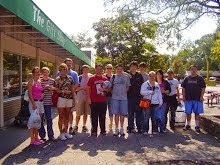
Schlichting, a freshman at Carthage High School, was part of a pilot program at Drury this week. The university hosted blind and visually impaired students on campus and taught them about college life -- how to live in a dorm and navigate campus, disability services, and useful technologies.
"You help kids coming from different backgrounds understand what the possibilities could be, what the dream could be. If you work hard, you can go here and we want you here," says Chris Craig, director of the Drury School of Education and Child Development.
The program is part of an over-arching mission at Drury, says Craig. With a grant from the Greene County Developmental Disabilities Board, the school is in the initial stages of launching the Drury University Children's Center for the Visually Impaired.
The idea is to get students prepared for kindergarten and then prepared for the transition from high school to college, said Calvin Churchwell, a certified orientation mobility specialist.
If blind students don't get what they need, the likelihood of them dropping out of college is higher, he says.
"If we can get them ready, they can go anywhere (to any college) and be successful," Churchwell says.
This is important because unemployment among the blind is about 70 percent, said Scott Truax, CareerConnect program manager for the American Foundation for the Blind in New York.
New skills
Making the transition to college is hard enough, but imagine doing it when you can't see, says Truax.
In public schools, blind students have teachers who are trained to teach them.
"In college, that person is no longer there," Truax says.
They have to learn their away around campus, and how to order books that can be downloaded electronically and turned from text to speech.
This week, they learned to use an adapted form of Blackboard, a standard tool on many college campuses.
They are learning to be independent travelers, says Angela Meadors, a Missouri State University student who is planning to become an orientation mobility specialist and was working with the students as part of her internship.
Drury graduate education students and students from other colleges worked with the group.
Another skill is finding the balance of independence: making them comfortable asking for help, without asking too often, Meadors says.
Then, there's social interaction.
"I think it's important to understand the whole breadth of what college life is all about," Craig says.
One session included dealing with roommates.
Roommates might not realize that if they leave something on the floor, their blind roommate could trip and fall, says Schlichting, who said she found the program very useful.
Technology
On Tuesday, representatives of NanoPac Inc., a company in Tulsa, Okla., that specializes in assisted technology, showed students how to use a barcode scanner.
The scanner has 1 million barcodes in its database and you can add barcodes, says Dave Wilkinson, a product specialist.
It's not only useful when grocery shopping, but people can color-code their clothes and make up a barcode so they can identify their clothes, he explained.
Freddy Marcos of Anderson held the scanner, and slowly rotated a can of tuna until the scanner found the barcode. The scanner said "Bumble Bee Tuna," and Marcos erupted in a smile.
"It's a really nice technology," Marcos says.
There were portable GPS devices with braille readers, so users could find the closest Andy's Frozen Custard.
For low vision students, there was a magnifying glass powerful enough to read something on the board.
Some of the technology is not new, but like other technology, it's smaller and more user-friendly, Wilkinson said.
Future
The students ranged in age from freshmen in high school to a community college student.
It was free to the students, made possible with funds from Rehab Services for the Blind and a grant from the Musgrave Foundation and from Drury's Office of Diversity Support Services.
This year's group included students from Missouri and Arkansas, but organizers hope to include Oklahoma and Kansas next year.
Ryan Wood, a senior at Joplin High School, liked the social aspect as much as the technology.
"I don't get out much, so I enjoy being here. It is useful," Wood.
He compared the experience to being at camp.
The best part was making new friends, said Marcos.
Hayley Scholes, who plans to attend the University of Arkansas this fall, says this week made her feel more prepared for college.
"The program is really awesome," Scholes says.

Subscribe to:
Post Comments (Atom)
No comments:
Post a Comment